
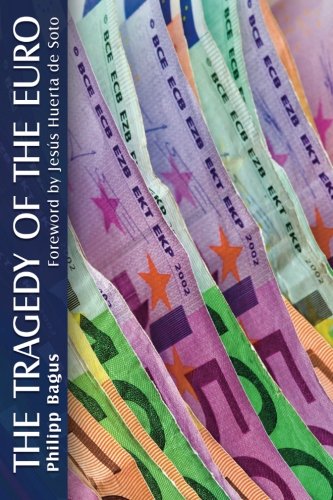
The Tragedy of the Euro
Why the common currency is built as a redistribution machine, and what follows from that.
- Level
- Advanced
- Published
- 2010
- Publisher
- Ludwig von Mises Institute
- ISBN
- 9781610162494
What it is about
In this book, the economist Philipp Bagus presents a fundamental analysis of the European Monetary Union. His starting point is the thesis that the euro was not a purely economic project but was driven by political interests, and that this is precisely the source of its structural problems.
Bagus shows how a common currency area without a common fiscal policy creates incentives that systematically encourage individual member states to live at the expense of others. He describes this mechanism with the concept of the “tragedy of the commons”: what belongs to everyone is treated responsibly by no one. Applied to the euro, this means that states can use the common currency to externalize their debts.
The account follows the tradition of the Austrian School of economics. Bagus draws on concepts such as business cycle theory and the expansion of the money supply to explain why central bank money is exposed to political covetousness and how this shapes the behavior of governments. Readers familiar with this school of thought will find here a consistent application of its tools to a current phenomenon.
The book is aimed at readers who want to understand how currency systems work, what role political institutions play in them, and why individual responsibility in handling money becomes more important when the institutional environment is fragile.
Did you enjoy the book? The author and publisher will appreciate a short review, for example with the retailer you bought it from.
More about the author: Philipp Bagus: Who Owns Our Money?