On March 19, 1815, Napoleon, back from Elba, had already reached Fontainebleau when a sharp article against him appeared in the Journal des Débats. Its author closed with a sentence that quickly made the rounds in Paris: he would not drag himself, a wretched turncoat, from one power to another (our own translation). A few weeks later the same man sat on the emperor’s Council of State and wrote most of a new constitution, which was soon named “la Benjamine” after him.
The author was Benjamin Constant, and his step can be understood from his work. The new constitution bound the returning emperor to rules: to two chambers, to the freedom to print and publish, and to the countersignature of his acts by ministers. The episode lasted a hundred days. What remained of Constant is a distinction that still echoes today in debates about majority rule and liberty.
At a glance
- Life: October 25, 1767, in Lausanne to December 8, 1830, in Paris
- Work: Writer and journalist, member of the Tribunate (1799 to 1802), deputy (1819 to 1822 and 1824 to 1830), spokesman of the liberals during the Restoration
- Major works: De l’esprit de conquête et de l’usurpation (1814), Principes de politique (1815), Adolphe (novel, 1816), De la liberté des Anciens comparée à celle des Modernes (speech, 1819), De la religion (from 1824)
- In one sentence: He showed that the liberty of the individual is a limit on every form of rule, including the rule of the people.
Between Lausanne, Edinburgh, and Coppet
Constant came from a family of Huguenot origin that had settled in the Vaud after the revocation of the Edict of Nantes. His mother died shortly after his birth, and his father, an officer in Dutch service, left his upbringing to a succession of private tutors. After a year of study in Erlangen, the young Constant went to Edinburgh from 1783 to 1785. There, in the Speculative Society, he debated politics and history for the first time, and the 1911 Encyclopaedia Britannica sees these years and his contacts with the British Whigs as the source of his political views.
In September 1794 he met Germaine de Staël. He followed her to Paris, and for years the two were partners in thought as in life. At her château in Coppet on Lake Geneva, a circle of writers and scholars gathered that became known as the Coppet group.
At the end of 1799 Constant was appointed to the Tribunate, one of the chambers meant to deliberate on bills under the Consulate. He used the post to warn against Bonaparte’s growing power and in 1802 was removed from the chamber along with other troublesome members. He spent the following years mostly far from Paris, in Weimar and with Madame de Staël in Coppet, working on a large manuscript on the principles of politics and on his novel Adolphe, which appeared in 1816.
After Napoleon’s fall he became the leading mind of the liberal opposition. From 1819 on he sat, with one interruption, in the Chamber of Deputies, although the government tried to keep him out because of his Swiss birth. There he fought for freedom of the press, for the accountability of ministers, and, on June 27, 1821, also against the slave trade.
Two kinds of liberty
Constant gave his best-known speech in 1819 at the Athénée royal in Paris. In it he compared the liberty of the ancient republics with the liberty that modern people seek. A citizen of Athens or Rome decided directly, in the public square, on war and peace, on laws and judgments. In his private life, by contrast, he was under the supervision of the community, which watched over morals, education, and belief. Constant summed this up in one sentence: among the ancients, the individual was almost always sovereign in public affairs and a slave in all his private relations (our own translation).
Modern man lives in large states in which his single vote hardly counts. He lives by commerce rather than by war, and because slavery has been abolished, he lacks the leisure that had freed ancient citizens for politics. His liberty therefore consists above all in being subject only to the laws, in speaking his mind, in choosing and practicing his profession, in disposing of his property, in traveling, in associating with others, and in living his faith. “La liberté individuelle, je le répète, voilà la véritable liberté moderne,” Constant said: individual liberty is the true modern liberty.
He by no means did away with political participation. For him it is the guarantee of personal liberty, and whoever gives it up will in the end lose both. The speech was aimed at a misunderstanding of the revolutionary era. Rousseau, and even more decidedly the Abbé de Mably, had wanted to transfer the liberty of the ancients to a world it does not fit, and the result was a coercion that claimed the whole of life in the name of the people. Toward the end, Constant addressed a request to those who govern that can be read as a short summary of classical liberalism: the authorities should stay within their limits. “Qu’elle se borne à être juste ; nous nous chargerons d’être heureux”: let them confine themselves to being just, and the citizens would see to their own happiness.
Where even the power of the people ends
Constant had already worked out the basic idea in 1815 in his Principes de politique. The first chapter deals with the sovereignty of the people, and it opens with agreement: that the general will stands above every particular will cannot be disputed. Then comes the qualification that mattered to him. “La souveraineté n’existe que d’une manière limitée et relative”: sovereignty exists only in a limited and relative way.
There is, Constant argued, a part of human existence that necessarily remains individual and independent and is by right beyond the reach of any social authority. If society oversteps this line, it becomes a usurper, and a majority that does so becomes a faction claiming the whole for itself. The revolutionaries, he wrote, had not abolished the unlimited power of the old rulers; they had merely placed it in new hands, and that is why it had done as much harm as before.
With this turn, Constant shifted the question of political philosophy. Who should rule matters, but what matters more is how far rule may reach at all. His answer was clear in substance: opinion, belief, the press, property, and protection from arbitrary power belong to the sphere over which no majority has any say. On the franchise he followed the conviction of his time and wanted to tie political rights to property, but he deliberately set the threshold low so that owners of modest holdings could vote as well.
Commerce instead of conquest
At the end of 1813, as Napoleon’s empire was collapsing, Constant published his polemic De l’esprit de conquête et de l’usurpation in Hanover. It contains a sentence that anticipates the program of the later free traders: “La guerre et le commerce ne sont que deux moyens différents d’arriver au même but : celui de posséder ce que l’on désire.” War and commerce, in other words, are only two ways of reaching the same goal, namely possessing what one desires. War is the older way, the savage impulse; commerce is civilized calculation. Mankind, Constant held, had entered the age of commerce, which must necessarily replace the age of war, and a government that today drove a European people to conquest was committing a gross and disastrous anachronism.
In the speech of 1819 he went a step further. Commerce gives property a new quality, circulation, and thereby removes it from the grip of power. It satisfies people’s needs without the intervention of the authorities, and by creating credit it makes the authorities dependent on the citizens. A government that has to borrow money cannot afford to fall out with its lenders at will. For friends of liberty, this is an early and very clear description of how markets limit power without anyone having to order them to do so.
Liberty as a task
Constant was no champion of complacency. Toward the end of his speech he warned of a danger that arises precisely from the success of modern liberty. People wholly absorbed in enjoying their private independence might all too easily give up their share of political power. He therefore called for citizens who keep watch over their representatives and form their own judgment.
Behind this lies a view of human beings that goes beyond mere well-being. Our destiny, Constant said, calls us beyond happiness to self-perfection, and for that a person needs both: a protected sphere of one’s own and a voice in public affairs. His lifelong work on religion also belongs in this context. In his multivolume work De la religion he described religious feeling as something compatible with doubt and saw liberty at the root of faith. In this understanding, the private sphere he defended against the state was more than a refuge, because it is also where religious feeling can develop freely.
What friends of liberty can learn from him
Constant’s most important lesson lies in separating two questions that are constantly mixed up in everyday politics. That a government was democratically elected says nothing yet about whether it has any business deciding a particular matter at all. Whoever points to a majority to justify interference in education, belief, speech, or property has answered the first question and skipped the second.
Isaiah Berlin took up this distinction in 1958 in his lecture “Two Concepts of Liberty” and called Constant the most eloquent of all defenders of freedom and privacy. In The Constitution of Liberty, Friedrich August von Hayek counted him, alongside Montesquieu and Tocqueville, among those Frenchmen who stood closer to the evolved, “British” tradition of liberty than to planning rationalism. Both judgments capture what sets Constant apart: he distrusted the blueprint that seeks to reorder society from above, and he trusted that free people, in commerce and in dealing with one another, bring forth an order that no lawgiver could invent.
Finally, it is remarkable that he thought the two together. Whoever loves private liberty must cultivate public control of power, or he will lose his private liberty. That makes Constant a sober counselor for any age in which citizens complain about the state’s growing demands but rarely ask where it actually gets its powers.
Be just, and we will see to our own happiness
When Benjamin Constant died in December 1830, a few months after the July Revolution, students unhitched the horses from the hearse and pulled it themselves to the Père-Lachaise cemetery. They were honoring a man who had defended the liberties the Revolution had once set out to win, without sharing its ambition to remake human beings in the name of the people. His words to those who govern can be put before any government that promises its citizens happiness. Let it first be just and stay within its limits; free people will see to everything else themselves.
Further reading
- Benjamin Constant: De la liberté des Anciens comparée à celle des Modernes (1819), in: Œuvres politiques, ed. Charles Louandre, Charpentier, Paris 1874
- Benjamin Constant: Political Writings, ed. Biancamaria Fontana, Cambridge University Press, Cambridge 1988
- Benjamin Constant: Werke in vier Bänden, ed. Axel Blaeschke and Lothar Gall, Propyläen, Berlin 1970 to 1972 (in German)
- Helena Rosenblatt (ed.): The Cambridge Companion to Constant, Cambridge University Press, Cambridge 2009
This article is part of our series on thinkers, doers, and historical figures of liberty.
Sources
- Constant, Benjamin: De l’esprit de conquête et de l’usurpation dans leurs rapports avec la civilisation européenne, Hahn, Hanover 1814 (quoted in: Œuvres politiques, ed. Charles Louandre, Charpentier, Paris 1874, p. 373 ff.), https://fr.wikisource.org/wiki/%C5%92uvres_politiques_(Constant)/De_l%E2%80%99esprit_de_conqu%C3%AAte
- Constant, Benjamin: Principes de politique applicables à tous les gouvernements représentatifs, Paris 1815, ch. 1 “De la souveraineté du peuple” (quoted in: Œuvres politiques, 1874, pp. 1–16), https://fr.wikisource.org/wiki/%C5%92uvres_politiques_(Constant)/De_la_souverainet%C3%A9_du_peuple
- Constant, Benjamin: “Des élections et du suffrage populaire,” in: Œuvres politiques, 1874, p. 145 ff., https://fr.wikisource.org/wiki/%C5%92uvres_politiques_(Constant)/Des_%C3%A9lections_et_du_suffrage_populaire
- Constant, Benjamin: De la liberté des Anciens comparée à celle des Modernes, speech at the Athénée royal, Paris 1819 (quoted in: Œuvres politiques, 1874, p. 258 ff.), https://fr.wikisource.org/wiki/%C5%92uvres_politiques_(Constant)/De_la_libert%C3%A9_des_Anciens_compar%C3%A9e_%C3%A0_celle_des_Modernes
- Constant, Benjamin: article in the Journal des Débats, March 19, 1815 (closing sentence quoted in Anatole France, La Vie littéraire, 1re série), https://fr.wikisource.org/wiki/La_Vie_litt%C3%A9raire/1/Le_Journal_de_Benjamin_Constant
- Constant, Benjamin: Political Writings, ed. Biancamaria Fontana, Cambridge University Press, Cambridge 1988.
- Constant, Benjamin: Werke in vier Bänden, ed. Axel Blaeschke and Lothar Gall, Propyläen, Berlin 1970–1972 (in German).
- Encyclopaedia Britannica, 11th edition, 1911: “Constant de Rebecque, Henri Benjamin,” https://en.wikisource.org/wiki/1911_Encyclop%C3%A6dia_Britannica/Constant_de_Rebecque,_Henri_Benjamin
- Musée protestant: Benjamin Constant, https://museeprotestant.org/en/?p=2473
- Rosenblatt, Helena (ed.): The Cambridge Companion to Constant, Cambridge University Press, Cambridge 2009 (excerpt: https://assets.cambridge.org/97805216/72436/excerpt/9780521672436_excerpt.pdf)
- Lentz, Thierry: “L’Acte additionnel aux constitutions de l’Empire,” napoleon.org 2015, https://www.napoleon.org/histoire-des-2-empires/articles/lacte-additionnel-aux-constitutions-de-lempire-heritage-et-cadeau-empoisonne-de-la-restauration/
- Catalog entry “Lettre à MM. Benjamin Constant et Manuel” (session of June 27, 1821), https://library.usi.edu/record/880039
- Berlin, Isaiah: Two Concepts of Liberty, Clarendon Press, Oxford 1958.
- Hayek, Friedrich August von: The Constitution of Liberty, University of Chicago Press, Chicago 1960, ch. 4.
- Wikipedia (en): Benjamin Constant, https://en.wikipedia.org/wiki/Benjamin_Constant (overview, offices, and dates)
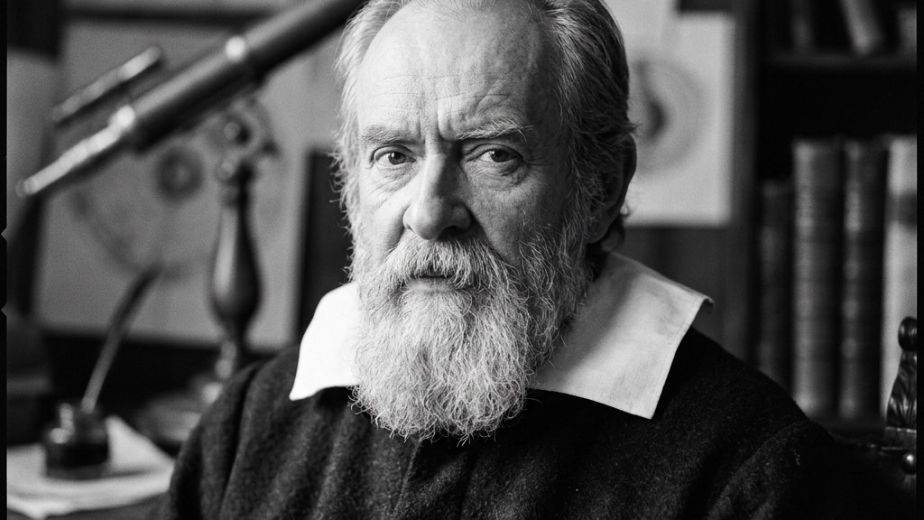
Featured image: Benjamin Constant (AI illustration)