In September 1841, John Bright, a young manufacturer from Rochdale, sat in a house in Leamington, so overcome with grief that he could hardly think. His wife had died three days earlier. Richard Cobden, who happened to be staying with relatives in the town, came to call on him. He comforted his friend and then, as Bright later recalled, told him that at that very moment in thousands of English homes, wives, mothers, and children were dying of hunger. When the first grief had passed, Bright should come with him, and they would not rest until the Corn Law was repealed.
Bright accepted the invitation, and he told the story himself in 1877 at the unveiling of Cobden’s statue in Bradford. Five years after the conversation in Leamington, the corn duties had fallen. A citizens’ movement had defeated one of the most powerful interest groups in the country by peaceful means, and its success bore one name above all.
At a glance
- Life: June 3, 1804, in Dunford near Midhurst (Sussex), to April 2, 1865, in London
- Profession: calico manufacturer in Manchester, member of the House of Commons 1841–1857 and 1859–1865
- Work: leading figure of the Anti-Corn Law League, negotiator of the Anglo-French commercial treaty of 1860
- Major works: England, Ireland, and America (1835), Russia (1836), The Three Panics (1862), Political Writings (1867), and Speeches on Questions of Public Policy (1870), both posthumous
- In one sentence: He proved that free trade can prevail against powerful interests, and he saw it above all as an instrument of peace.
A Farmer’s Son Learns Trade
Cobden was the fourth of eleven children in a farming family in Sussex. His father was an unlucky farmer who lost the Dunford farm, and the family moved from one tenancy to the next. At the age of ten the boy was sent to a school in Yorkshire, where for five years he was badly fed, badly taught, and badly treated. His biographer John Morley reports that Cobden later did not like to speak about this time.
At fifteen he became a clerk in the London warehouse of an uncle who dealt in muslin and calico, and he was soon traveling the country as a commercial traveler. Around 1831 he and two partners took over a calico-printing works at Sabden near Clitheroe in Lancashire, and he settled in Manchester, the center of the cotton industry.
Little Politics, Much Connection
In 1835 Cobden published his first pamphlet, England, Ireland, and America, anonymously, as “a Manchester Manufacturer.” In 1836 came Russia, a reply to the fear of Russia stirred up above all by the publicist David Urquhart. In it he attacked the balance-of-power policy through which Britain formed alliances, maintained fleets, and meddled in other nations’ quarrels.
There he summed up his own position in a guiding maxim: “As little intercourse as possible betwixt the Governments, as much connection as possible between the nations of the world.” The sentence is often attributed to the first pamphlet, but it appears in Russia. Already in England, Ireland, and America he had written that “commerce is the grand panacea, which, like a beneficent medical discovery, will serve to inoculate with the healthy and saving taste for civilization all the nations of the world.” Those who exchange goods, he reasoned, need no gunboats to gain influence.
A League Against Dear Bread
The Corn Laws of 1815 admitted foreign grain only once the domestic price had reached a very high threshold; from 1828 on, a sliding scale of duties governed imports. The beneficiaries were the landowners, whose rents depended on the price of grain and who also dominated Parliament. Everyone who bought bread paid the price.
In October 1838, seven men met in a Manchester hotel and founded an association against the corn duties. Cobden joined at once, was elected to its council, and remained on it until the end of the campaign. In March 1839 this grew into the nationwide Anti-Corn Law League, headquartered in Manchester. Its goal was the total and immediate repeal of the Corn Laws, pursued exclusively by legal means: local associations, lectures, pamphlets, and petitions to Parliament.
What set the League apart from earlier protests was its persistence and its flair for organization. It paid for speakers and publications and appealed again and again to the voters themselves. Its plan for the county constituencies was especially ingenious: anyone there who owned a freehold worth forty shillings a year had the vote. The League encouraged its supporters to buy such small plots, and by early 1845, according to Morley, four to five thousand new voters had been added to the rolls in Yorkshire, Lancashire, and Cheshire. In 1841 Cobden himself entered the House of Commons as member for Stockport.
The Victory of 1846
When potato blight set off a famine in Ireland in 1845, Prime Minister Robert Peel gave up his resistance. In January 1846 he announced the repeal of the corn duties, with a transition period until February 1849, after which only a small residual duty remained. In June the bill passed both Houses. On the very evening the Lords approved it, Peel lost a vote on an Irish coercion bill.
On June 29, 1846, he announced his resignation in the House of Commons. The credit, he said, belonged neither to him nor to the opposition, and there followed a remarkable tribute to the man who had fought him for years. “The name which ought to be, and will be, associated with the success of those measures,” Peel said, “is the name of one who, acting, I believe, from pure and disinterested motives, has, with untiring energy, made appeals to our reason, and has enforced those appeals with an eloquence the more to be admired because it was unaffected and unadorned: the name which ought to be chiefly associated with the success of those measures, is the name of Richard Cobden” (Hansard).
Trade as a Bond Between Nations
For Cobden, cheaper bread was only the first gain. In January 1846 he had said in Manchester that he considered the material advantage of free trade the least of its benefits. “I look farther,” he said; “I see in the Free-trade principle that which shall act on the moral world as the principle of gravitation in the universe, drawing men together, thrusting aside the antagonism of race, and creed, and language, and uniting us in the bonds of eternal peace” (Speeches, vol. 1). In the long run, he hoped, the desire for great empires and for gigantic armies and navies would die away.
After the victory, Cobden spent a year traveling through France, Spain, Italy, the German states, and Russia, making his case to statesmen. Back in Parliament, he introduced a motion for international arbitration in 1849 and one for mutual disarmament in 1851, and he took part in the peace congresses of those years. He opposed the Crimean War and, like Bright, endured fierce hostility for it.
In 1857 he attacked British conduct toward China in the House of Commons after the navy had bombarded the city of Canton over an incident involving the ship Arrow. After four days of debate, his motion carried by a majority of sixteen votes against Palmerston’s government. Palmerston called a new election and won; Cobden was defeated in Huddersfield and Bright in Manchester.
A Treaty Without Office
In 1859 Rochdale returned him to Parliament unopposed while he was in America. When he landed at Liverpool, a letter from Palmerston was waiting for him, offering him the presidency of the Board of Trade with a seat in the cabinet. Cobden declined, because he had opposed Palmerston’s foreign policy in public too often to serve it now as a minister.
Instead, he went to Paris without any office and, together with the French economist Michel Chevalier, made the case for a commercial treaty in an audience with Emperor Napoleon III. The treaty was signed on January 23, 1860, and Cobden negotiated the details of the tariff schedules until November of that year. France cut its duties on most British manufactured goods to no more than thirty percent, and Britain cut its duties on French wine and brandy. For Britain it was the first of eight most-favored-nation treaties of the 1860s. Cobden declined a baronetcy and a seat on the Privy Council, which were offered to him in gratitude.
A Life in the Service of a Cause
Because he had sacrificed his business to the campaign, supporters raised between £75,000 and £80,000 for him in 1846. Most of it covered the firm’s losses; the rest he invested in shares of the Illinois Central Railroad, whose calls on shareholders soon left him in debt. In 1860 friends quietly placed another £40,000 at his disposal. He had the list of the ninety to one hundred donors handed to him in a sealed envelope, and after his death his executors found it unopened in his desk.
In his last speech, in Rochdale in November 1864, he looked ahead to a new task. If he were twenty-five or thirty, he said, “I would take Adam Smith in hand, and I would have a League for free trade in Land just as we had a League for free trade in Corn.” According to Morley, what he chiefly had in mind was the abolition of entail, the tying of great estates to a family, which prevented their sale and division. He left no worked-out program. Richard Cobden died in London on April 2, 1865, and was buried at West Lavington in Sussex. A year later his friends founded the Cobden Club, with the motto of peace, free trade, and goodwill among nations.
What Friends of Liberty Can Learn from Cobden
The first lesson concerns the tariff itself. Cobden showed that a protective tariff is a tax that many pay and few collect, and that it often burdens the poorer for the benefit of the well-off. He captured this in the image of dear bread, which everyone understood. Anyone arguing today about agricultural tariffs, punitive tariffs, or industrial protection will find in him the question that usually gets lost: Who actually pays?
The second lesson is strategic. The Anti-Corn Law League showed that ideas of liberty can win when they are championed persistently, with good organization, and in plain terms. Cobden sought no office and turned down several. He relied on public opinion and on the voters, and he counted on a law falling once enough people would no longer accept it. Frédéric Bastiat recognized this early and introduced the campaign to the French public in 1845 with Cobden et la Ligue.
His linking of trade and peace reaches furthest. Governments that stay out of other nations’ quarrels, and peoples who trade freely with one another, have less cause for war. For this Cobden risked his seat in Parliament and lost it, without changing his position. His hope that trade would soon make war obsolete has not been fulfilled, yet his basic idea still holds.
Bread, Peace, and the Power of Persuasion
Richard Cobden left no grand system, but he did leave the example of a businessman who repeated a simple truth so long and so skillfully that a Parliament of landowners made it law against its own interest. That this success came without violence and without government office gives it weight, especially in a time of new tariffs and trade disputes. He showed people who was making their bread dearer, and he was convinced that nations that trade with one another can also keep the peace with one another.
Further reading
- Richard Cobden: The Political Writings of Richard Cobden, 2 vols., Ridgway, London 1867 (includes England, Ireland, and America and Russia)
- Richard Cobden: Speeches on Questions of Public Policy, ed. John Bright and J. E. Thorold Rogers, London 1870
- John Morley: The Life of Richard Cobden, London 1881, one-volume edition T. Fisher Unwin, London 1906
- Frédéric Bastiat: Cobden et la Ligue, ou l’agitation anglaise pour la liberté du commerce, Guillaumin, Paris 1845
This article is part of our series on thinkers, doers, and historical figures of liberty.
Sources
- Cobden, Richard: England, Ireland, and America, “by a Manchester Manufacturer”, Ridgway, London 1835.
- Cobden, Richard: Russia, 1836 (chapter “The Balance of Power”).
- Cobden, Richard: The Political Writings of Richard Cobden, 2 vols., Ridgway, London 1867, https://archive.org/details/politicalwriting01cobduoft (vol. 1, p. 45 and pp. 282–283).
- Cobden, Richard: Speeches on Questions of Public Policy, ed. John Bright and J. E. Thorold Rogers, 2 vols., London 1870; 3rd edition T. Fisher Unwin, London 1908, https://archive.org/details/speechesonquesti01cobduoft (speech in Manchester, January 15, 1846, vol. 1, p. 187; speech in Rochdale, November 23, 1864, vol. 2, p. 493).
- Hansard, House of Commons, June 29, 1846, “Resignation of the Ministry” (speech by Robert Peel), col. 1054, https://api.parliament.uk/historic-hansard/commons/1846/jun/29/resignation-of-the-ministry
- Bright, John: address at the unveiling of the Cobden statue in Bradford, July 25, 1877, quoted in Morley, Life of Richard Cobden, pp. 190–191.
- Bastiat, Frédéric: Cobden et la Ligue, ou l’agitation anglaise pour la liberté du commerce, Guillaumin, Paris 1845, https://fr.wikisource.org/wiki/Cobden_et_la_ligue
- Morley, John: The Life of Richard Cobden, London 1881; one-volume edition T. Fisher Unwin, London 1906, https://archive.org/details/lifeofrichardcob00morliala
- Encyclopaedia Britannica, 11th edition, 1911: “Cobden, Richard”, https://en.wikisource.org/wiki/1911_Encyclop%C3%A6dia_Britannica/Cobden,_Richard
- Encyclopaedia Britannica, 11th edition, 1911: “Bright, John”, https://en.wikisource.org/wiki/1911_Encyclop%C3%A6dia_Britannica/Bright,_John
- Online Library of Liberty: Introduction to Cobden and the League (1845), https://oll.libertyfund.org/pages/introduction-to-cobden-and-the-league
- Wikipedia (en): Richard Cobden, https://en.wikipedia.org/wiki/Richard_Cobden (starting point and cross-check)
- Wikipedia (en): Corn Laws, https://en.wikipedia.org/wiki/Corn_Laws
- Wikipedia (en): Cobden–Chevalier Treaty, https://en.wikipedia.org/wiki/Cobden%E2%80%93Chevalier_Treaty
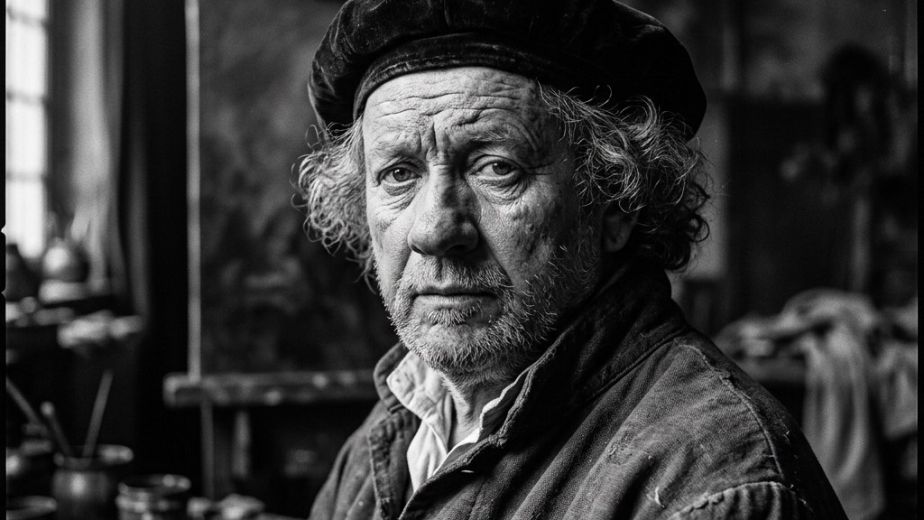
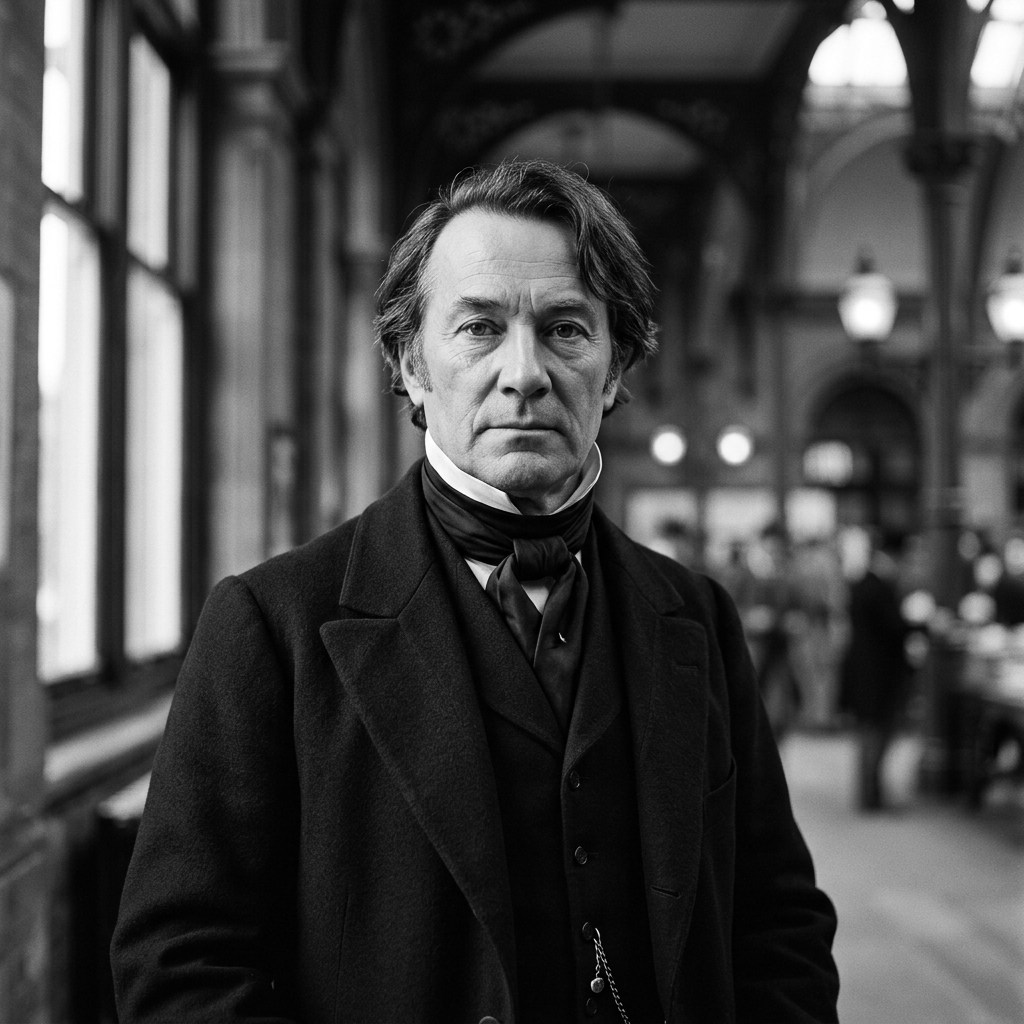
Featured image: Richard Cobden (AI illustration)