In 1891 a slim book appeared in Berlin, presented as the diary of a committed Social Democrat. The narrator enthusiastically witnesses the victory of his party, which abolishes private property, assigns jobs, and sets out to provide for everyone equally. Soon many people want to leave the country, so the government bans all emigration without official permission, and the border guards are ordered to shoot anyone fleeing without further ado.
The author of the Sozialdemokratische Zukunftsbilder (Pictures of the Socialistic Future) was no novelist. Eugen Richter led the left liberals in the Reichstag, the German parliament, knew the state budget like hardly anyone else, and took on August Bebel’s blueprints for the future. Seventy years later, in August 1961, a socialist German state had a wall built in Berlin, and its border soldiers followed exactly that order. This is why the American economist Bryan Caplan titled his foreword to a new edition of the book “The Writing on the Wall,” after the biblical image.
At a glance
- Life: July 30, 1838, in Düsseldorf to March 10, 1906, in Groß-Lichterfelde near Berlin
- Work: Journalist and one of the first professional politicians in Germany; Reichstag in 1867 and from 1871 to 1905, Prussian House of Representatives from 1869 to 1905; parliamentary group leader from 1875, from 1893 chairman of the Free-minded People’s Party (Freisinnige Volkspartei)
- Editor: Freisinnige Zeitung (1885 to 1904)
- Major works: Politisches ABC-Buch (many editions up to 1903, first published as ABC-Buch für freisinnige Wähler), Sozialdemokratische Zukunftsbilder. Frei nach Bebel (1891; English: Pictures of the Socialistic Future), Im alten Reichstag (1894/96)
- In one sentence: He defended free trade, self-help, and parliament’s power over the budget against Bismarck and foresaw what becomes of a society in which the state owns everything.
A Mayor Prussia Did Not Want
Richter was the son of a Prussian military physician who ended his career as surgeon general in Koblenz. After secondary school in Koblenz, he studied law and political science from 1856 in Bonn, Heidelberg, and Berlin, where Robert von Mohl and Karl Heinrich Rau shaped his thinking. At the Congress of German Economists, the meeting place of the free traders of those years, he met Hermann Schulze-Delitzsch, the founder of the German cooperative movement.
As a young civil servant, Richter soon ran into trouble. A pamphlet on freedom in the tavern trade, which attacked the heavy-handed control of the trade police in 1862, got him into difficulties with the government. Then the town of Neuwied elected him mayor, but the authorities refused to confirm him and wanted to transfer him to Bromberg (today Bydgoszcz). In 1864 Richter resigned from the civil service, moved to Berlin, and from then on lived by his pen as a journalist, which made him one of the first professional politicians in Germany.
In 1867 he entered the Constituent Reichstag of the North German Confederation for the German Progress Party. From 1869 he sat in the Prussian House of Representatives, and from 1871 again in the Reichstag, from 1874 for the constituency of Hagen-Schwelm, which he represented until he gave up his seat in 1904/05. In 1875 he took over the leadership of the parliamentary group. In 1884 the Progress Party merged into the German Free-minded Party, and when that party broke apart in 1893 over Chancellor Caprivi’s army bill, Richter led the Free-minded People’s Party until his death.
Self-Help Instead of State Welfare
Richter’s thinking began with the cooperative. Schulze-Delitzsch counted on craftsmen and workers helping themselves through cooperatives by their own efforts. In 1862 Richter wrote about the economic aims of his mentor, published a pamphlet on consumer cooperatives, and worked in the movement himself. The Deutsche Biographie, Germany’s national biographical dictionary, describes his outlook as a cooperative form of liberalism, and the description fits: for Richter, liberty also meant joining with others voluntarily instead of waiting for allocations from above.
The opposing vision was formulated at the same time by Ferdinand Lassalle, who in his Arbeiterprogramm (The Working Man’s Programme) of 1862 mocked the liberal rule of law as a mere night-watchman idea and demanded far more of the state than the protection of life and property. Richter remained on the other side of this dispute all his life. He rejected state intervention in the economy and society on principle, and his memoirs contain the remark, in Ralph Raico’s translation, that “a special social question does not exist for us,” because “the social question is the sum of all cultural questions.”
Against Bismarck’s State Socialism
This stance was put to a hard test when Bismarck introduced health insurance, accident insurance, and disability and old-age insurance in the 1880s. The German Historical Museum describes the political purpose openly: the workers were to be bound to the monarchical state and the labor movement deprived of its base. The social policy was the counterpart to the Anti-Socialist Law of 1878, with which Bismarck suppressed the Social Democrats.
Richter opposed both. Together with Ludwig Bamberger, he led the opposition to social insurance, beginning with the accident insurance bill of 1881, and he held to this line when other liberal critics changed course. One of his arguments was a political one: state provision awakens ever-growing demands on the state, which in the long run no political system can satisfy. In Ralph Raico’s translation of the Politisches ABC-Buch, he wrote that hindering the development of independent funds “awoke growing claims on the State that, in the long run, no political system can satisfy.” Anyone who looks today at the subsidies that flow every year from Germany’s federal budget into the public pension system will not consider this warning unrealistic.
He likewise rejected the Anti-Socialist Law, although he fought the Social Democrats fiercely. According to a contemporary English account, he said he feared Social Democracy more under this law than without it. Still, his course was not entirely straight: when the law was extended in 1884, his parliamentary group did not vote against it unanimously, and Raico judges that here, for once, Richter acted more as a tactician.
The Taxpayer’s Pfennig
His sharpest weapon was the number. Richter saw himself as the guardian of the taxpayer’s pfennig (the German penny), and parliament’s power over the budget stood for him at the center of the constitution. As early as 1869 he published a study of the Prussian public debt. Max Weber, anything but a Manchester liberal, later wrote appreciatively that Richter “was surely the last representative who could check over every penny spent, to the very last canteen, with the War Minister” (in Raico’s translation).
With the same care, he fought the protective tariff policy that Bismarck pushed through from 1879. The new tariffs on grain and iron made everyday necessities more expensive, and Richter warned that such a tariff wall was the ideal breeding ground for new cartels. He closed his great speech against the protective tariff with a sentence that reveals much about his thinking: “Economic freedom has no security without political freedom, and political freedom can find its security only in economic freedom” (in Raico’s translation).
He also measured the military and world-power plans of the German Empire by their cost. He fought the army bill of 1893, even at the price of splitting his party, and opposed the naval laws from 1898 on. Asked what Weltpolitik, the Kaiser’s “world policy,” actually was, he replied, in Raico’s translation: “Wanting to be present wherever something is going wrong.” On the colonial question he did the sober arithmetic: “colonial policy is extraordinarily expensive,” he declared in June 1884, and if there had to be colonies, then “on the model of the English royal charters,” under which private companies bear the risk and not the taxpayer.
Liberty That Applies to Opponents Too
How seriously Richter took equality before the law became clear in 1880. The so-called Antisemites’ Petition was directed at the time against the equal rights of Jews in Germany, and in November the Progress Party brought the question before the Prussian House of Representatives. Richter placed the antisemitic movement, in its aims and methods, alongside the socialist one and called its leaders “unnational.” The antisemites retaliated by reviling the left liberals as the “Judenschutztruppe,” a protective guard for the Jews. On the relationship between church and state, he demanded a clear separation, including full freedom for private schools, which, in a phrase Raico quotes, were “the last possible refuge.”
A Diary from the Future
The Zukunftsbilder took Bebel’s Die Frau und der Sozialismus (Woman under Socialism) at its word, as the subtitle Frei nach Bebel (freely adapted from Bebel) already indicates. Richter needed no theory for this; he let a devout follower tell the story and allowed the consequences to speak for themselves. Jobs are assigned, and people need passports to move around in their own country. Whoever owes his education to the state, the book says, may not emigrate. Elsewhere the book asks what use freedom of assembly is when all the meeting halls belong to the government.
Bryan Caplan has pointed out that Richter described this oppression as a consequence of the program itself and not as the excess of bad leaders, and that is precisely what sets the book apart from mere party satire. According to Ralph Raico, it was translated into a dozen languages and printed in more than a quarter of a million copies in Germany alone. The English edition appeared in London in 1893 with an introduction by the British liberal Thomas Mackay. What Richter anticipated in narrative form, Ludwig von Mises established theoretically in 1920 in his essay on economic calculation in the socialist commonwealth and in 1922 in Die Gemeinwirtschaft (Socialism): without private property in the means of production, there are no market prices for them, and without such prices rational calculation is impossible.
What friends of liberty can learn from him
The first lesson concerns the indivisibility of liberty. Richter fought the Social Democrats with all his might and still did not want them banned, and he defended Jewish citizens at a time when antisemites disrupted liberal meetings and the liberals had to arrange special protection for their gatherings, and in both cases he demanded equal rights even for people whose views he did not share.
The second lesson concerns the welfare state. Richter recognized early that state insurance schemes awaken claims that keep growing, and he set the self-help of cooperatives against this kind of provision. The public pension system, which many today take for granted, was fought by a contemporary with arguments worth knowing before one argues about its future.
Finally, Richter shows what a single member of parliament can achieve by doing his homework. He was no theorist, but he knew the budget figures so precisely that even Max Weber tipped his hat, and he combined this precision with the courage to tell a story that people without special training could understand.
Proved Right
Ralph Raico, the American historian of liberalism, saw in Richter the last genuine liberal left in the parliament of a great nation. In his lifetime he lost most of the big votes: the tariffs came, as did social insurance and the navy, and liberalism in Germany increasingly made its peace with the state. Friedrich Naumann, the leading thinker of a more state-friendly liberalism, called him the “Reichskritikus,” the critic of the Reich. On the question of where a state leads that owns and allocates everything, however, the twentieth century proved him right. In Hagen, the Eugen Richter Tower has commemorated him since 1911, and since 1983 his grave in Hagen-Delstern has been an honorary grave maintained by the city. But his Zukunftsbilder are the more living monument, because they pose a question that arises anew in every generation: who remains free when the state provides for everything?
Further reading
- Eugen Richter: Sozialdemokratische Zukunftsbilder. Frei nach Bebel, Verlag “Fortschritt,” Berlin 1891 (English: Pictures of the Socialistic Future, Swan Sonnenschein, London 1893)
- Eugen Richter: Im alten Reichstag. Erinnerungen, 2 vols., Berlin 1894/1896 (in German)
- Ralph Raico: Die Partei der Freiheit. Studien zur Geschichte des deutschen Liberalismus, Lucius & Lucius, Stuttgart 1999 (in German)
- Ina Susanne Lorenz: Eugen Richter. Der entschiedene Liberalismus in wilhelminischer Zeit 1871 bis 1906, Matthiesen, Husum 1981 (in German)
This article is part of our series on thinkers, doers, and historical figures of liberty.
Sources
- Richter, Eugen: Die wirtschaftlichen Bestrebungen von Schulze-Delitzsch, 1862 (in German).
- Richter, Eugen: Das preußische Staatsschuldenwesen, 1869 (in German).
- Richter, Eugen: Die neuen Zoll- und Steuervorlagen, 1879 (in German).
- Richter, Eugen: ABC-Buch für freisinnige Wähler (from 1881), later Politisches ABC-Buch. Ein Lexikon parlamentarischer Zeit- und Streitfragen, last edition Berlin 1903 (in German).
- Richter, Eugen: Sozialdemokratische Zukunftsbilder. Frei nach Bebel, Verlag “Fortschritt” AG, Berlin 1891; English: Pictures of the Socialistic Future, translated by Henry Wright, introduction by Thomas Mackay, Swan Sonnenschein, London 1893, online: https://www.econlib.org/library/YPDBooks/Richter/rchtPSF.html
- Richter, Eugen: Im alten Reichstag. Erinnerungen, 2 vols., Berlin 1894/1896 (in German).
- Bebel, August: Die Frau und der Sozialismus, Zurich 1879 (in German).
- Lassalle, Ferdinand: Arbeiterprogramm, Berlin 1862 (in German).
- Mises, Ludwig von: Die Wirtschaftsrechnung im sozialistischen Gemeinwesen. In: Archiv für Sozialwissenschaft und Sozialpolitik 47 (1920); Die Gemeinwirtschaft, Jena 1922 (in German).
- Thier, Andreas: Richter, Eugen. In: Neue Deutsche Biographie 21 (2003), pp. 526–528, https://www.deutsche-biographie.de/pnd118600400.html (in German)
- Deutsches Historisches Museum, LeMO: Biografie Eugen Richter, https://www.dhm.de/lemo/biografie/eugen-richter (in German)
- Deutsches Historisches Museum, LeMO: Sozialgesetzgebung im Kaiserreich, https://www.dhm.de/lemo/kapitel/kaiserreich/innenpolitik/sozialgesetzgebung (in German)
- Raico, Ralph: Eugen Richter and Late German Manchester Liberalism: A Reevaluation. In: The Review of Austrian Economics 4 (1990), pp. 3–25, https://mises.org/online-book/review-austrian-economics/eugen-richter-and-late-german-manchester-liberalism-reevaluation
- Raico, Ralph: Die Partei der Freiheit. Studien zur Geschichte des deutschen Liberalismus, Lucius & Lucius, Stuttgart 1999 (in German).
- Caplan, Bryan: The Writing on the Wall. Foreword to Eugen Richter, Pictures of the Socialistic Future, Ludwig von Mises Institute, https://mises.org/online-book/socialistic-future/foreword-writing-wall
- Lorenz, Ina Susanne: Eugen Richter. Der entschiedene Liberalismus in wilhelminischer Zeit 1871 bis 1906, Matthiesen, Husum 1981 (in German).
- Wikipedia (de): Eugen Richter, https://de.wikipedia.org/wiki/Eugen_Richter (in German; starting point, dates of works and seats)
- Wikipedia (en): Eugen Richter, https://en.wikipedia.org/wiki/Eugen_Richter (starting point; Dawson and Taylor references)
- Wikipedia (de): Nachtwächterstaat, https://de.wikipedia.org/wiki/Nachtw%C3%A4chterstaat (in German)
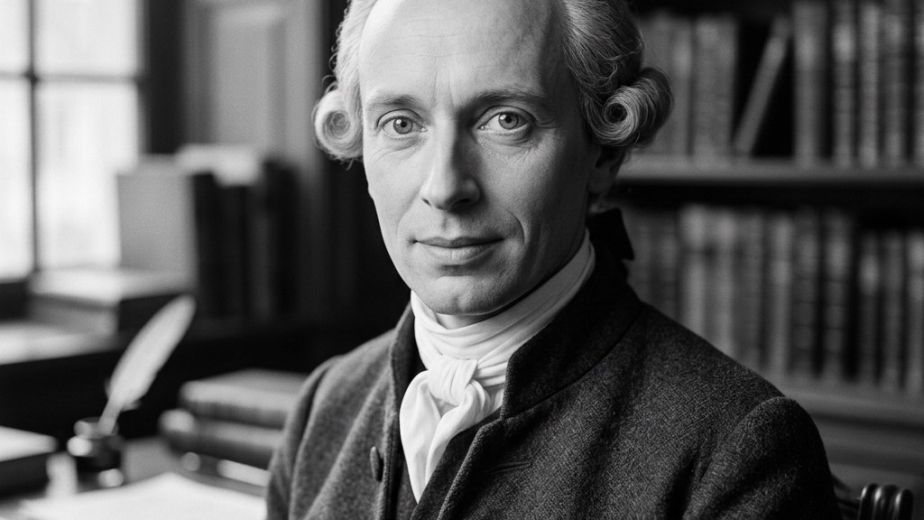
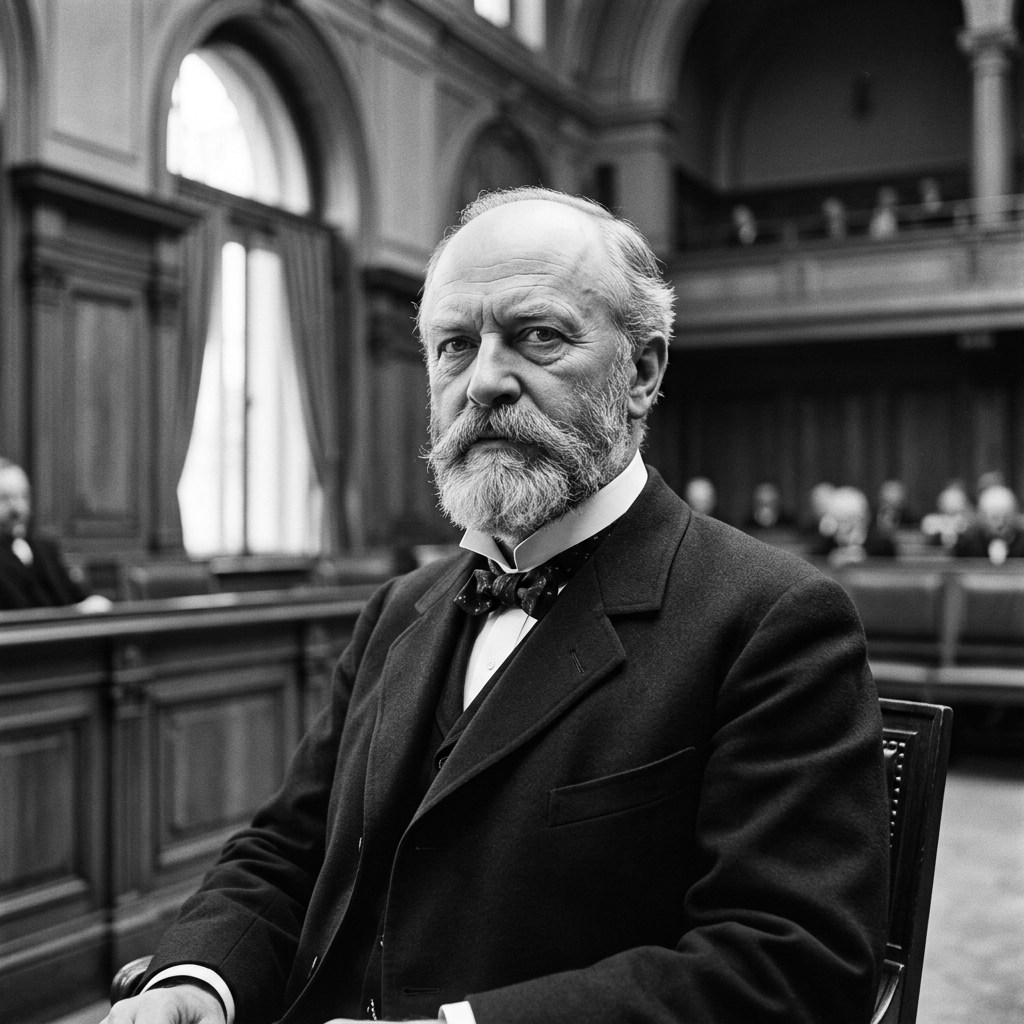
Featured image: Eugen Richter (AI illustration)