
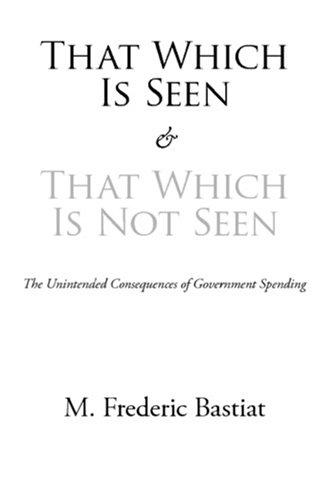
That Which Is Seen and That Which Is Not Seen
The Unintended Consequences of Government Spending
The short classic on the unseen consequences of government intervention: read in an hour, useful for a lifetime.
- Level
- Beginner
- Published
- 1852
- Publisher
- Waking Lion Press
- ISBN
- 9781600960567
What it is about
Frédéric Bastiat, the nineteenth-century French economist and writer, produced with this short essay one of the most influential texts of liberal economic thought. Its central idea can be summed up in one sentence: every economic act has visible and invisible consequences, and anyone who considers only the visible ones understands nothing.
Bastiat develops his analysis with the famous example of the broken shop window. A broken window seems to create work for the glazier and thus to benefit the economy. What gets overlooked is that the money spent on the repair is no longer available for something else that would otherwise have been made. The damage is real; the supposed benefit is an illusion. This error, known as the “glazier’s fallacy,” still turns up in countless debates on economic policy today.
Bastiat applies this principle to a whole range of topics: government subsidies, tariffs, public works programs, taxes. Again and again he shows how political measures are justified by what is seen, while what is not seen, namely what people would otherwise have done with their liberty and their money, drops out of view.
The text is short, clear, and free of jargon. It works as a first introduction to economic thinking as well as a refresher for anyone who wants to sharpen their arguments. Once you have read Bastiat, you see debates on economic policy with different eyes.
Did you enjoy the book? The author and publisher will appreciate a short review, for example with the retailer you bought it from.
More about the author: Frédéric Bastiat: What Is Seen and What Is Not Seen