
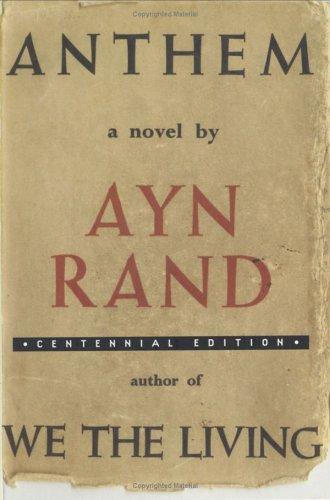
Anthem
In a world without the word “I,” one man fights for his very existence as an individual: Ayn Rand’s uncompromising hymn to the human spirit.
- Level
- Beginner
- Published
- 1938
- Publisher
- Plume
- ISBN
- 0452286352
What it is about
Anthem is set in a distant future in which humanity has fallen back into a new dark age. It was not ignorance that brought it there, but a system that has subordinated the individual entirely to the collective. The word “I” no longer exists; every person refers to himself only as “we.” Technical progress is forbidden or delayed for decades by sluggish councils, and anyone who thinks too much, runs too fast, or shines too brightly stands out, dangerously so.
At the center of the story is Equality 7-2521, a young man who, despite everything, cannot stop asking questions, observing, and inventing. His discoveries inevitably bring him into conflict with a society that understands equality not as a starting condition but as an enforced result. Rand tells this story in spare, almost archaic language that makes the break with the lost world of the self palpable.
The novella is one of Rand’s earlier works and lays out, in concentrated form, ideas she later developed more fully in The Fountainhead and Atlas Shrugged: that creative power, reason, and the right to one’s own life belong inseparably together, and that a society that wipes out the individual is not only unjust but also incapable.
Anthem is a particularly good first step into Rand’s thinking. The story is short, the images are powerful, and the questions it raises stay with you long after the last page: What remains of a human being when he is denied the right to his own judgment? And what becomes possible when he wins it back?
Did you enjoy the book? The author and publisher will appreciate a short review, for example with the retailer you bought it from.