Soon after Jean-Baptiste Say published his textbook of political economy in 1803, the First Consul received him. Napoleon Bonaparte wanted a new edition that would explicitly support his financial policy. Say, then a member of the Tribunate, refused. In 1804 he lost his seat, he turned down an offered post as director of indirect taxes in a département, and the finished second edition of his book could not appear until ten years later, after the emperor’s fall.
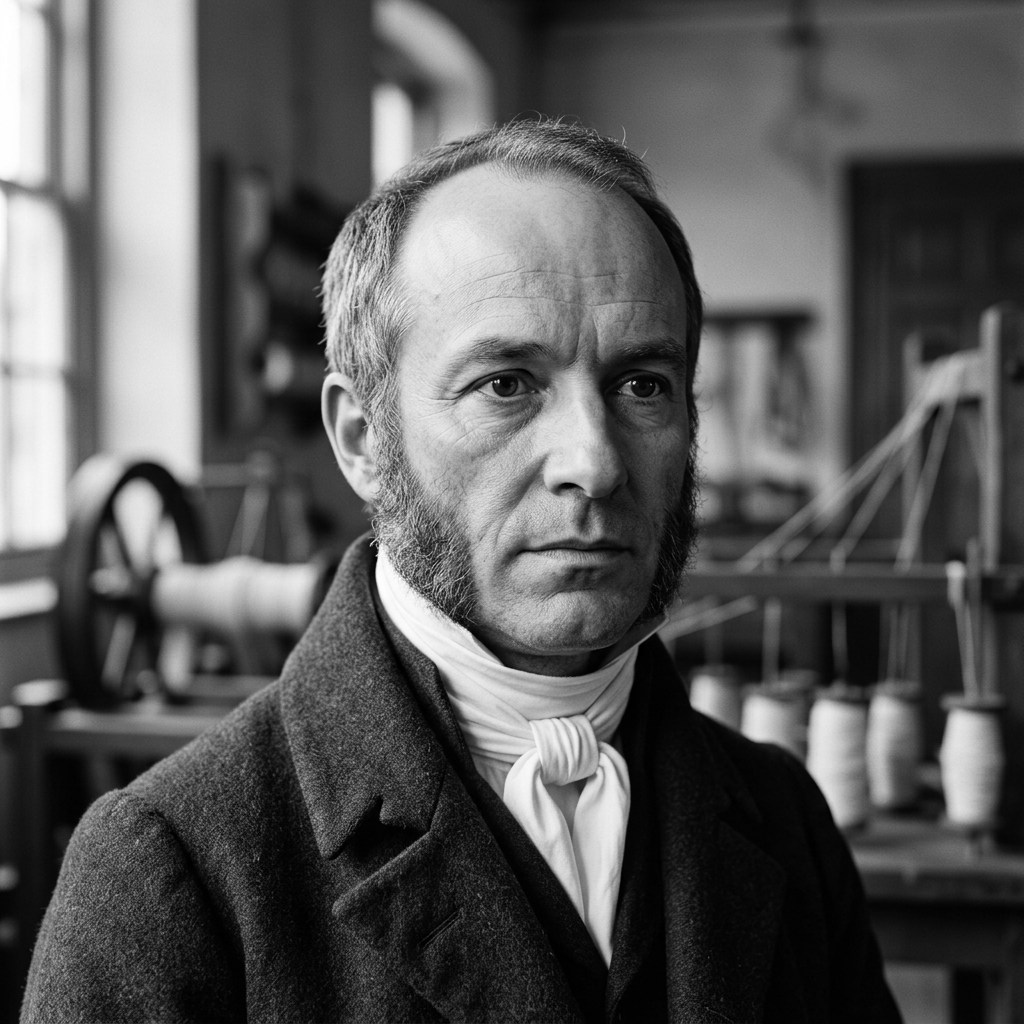
Instead of coming to terms with power, Say went into industry. In a former abbey in northern France he built up a cotton spinning mill that soon employed around four hundred people. The man who gave the entrepreneur a firm place in economics thus knew the entrepreneur’s situation from his own experience.
At a glance
- Life: born January 5, 1767, in Lyon, died November 1832 in Paris
- Work: journalist, member of the Tribunate (1799 to 1804), cotton manufacturer, professor at the Conservatoire des arts et métiers (from 1819) and at the Collège de France (from 1830)
- Major works: Traité d’économie politique (1803), Catéchisme d’économie politique (1815), Lettres à M. Malthus (1820), Cours complet d’économie politique pratique (1828/29)
- In one sentence: He explained prosperity by the utility that people create and by the entrepreneur, who brings together knowledge, capital, and labor.
From the Silk Trade to Science
Say came from a Protestant family whose ancestors had fled to Geneva after the revocation of the Edict of Nantes. His father returned to Lyon and became a merchant in the silk trade there. In 1785 Jean-Baptiste went to England with his brother Horace for about two years to learn commerce and the language. After his return he worked for a life insurance company whose head, Étienne Clavière, lent him a book that was to shape his life: Adam Smith’s The Wealth of Nations.
Say witnessed the Revolution at close range. He wrote for Mirabeau’s newspaper, served as a volunteer in the 1792 campaign in Champagne, and had to watch as the paper money inflation of the revolutionary years destroyed most of the family fortune. From 1794 to 1799 he edited the journal La Décade philosophique. After Bonaparte’s coup in November 1799 he was appointed to the Tribunate, where he sat on the finance section until the conflict over his book ended this career.
After selling his shares in the spinning mill, Say returned to Paris in 1813. The following year the government sent him to England to study the sources of English prosperity, and there he met David Ricardo, James Mill, and Jeremy Bentham. Then began his time as a teacher: first public lectures at the Athénée, in 1819 a professorship of industrial economics at the Conservatoire des arts et métiers, and in 1830 the first chair of political economy at the Collège de France.
Value Comes from Utility
In the very first chapter of his Traité, Say makes a claim that would have spared later economics a great deal of trouble had it followed him. Production, he writes, is the creation of utility, not of matter, and the utility of things is the basis of their value. A chair is valuable because one can sit on it, not because a certain amount of labor is embodied in it.
From this Say drew a conclusion with which he openly contradicted his model, Smith. Smith had classified the work of the physician, the musician, or the actor as unproductive because it leaves nothing behind that can be stored. Say called such services “immaterial products”: the physician’s advice is produced and consumed in the same instant, but it provides utility, people pay for it, and therefore the work is productive. Anyone living today in an economy that consists mostly of services will agree with Say here without hesitation.
In his history of economic thought, Murray Rothbard described how much depended on this turning point. While British classical economics, with Ricardo, increasingly explained value by costs, Say founded a tradition in France that started from people’s subjective valuations and at the same time consistently argued for the free market. Authors in the circle of the Mises Institute therefore draw a line from Say to Carl Menger and Ludwig von Mises, who likewise explained value by the valuations of acting individuals.
The Man Who Turns Knowledge into Goods
Say’s second great achievement is the discovery of the entrepreneur as a distinct figure. In every kind of production he distinguishes three activities. The scholar investigates the laws of nature, the entrepreneur, whether farmer, manufacturer, or merchant, applies this knowledge to a useful purpose, and the worker carries out the task under the direction of the other two. For Say, then, the entrepreneur is the one who turns knowledge into a product, and so between knowledge and the finished good stands a person who must decide what is worth the effort.
In the English-speaking world this view became known above all through Peter Drucker. In his book Innovation and Entrepreneurship (1985), Drucker summarized Say’s idea by saying that the entrepreneur shifts economic resources out of areas of lower productivity into areas of higher productivity. The formula is Drucker’s summary and cannot be found word for word in Say’s writings, but it captures the core of his teaching. Prosperity, on this view, arises from the achievement of people who find better uses for existing resources. In the history of ideas, Say thus stands in a line with Richard Cantillon and Turgot, who had paid attention to the entrepreneur before him.
Products Are Paid for with Products
Say is best known for the chapter “Des débouchés” (titled “Of the Demand or Market for Products” in Prinsep’s English translation) in the first book of his Traité. There he writes that a finished product opens, “dès cet instant,” that is, from that very moment, an outlet for other products to the full amount of its value (our translation). Whoever makes and sells something does so in order to buy something else with the proceeds. In Say’s words, money performs only a temporary function in this double exchange.
Remarkable conclusions follow from this simple idea. If some goods find no buyers, Say argued, it is because too little of other goods has been produced; he saw in this a disproportion between particular goods, not a general glut. According to Say, every country has an interest in its neighbors becoming prosperous, because it profits from their wealth, and understood this way, trade between nations is not a zero-sum game. Whoever wants to stimulate the economy, Say held, should encourage production; merely encouraging consumption does nothing for commerce.
The doctrine quickly became well known and was just as quickly attacked. Thomas Robert Malthus attacked it, and Say answered him in 1820 in his Lettres à M. Malthus. More than a hundred years later, John Maynard Keynes in his General Theory (1936) turned it into the proposition that “supply creates its own demand” and declared it obsolete, although this formula does not appear in Say in that form. Thomas Sowell traced the history of the theorem in a study of its own in 1972, and in 1998 Steven Kates argued that Keynes had presented the classical doctrine in a way that did not do justice to its meaning. Say’s own version of the idea, that in the long run one can buy only with what one has produced oneself, is hardly touched by this criticism.
The Best Tax Is the Lightest
How close Say stayed to the practical questions of his time is shown most clearly in his remarks on public finance. In the third book of the Traité there is the sentence that reads in Prinsep’s English translation: “The best scheme of finance is, to spend as little as possible; and the best tax is always the lightest.” Immediately afterward he soberly describes taxation as the taking of a portion of individuals’ property.
He also looked at the colonial policy of his time with the eye of a calculator. Using the example of the Île de France, today’s Mauritius, he showed that the colony had cost France large sums and brought in hardly anything. On slavery, he reported the view of Steuart, Turgot, and Smith that slave labor was more expensive and less productive than free labor, and added that labor can never be respected where a lower caste is forced to perform it. As a manufacturer he had himself experienced how the Continental System hampered his spinning mill, and he considered French policy, with its blockades, licenses, and rising cotton tariffs, hostile to industry.
A Textbook for Two Continents
Say had a gift that many great thinkers lack: he could organize and explain. Smith had spread out his material in a sprawling work rich in examples; Say arranged it clearly into production, distribution, and consumption. During the author’s lifetime the Traité went through several steadily expanded editions and, as Rothbard notes, was translated in every major European country, into German as early as 1807 by Ludwig Heinrich von Jakob.
Its success was especially great in the United States. According to Rothbard, the Treatise was the most widely read economics textbook there until the Civil War and was still being reprinted for colleges in 1880. Thomas Jefferson admired Say, considered his book shorter, clearer, and sounder than Smith’s work, and would have liked to bring him to his University of Virginia as a professor.
For readers without prior knowledge, Say wrote the Catéchisme d’économie politique in 1815, an introduction in questions and answers. The little book shows how much he cared about spreading economic knowledge beyond the circle of specialists. In the next generation this thread was taken up by Frédéric Bastiat, who in Rothbard’s judgment was shaped more strongly by Say than by any other economist.
What Friends of Liberty Can Learn from Say
The first lesson concerns the entrepreneur. An economic theory that knows only given quantities and equilibria cannot explain where new products, processes, and markets come from. Say put the person who turns knowledge into goods and bears the risk for it at the beginning. Anyone who sees today how subsidy programs and industrial policy seek to replace entrepreneurial discovery with planning will find in him a lasting counterargument.
The second lesson concerns demand. Only what has been produced beforehand can be bought, and purchasing power that does not come from one’s own output comes from debt or from newly created money. Say teaches us, when we hear calls for more consumption, to ask first who is to produce the goods that will be bought with it.
The third lesson is a human one. As a tribune and tax director, Say could have had an easy life had he adapted his book to the wishes of the most powerful man in Europe. He preferred to earn his living as a manufacturer and waited ten years until he could publish freely again.
Production Comes First
Jean-Baptiste Say died in Paris in November 1832 and was buried in Père Lachaise Cemetery. He left economics two ideas that are forgotten again and again and must be rediscovered again and again: that value arises from the utility people provide one another, and that at the beginning of all prosperity stands someone who makes something. That he set out both in clear language readable even by laypeople makes his books a good introduction to this day for anyone who wants to understand what a society lives on.
Further reading
- Jean-Baptiste Say: Traité d’économie politique, Paris 1803 (English: A Treatise on Political Economy, freely available at Econlib)
- Jean-Baptiste Say: Catéchisme d’économie politique, Paris 1815
- Thomas Sowell: Say’s Law. An Historical Analysis, Princeton University Press, Princeton 1972
- Murray N. Rothbard: Classical Economics. An Austrian Perspective on the History of Economic Thought, vol. 2, Edward Elgar, Aldershot 1995
This article is part of our series on thinkers, doers, and historical figures of liberty.
Sources
- Say, Jean-Baptiste: Traité d’économie politique, Deterville, Paris 1803; Book I, ch. 15 “Des débouchés” via Wikisource: https://fr.wikisource.org/wiki/Trait%C3%A9_d%E2%80%99%C3%A9conomie_politique/Livre_1/Chapitre_15
- Say, Jean-Baptiste: A Treatise on Political Economy, translated by C. R. Prinsep, ed. Clement C. Biddle, Grigg & Elliot, Philadelphia 1855 (Book I, ch. 1, 6, 13, 15, 19; Book III, ch. 8), https://www.econlib.org/library/Say/sayT.html
- Say, Jean-Baptiste: Catéchisme d’économie politique, Crapelet, Paris 1815.
- Say, Jean-Baptiste: Lettres à M. Malthus, Bossange, Paris 1820.
- Say, Jean-Baptiste: Cours complet d’économie politique pratique, Rapilly, Paris 1828–1829.
- Keynes, John Maynard: The General Theory of Employment, Interest and Money, Macmillan, London 1936, ch. 2, sect. VII.
- Econlib: “Say’s Life (1767–1832),” https://www.econlib.org/library/Say/SayBio.html
- Econlib, Concise Encyclopedia of Economics: Jean-Baptiste Say, https://www.econlib.org/library/Enc/bios/Say.html
- Fondation Napoléon: “SAY Jean-Baptiste (1767-1832), tribun, industriel et économiste lyonnais,” https://www.napoleon.org/histoire-des-2-empires/biographies/say-jean-baptiste-1767-1832-tribun-industriel-et-economiste-lyonnais/
- Rothbard, Murray N.: Classical Economics. An Austrian Perspective on the History of Economic Thought, vol. 2, Edward Elgar, Aldershot 1995; therein “The Influence of Say’s Traité,” https://mises.org/library/influence-says-traite, and ch. 14.1 “The French laissez-faire school,” https://mises.org/online-book/austrian-perspective-history-economic-thought/141-french-laissez-faire-school
- Sowell, Thomas: Say’s Law. An Historical Analysis, Princeton University Press, Princeton 1972.
- Kates, Steven: Say’s Law and the Keynesian Revolution, Edward Elgar, Cheltenham 1998, https://www.e-elgar.com/shop/say-s-law-and-the-keynesian-revolution
- Drucker, Peter F.: Innovation and Entrepreneurship, Harper & Row, New York 1985.
- Mises Wire: “Was J.B. Say an Austrian Economist?,” https://mises.org/mises-wire/was-jb-say-austrian-economist
- Wikipédia (fr): Jean-Baptiste Say, https://fr.wikipedia.org/wiki/Jean-Baptiste_Say (starting point: family, spinning mill, ESCP, Père-Lachaise)
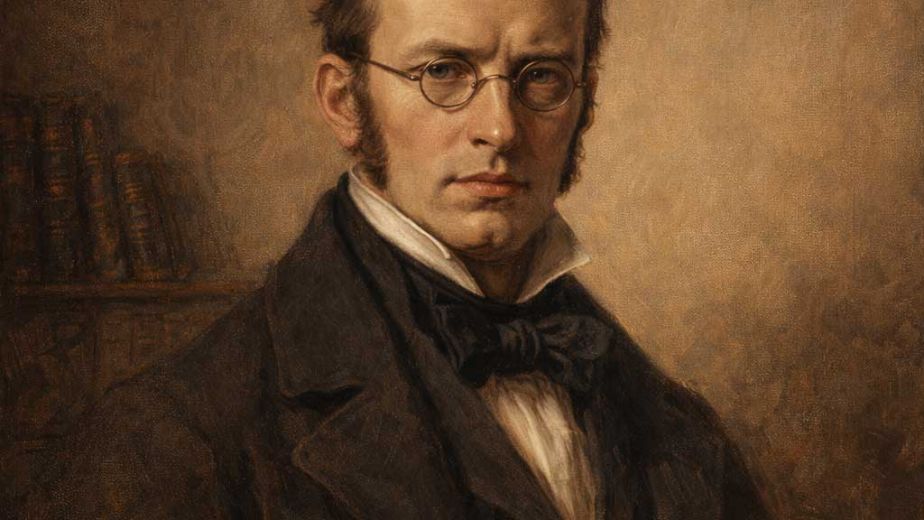
Featured image: Jean-Baptiste Say (AI illustration)