On August 24, 1774, Louis XVI, only a few months on the throne, appointed a longtime provincial official as Controller-General of Finances. That very day, Anne Robert Jacques Turgot wrote the king a letter from Compiègne that opened with three pledges: no state bankruptcy, no tax increase, no new loans. There was only one way to keep all three, he explained. Spending had to be cut below revenue, and far enough that some twenty million livres would be left over each year to pay down the old debts.
A finance minister who advises his master to economize on his very first day is a rarity in any age. Turgot stayed in office for less than two years, but in that time he freed the grain trade, abolished forced labor on the roads, and dissolved the guilds. As a thinker, he had already explained where capital comes from, why interest is justified, and why both sides gain in a voluntary exchange. Economists of the Austrian School see him as one of their earliest forerunners.
At a glance
- Life: Born May 10, 1727, in Paris; died March 18, 1781, in Paris
- Offices: Intendant of the province of Limoges (1761 to 1774), Minister of the Navy (July 1774), Controller-General of Finances (August 1774 to May 1776)
- Major works: Réflexions sur la formation et la distribution des richesses (written 1766, printed 1769/70), Mémoire sur les prêts d’argent (1770), Valeurs et monnaies (unfinished), edict abolishing the guilds (1776)
- In one sentence: He understood the market economy earlier than almost any of his contemporaries and, as a minister, tried to push it through against the privileges of the Ancien Régime.
An abbé who would not wear a mask
Turgot came from an old family of royal officials. His father, Michel Étienne Turgot, was prévôt des marchands, the head of the Paris merchants and thus something like the leader of the capital. The youngest son was meant for the Church; he studied theology at the Sorbonne and in 1749 was elected its prior, an honorary post among the students. On December 11, 1750, he gave a speech there on the successive advances of the human mind, which is still read today as an early philosophy of history built on the idea of progress.
He never became a priest, though. His friend Pierre Samuel Du Pont de Nemours recorded the reason: Turgot did not want to wear a mask for the rest of his life. He moved into the judicial service and in 1753 became maître des requêtes, a post in the royal administration. That same year, he argued for religious toleration in a series of letters.
A formative influence was his acquaintance with Vincent de Gournay, the intendant of commerce, whom he accompanied on inspection tours through the provinces in the mid-1750s. After Gournay’s death, he wrote a eulogy in 1759 summarizing his convictions. He contributed five articles to Diderot’s Encyclopédie, among them one on fairs and markets, and in 1760 he visited Voltaire, who remained his friend and supporter from then on.
Thirteen years in Limoges
In August 1761, Turgot took over the intendancy of Limoges, which included some of the poorest and most heavily taxed regions of France. As the king’s highest representative on the spot, he tried out there what he would later attempt across the whole country. He had a land survey drawn up so that the most important direct tax, the taille, could be assessed more fairly. He replaced the corvée, the unpaid labor the peasants were required to perform on road building, with a money levy on the whole province and contracted the work out to entrepreneurs. Whoever pays money instead of handing over days of his life remains master of his own time, and the building still got done, above all roads and canals for transporting grain.
When famine struck the province in 1770, he set up relief works so that those able to work could earn wages, and he obliged the landowners to help the poor. That same year, in letters to the Controller-General Terray, he made the case for freedom of the grain trade.
Where capital comes from
Turgot wrote his main economic work in 1766: the Réflexions sur la formation et la distribution des richesses, the Reflections on the Formation and Distribution of Wealth, for two young Chinese students who had been educated in Paris. The slim treatise was printed in 1769 and 1770 in Du Pont’s journal Éphémérides du citoyen, years before Adam Smith’s The Wealth of Nations (1776).
In it, Turgot describes how capital comes into being: people do not consume everything they produce, and they invest their savings as advances in tools, raw materials, and wages. Whoever makes such advances organizes production and bears the risk if it fails. Turgot thus sketches the figure of the entrepreneur, which in Murray Rothbard’s judgment the British classical economists neglected. Joseph Schumpeter, in his History of Economic Analysis, called Turgot’s theory of saving and capital the first serious analysis of these questions.
Turgot also explained interest without any moral embarrassment. For him, it follows from the supply of and demand for capital. In his memorandum on lending money of 1770, he grounds it in an observation everyone knows from daily life: a sum one has today is worth more than the promise of the same sum a year from now. Interest makes up for this difference. Economists today call this time preference, and Rothbard saw here the capital and interest theory of Eugen von Böhm-Bawerk almost fully worked out about a century earlier. Legal caps on interest, Turgot argued, cut off precisely the risky ventures from credit.
As early as 1767, in a report for the Agricultural Society of Limoges, he had formulated the law of diminishing returns. Whoever doubles the labor and capital put into the same field does not thereby double the harvest, and beyond a certain point each further input yields less and less, and finally nothing at all.
Why both sides gain from exchange
In the unfinished essay Valeurs et monnaies (Value and Money), Turgot places two people on a desert island. One has more fish than he can eat, the other more hides than he needs. Each gives something he values less for something he values more, and both come out of the trade richer. Neither would trade, Turgot says in substance, if he did not find some advantage of his own in it.
Value, in this picture, is people’s judgment of what things mean for their needs. Rothbard found Turgot’s analysis of exchange between two people almost exactly as Carl Menger, the founder of the Austrian School, would develop it a century later. Schumpeter considered Turgot’s theory of price, apart from the explicit formulation of the marginal principle, nearly faultless and remarked that economics had taken a century to get where it could have arrived in twenty years with him.
Turgot was close to the Physiocrats around François Quesnay, who held the land to be the only source of net product and therefore called for a single tax on land. He shared this doctrine, but his own ideas about capital, interest, and value go far beyond it.
Twenty months against privilege
In the summer of 1774, Louis XVI brought Turgot in, first in July as Minister of the Navy and then in August as head of the finances. As early as September 13, 1774, a decree freed the grain trade within the kingdom, for Turgot was convinced that merchants would bring grain to where it was scarce and therefore expensive, if only they were allowed to. On the budget, he kept his word: in 1775 the deficit shrank and the state’s credit recovered.
After a bad harvest, bread prices rose in the spring of 1775, and in the so-called Flour War crowds stormed markets and bakeries. Turgot had the unrest put down firmly and held on to the freedom of trade, but his opponents now had an argument.
In January 1776, he presented six edicts to the king. The most famous abolished the guilds, which determined who was allowed to practice which trade. The preamble lists whom the guild rules shut out: journeymen without the money for the costly master’s examination, newcomers from other towns, married people and women, who were barred even from doing embroidery on their own account. The edict expressly rejects the view that the right to work is a royal right that the prince may sell. Then comes the sentence that wrote Turgot into the history of liberty: “God, by giving to man wants, and making his recourse to work necessary to supply them, has made the right to work the property of every man; and this property is the first, the most sacred, the most imprescriptible of all.” (Edict of February 1776, in a nineteenth-century English translation)
A second edict abolished the peasants’ forced labor and replaced it with a levy on landowners from which the nobility, too, was not to be exempt. At the urging of the influential minister Maurepas, the clergy was exempted after all. The Parlement of Paris refused to register the edicts, whereupon the king forced them through in a solemn session on March 12, 1776. At court, however, the resistance of the privileged grew, and both Maurepas and Queen Marie Antoinette worked toward his removal. On May 12, 1776, Turgot had to hand in his resignation. In August of the same year, the corvée returned, and in Paris the guilds were reestablished in a modified, reduced form.
Turgot then devoted himself to science and literature, became vice president of the Académie des Inscriptions et Belles-Lettres in 1777, and died in March 1781, eight years before the Revolution began.
What friends of liberty can learn from him
The sentence about the right to work is among the clearest formulations of self-ownership in the 18th century. Anyone who argues today about mandatory master craftsman certificates, occupational licensing, and permits that bar people from entering a trade will find the argument in its purest form in Turgot: permission to provide for oneself is not a gift from the authorities that one has to buy from them.
His fall is just as instructive. The benefits of his reforms were spread across many people who hardly noticed them, while the losses fell on a few who knew exactly what they were losing. Public choice economics described this mechanism two centuries later. Turgot also shows how vulnerable a liberty is that rests solely on a ruler’s goodwill, for the same king who forced his edicts through dropped them again a few months later.
Finally, his letter of August 1774 has lost none of its validity: a state that wants neither bankruptcy nor higher taxes nor new debt has to cut its spending.
A minister who came too early
Turgot understood the market more precisely than most of his contemporaries and had shown in a poor province that his ideas could be put into practice. His theory of capital, interest, and value has outlasted the centuries; his reforms did not last a single summer. Anyone today who fights guild barriers in modern dress, growing public debt, or price controls has it easier than he did, because they no longer have to convince a king but can appeal to the public. Yet Turgot’s open question remains the same: How do you win over the many who benefit from a reform before the few who lose bring it down?
Further reading
- Anne Robert Jacques Turgot: Réflexions sur la formation et la distribution des richesses, first published in: Éphémérides du citoyen, Paris 1769/70
- Peter D. Groenewegen (ed.): The Economics of A. R. J. Turgot, Martinus Nijhoff, The Hague 1977
- Murray N. Rothbard: Economic Thought Before Adam Smith, chapter 14, “The brilliance of Turgot,” Edward Elgar, Aldershot 1995
This article is part of our series on thinkers, doers, and historical figures of liberty.
Sources
- Turgot, Anne Robert Jacques: Tableau philosophique des progrès successifs de l’esprit humain, speech at the Sorbonne, December 11, 1750; English translation: https://www.cooperative-individualism.org/turgot-anne-r-j_on-the-successive-advances-of-the-human-mind-1750-dec-11.pdf
- Turgot, Anne Robert Jacques: Éloge de Vincent de Gournay, 1759.
- Turgot, Anne Robert Jacques: Réflexions sur la formation et la distribution des richesses, written 1766, in: Éphémérides du citoyen, Paris 1769–1770.
- Turgot, Anne Robert Jacques: Observations sur le mémoire de M. de Saint-Péravy, 1767.
- Turgot, Anne Robert Jacques: Valeurs et monnaies, unfinished (c. 1769).
- Turgot, Anne Robert Jacques: Mémoire sur les prêts d’argent, 1770.
- Turgot, Anne Robert Jacques: letter to Louis XVI, Compiègne, August 24, 1774; text: https://www.herodote.net/articles/article.php?ID=1393 and https://www.revolution.chnm.org/d/252
- Édit du Roi portant suppression des jurandes, Versailles, February 1776, registered at the lit de justice of March 12, 1776; text: https://www.coppetinstitute.org/EL/Turgot-Corporations.pdf
- Groenewegen, Peter D. (ed.): The Economics of A. R. J. Turgot, Martinus Nijhoff, The Hague 1977.
- Encyclopaedia Britannica (1911): “Turgot, Anne Robert Jacques,” https://en.wikisource.org/wiki/1911_Encyclop%C3%A6dia_Britannica/Turgot,_Anne_Robert_Jacques
- Vyverberg, Henry: “Turgot, Anne Robert Jacques, Baron de L’Aulne,” in: Encyclopedia of Philosophy, 1967/2005, https://encyclopedia.com/humanities/encyclopedias-almanacs-transcripts-and-maps/turgot-anne-robert-jacques-baron-de-laulne
- Econlib, Concise Encyclopedia of Economics: Anne-Robert-Jacques Turgot, https://www.econlib.org/library/Enc/bios/Turgot.html
- Château de Versailles: Turgot, https://en.chateauversailles.fr/discover/history/great-characters/turgot
- Rothbard, Murray N.: Economic Thought Before Adam Smith. An Austrian Perspective on the History of Economic Thought, vol. 1, Edward Elgar, Aldershot 1995, chap. 14, “The brilliance of Turgot,” https://mises.org/library/brilliance-turgot
- Schumpeter, Joseph A.: History of Economic Analysis, Oxford University Press, New York 1954 (quoted in Rothbard).
- Larousse: “corvée,” https://www.larousse.fr/encyclopedie/divers/corv%C3%A9e/37552
- Kaplan, Steven L.: “La fin des corporations,” Encyclopaedia Universalis, https://www.universalis.fr/encyclopedie/la-fin-des-corporations/
- Wikipedia (fr): Anne Robert Jacques Turgot, https://fr.wikipedia.org/wiki/Anne_Robert_Jacques_Turgot (starting point)
- Wikipedia (en): Edict of Turgot, https://en.wikipedia.org/wiki/Edict_of_Turgot (starting point)
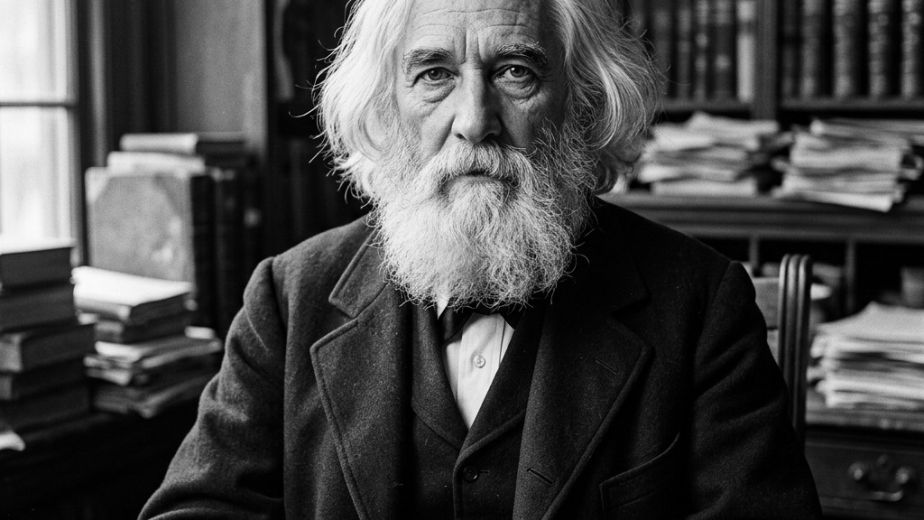
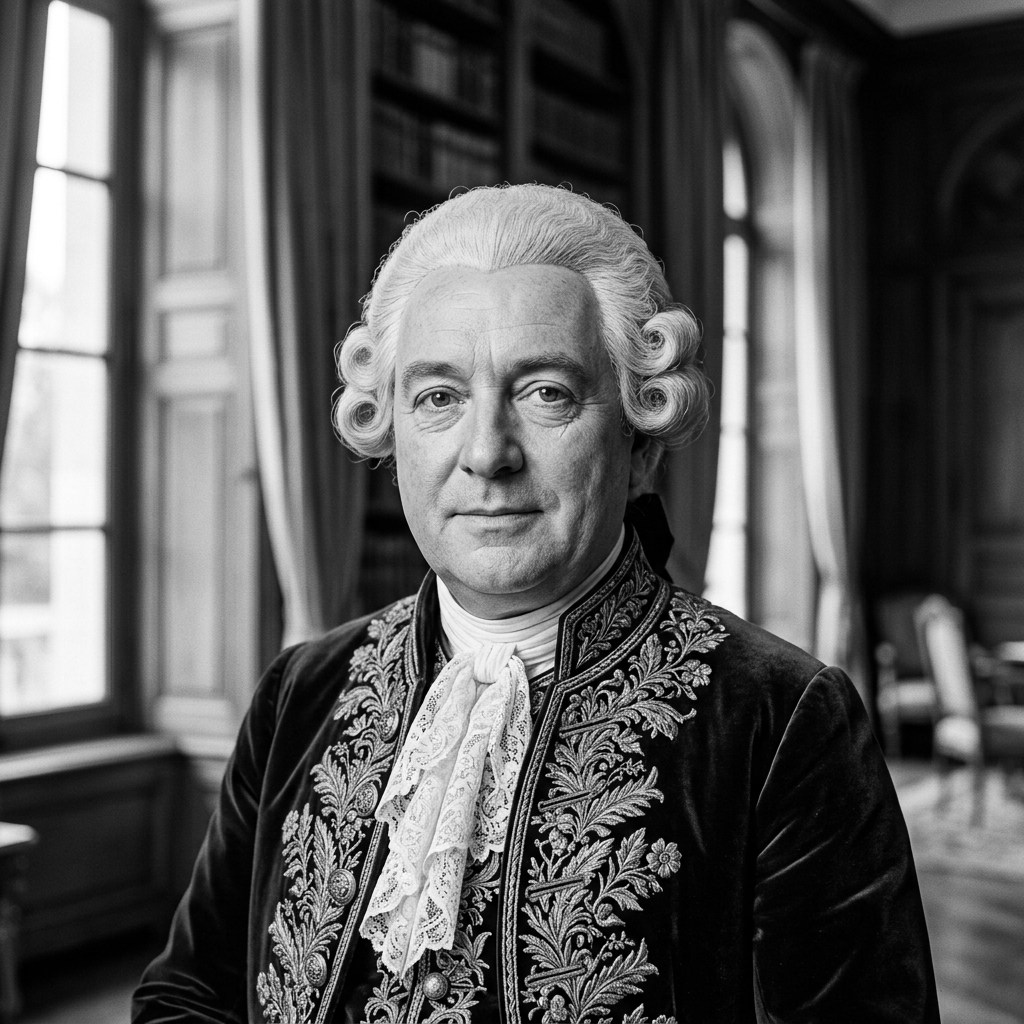
Featured image: Anne Robert Jacques Turgot (AI illustration)