In 1514, a priest on Cuba was preparing his sermon for Pentecost. He was thirty years old, had first come to the New World twelve years earlier, and was one of the winners of the conquest: together with a partner he owned land on the Arimao River and an encomienda, that is, an allotment of Indigenous laborers who were obliged to work for him. While reading, he came upon chapter 34 of the Book of Sirach, which in the Latin version says, in substance, that the bread of the needy is the life of the poor and that whoever withholds it from them is a man of blood. The priest read the passage as a verdict on his own life.
Shortly afterward, Bartolomé de las Casas told the settlers in Sancti Spíritus that he was releasing his Indians and that they were incurring grave guilt by what they were doing to the native people. This began a career that for five decades brought him before cardinals, emperors, and learned commissions. His question always remained the same: by what right does anyone take away people’s liberty and their property?
At a glance
- Life: 1484 in Seville to July 1566 in Madrid
- Work: settler on Hispaniola and Cuba, priest, Protector of the Indians from 1516, Dominican from 1522, Bishop of Chiapas from 1544 to 1550
- Major works: De unico vocationis modo (On the Only Way of Calling, c. 1537), Brevísima relación de la destrucción de las Indias (A Short Account of the Destruction of the Indies, printed 1552), Historia de las Indias (History of the Indies, printed 1875–76), Tratado de las doce dudas (Treatise of the Twelve Doubts, 1563–64)
- In one sentence: He insisted that liberty, property, and self-government belong to all peoples, including those whom an empire had just subjugated.
A winner of the conquest
Las Casas was born in Seville in 1484; the earlier birth year of 1474, still found in some reference works, was refuted by archival discoveries in the 1970s. His father, Pedro, had sailed on Columbus’s second voyage in 1493. The son followed him to Hispaniola in 1502 with the great fleet of Governor Nicolás de Ovando, became a landowner, held slaves, and took part in raids. Along the way, he became a priest.
His conscience did not stir at once. From 1510 on, Dominicans were working in Santo Domingo who refused confession to slaveholders, and Las Casas himself was among those turned away. In December 1511, the Dominican Antonio de Montesinos asked the assembled settlers whether the Indians were not human beings, and by what right they were held in such servitude. Las Casas later recorded this sermon in his Historia de las Indias, but at the time he held on to his possessions. Only when he accompanied the conquest of Cuba as a chaplain in 1513 and witnessed at Caonao how soldiers cut down villagers who had come out to meet them with food did the change of heart begin that led to his renunciation in 1514.
Advice he bitterly regretted
In 1515, Las Casas went to Spain to speak for the Indians at court. Cardinal Cisneros, who served as regent after the death of King Ferdinand, had him appointed Protector of the Indians in 1516. That same year, Las Casas submitted a memorandum with proposals for remedies, and it contains the idea that clings to his name to this day: the settlers should be allowed to import African slaves so that the Indians could be freed from forced labor. He repeated this proposal several times in the following years, as Protector of the Indians and thus with the weight of his office.
What is remarkable is what he later made of it. In the Historia de las Indias, in chapter 129 of the third book, he wrote about himself in the third person: the cleric soon regretted this advice and judged himself guilty of carelessness, for he had come to see that the captivity of Black people was just as unjust as that of the Indians. He was not certain, the passage continues in substance, whether his ignorance and good intentions would excuse him before the judgment of God. In the same work, he included the history of the Portuguese slave hunts on the African coast, down to the distribution of captives in the port of Lagos in 1444. In a 2020 study, Luca Baccelli calls this self-criticism unsparing and dates the turn to the end of the 1540s.
Persuade, do not conquer
An attempt to build a peaceful settlement with Spanish farmers on the coast of Venezuela near Cumaná failed when native people attacked the settlement in early 1522 and burned it down. Las Casas then entered the Dominican order in 1522 and spent years studying and writing. Around 1537 he wrote De unico vocationis modo. Its idea is simple and far-reaching: there is only one rightful way to win people for the faith, namely, to persuade the understanding with reasons and to gently attract and exhort the will. Whoever preaches with weapons commits a mortal sin and must restore what he has taken, goods as well as rights and dominions.
Las Casas wanted to show that this was no armchair idea. On May 2, 1537, he concluded an agreement with the governor of Guatemala, Alonso Maldonado, concerning the territory of Tezulutlán, which the Spaniards called the “Land of War.” Anyone there who was converted by the Dominicans was not to be allotted to any settler as a laborer. The friars taught Indigenous traders songs about the Christian faith and so had the message carried on through the markets. The territory later received the name Verapaz, “true peace,” even though Maldonado broke the agreement as early as 1539 under pressure from the settlers. Back in 1537, Pope Paul III had declared in the bull Sublimis Deus that the Indians were truly human and must not be deprived of their liberty or their property, even though they stood outside the faith.
Laws that got in the way of business
In 1542, Las Casas presented at court the first version of the account that was printed in 1552 as the Brevísima relación. On November 20 of the same year, Emperor Charles V issued the New Laws, which prohibited the enslavement of Indians and provided that the encomiendas should lapse on the death of their holders. This second part did not last long: in October 1545, the Crown withdrew the provisions on the lapsing of the encomiendas.
By then Las Casas was Bishop of Chiapas, in present-day Mexico, consecrated in March 1544. In a pastoral letter and in a set of instructions for confessors, the Confesionario, he directed his priests to refuse absolution to slaveholders and encomenderos as long as they had not returned to the Indians what they had taken from them. In 1548 the Crown had copies of the Confesionario burned. In November 1547, Las Casas was back in Spain, and in 1550 he resigned his bishopric.
Valladolid: Are some people slaves by nature?
In 1550 and 1551, Valladolid saw one of the most memorable disputes of the early modern era. Before a commission of theologians and jurists, the humanist Juan Ginés de Sepúlveda argued that wars against the Indians were just, appealing to Aristotle’s doctrine that some human beings are by nature destined to serve. Las Casas argued against him for five days.
His argument was aimed at the core of the Aristotelian doctrine. He distinguished four meanings of the word “barbarian” and showed that the peoples of the Americas, with their institutions and legal orders, fell under none of those that could have justified their subjugation. In his Apologética historia, he even described the Inca Empire as a model of natural prudence, more just than the Roman Empire. Human beings are born free because they are rational beings, as he put it elsewhere in substance. The commission reached no final verdict, but Sepúlveda’s treatise was denied permission to be printed.
No rule without consent
In his late writings, Las Casas placed the consent of the governed at the center and went further than his king could have liked. The people exist before the ruler and are free by nature, and any transfer or grant of dominion without their consent has no legal effect. The consent of the people weighs more than the papal mandate; without it, the king’s dominion exists only in potential, and that consent must come from the native princes as well as from the people themselves.
In the Tratado de las doce dudas, whose manuscript is dated December 1563, he drew the consequence for Peru. The conquests had been unjust wars, the tributes and encomiendas unjust, and without restitution there could be no salvation, because all the kingdoms of the Indies had been seized. If the King of Castile wished to save his soul, he must support the Inca Titu Cusi as the rightful heir to the empire. In his treatise De thesauris, he also disputed Spain’s right to Atahualpa’s ransom and to the treasures taken from the tombs. Las Casas died in Madrid in July 1566, at the age of 81.
What friends of liberty can learn from him
The first lesson concerns equality before the law. Las Casas refused to distribute rights according to faith, culture, or level of development. The property of non-Christians was as rightful as that of Christians, and so were their dominion and jurisdiction, and he defended this principle against the most powerful empire of his time as well as against the authority of Aristotle.
Just as important is his doctrine of restitution. Whoever has robbed must give back, and no later order turns plunder into rightful property. In The Ethics of Liberty (1982), Murray Rothbard developed a related principle: stolen goods belong to the victim or the victim’s heirs, provided they can be identified, and the thief or his successors in title cannot rely on mere possession. Las Casas arrived at a similar result four centuries earlier, out of the tradition of natural law and the practice of confession.
Then there is his linking of persuasion and consent: for him, a faith spread by force is worth as little as a rule to which no one has consented. Here we hear in advance what John Locke wrote more than a century later about government by consent.
Perhaps the most human lesson lies in his life itself. Las Casas was a beneficiary of the system he denounced, and he gave up his possessions when he recognized the injustice. When he realized that his advice to import African slaves had been wrong, he put that in writing too, without making excuses. In his Letter from Jamaica of 1815, Simón Bolívar called him the philanthropic Bishop of Chiapas and the apostle of America.
On whose bread?
Bartolomé de las Casas defended the liberty of all people early and persistently against a world empire whose scholars contradicted him with Aristotle. Some of what he achieved was soon taken away from him again. What remains is his principle that no one is a slave by nature and that dominion and property are worth only as much as their legitimacy. The verse from Sirach on which he meant to preach in 1514 therefore still poses an uncomfortable question to every order today: on whose bread is one’s own prosperity built?
Further reading
- Bartolomé de las Casas: Kurzgefaßter Bericht von der Verwüstung der Westindischen Länder, ed. Hans Magnus Enzensberger, Insel, Frankfurt am Main 1981 (in German)
- Bartolomé de las Casas: Werkauswahl, ed. Mariano Delgado, Schöningh, Paderborn (several volumes, from 1994) (in German)
- Lewis Hanke: All Mankind Is One, Northern Illinois University Press, DeKalb 1974
- Gustavo Gutiérrez: Gott oder das Gold. Der befreiende Weg des Bartolomé de Las Casas, Herder, Freiburg 1990 (in German)
This article is part of our series on thinkers, doers, and historical figures of liberty.
Sources
- Las Casas, Bartolomé de: Historia de las Indias, ed. the Marqués de la Fuensanta del Valle and José Sancho Rayón, 5 vols., Miguel Ginesta, Madrid 1875–76 (Book III, chs. 3–5: Montesinos’s sermon; Book III, ch. 129: regret over the advice to import African slaves, vol. 5, p. 30), Project Gutenberg: https://www.gutenberg.org/ebooks/53131
- Las Casas, Bartolomé de: Kurzgefaßter Bericht von der Verwüstung der Westindischen Länder, ed. Hans Magnus Enzensberger, Insel, Frankfurt am Main 1981 (in German).
- Las Casas, Bartolomé de: Werkauswahl, ed. Mariano Delgado, Schöningh, Paderborn (several volumes, from 1994) (in German).
- Las Casas, Bartolomé de: Obras completas, ed. Paulino Castañeda Delgado, Alianza Editorial, Madrid 1989 ff. (including De unico vocationis modo, Apologética historia sumaria, the treatises of 1552, Tratado de las doce dudas).
- Paul III: bull Sublimis Deus (1537), English translation: https://www.papalencyclicals.net/paul03/p3subli.htm
- Bolívar, Simón: Carta de Jamaica, Kingston, September 6, 1815, text: https://www.andesacd.org/wp-content/uploads/2015/09/Simón-Bolívar-Cartas-de-Jamaica.pdf
- Rothbard, Murray N.: The Ethics of Liberty, Humanities Press, Atlantic Highlands 1982, ch. 9 (“Property and Criminality”).
- Baccelli, Luca: “La crítica del colonialismo en los orígenes del colonialismo. Bartolomé de las Casas,” in: Soft Power 7,2 (2020), pp. 117 ff., DOI 10.14718/SoftPower.2020.7.2.6, https://editorial.ucatolica.edu.co/index.php/SoftP/article/download/6105/5102
- Encyclopedia of Latin American History and Culture: “Las Casas, Bartolomé de,” https://www.encyclopedia.com/people/history/latin-american-history-biographies/bartolome-de-las-casas
- Hanke, Lewis: All Mankind Is One, Northern Illinois University Press, DeKalb 1974.
- Gutiérrez, Gustavo: Gott oder das Gold. Der befreiende Weg des Bartolomé de Las Casas, Herder, Freiburg 1990 (in German).
- Wikipedia (en): Bartolomé de las Casas, https://en.wikipedia.org/wiki/Bartolom%C3%A9_de_las_Casas (overview, chronology)
- Wikipedia (en): Verapaz, Guatemala, https://en.wikipedia.org/wiki/Verapaz,_Guatemala (Tezulutlán agreement, May 2, 1537)
- John Carter Brown Library: manuscript of Doce dudas, dated December 1563, https://jcb.lunaimaging.com/luna/servlet/detail/JCB~3~3~17290~115917228?page=366
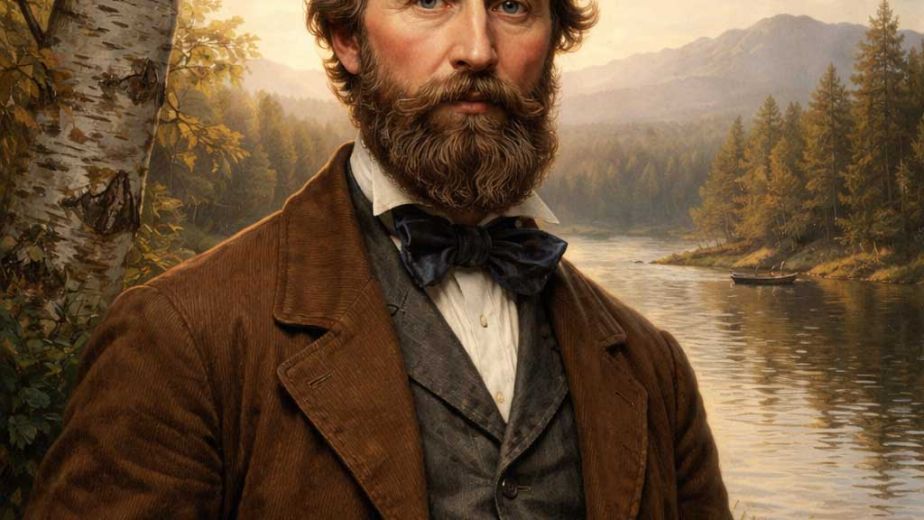
Featured image: Bartolomé de las Casas (AI illustration)