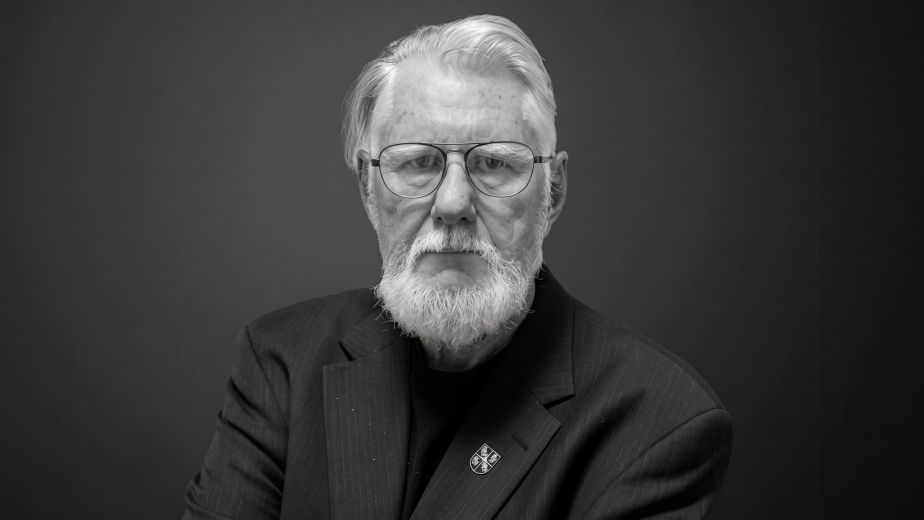
On November 8, 2023, the Bundestag, Germany’s federal parliament, debated the digital euro. Before Joana Cotar was allowed to speak, the presiding vice president asked her not to use the slogan printed on her T-shirt as a nonverbal message. Cotar promised to stick to words and opened her one minute of speaking time with a sentence that was soon quoted by international Bitcoin media as well: “Nobody needs the digital euro: not the banks, not the companies, and certainly not the citizens.” And she went on: “Anyone who wants to pay electronically already does so today. Anyone who wants to protect their privacy uses cash.”
From the benches of the CDU/CSU, Germany’s center-right Union parties, the CSU member Alois Rainer heckled: “Schmarrn,” Bavarian for nonsense. For Cotar it was the core of her political work, because during her years in parliament her thinking kept circling back to the same question: How much may the state know about its citizens, and how much may it dictate to them what they say and how they pay?
At a glance
- Born: April 6, 1973, in Pitești, Romania
- Work: Member of the German Bundestag from 2017 to 2025 (in the parliamentary group of the AfD, the Alternative for Germany party, until November 2022, then without a group), her group’s lead member on the Committee on the Digital Agenda (2017 to 2021)
- Today: Author and speaker, cofounder of Free Speech Aid and of the Javier Milei Institute for Deregulation in Europe, supporter of Team Freiheit
- Initiatives: “Bitcoin im Bundestag” (Bitcoin in the Bundestag, 2023)
- Book: Inside Bundestag. Wie ich in acht Jahren im Zentrum der Macht das Vertrauen in unsere Demokratie verlor (2026, in German)
- In one sentence: She defends free speech and people’s own money against a state that would like to control both.
A Childhood under Surveillance
Joana Cotar was born in 1973 in Pitești, Romania, and came to Germany as a child. She describes briefly what Ceaușescu’s dictatorship meant for her family: her father paid for his resistance to the regime “with years of political imprisonment,” and as a child she experienced “what it means when the state becomes the enemy: bugged, interrogated, persecuted.” This is where her later vigilance toward every form of state surveillance began.
After finishing secondary school (the Abitur) in Friedberg, she studied political science and German studies in Mannheim and graduated in 1999 with a Magistra Artium degree. She then worked as an event manager for major financial institutions in Germany and Switzerland and later went into business for herself as a project manager, focusing on social media.
From the Party Base in Hesse to the Bundestag
In 2013 Cotar joined the newly founded Alternative für Deutschland (Alternative for Germany, AfD). Shortly afterward she became one of the spokespersons of its Hesse state branch, but stepped down in July 2014 after internal disputes. From 2016 she sat on the district council of Giessen.
In the 2017 federal election she entered the Bundestag via the party’s Hesse state list. There she became her group’s lead member (Obfrau) on the Committee on the Digital Agenda, that is, its spokesperson on that committee, and worked on the Study Commission on Artificial Intelligence. She also served on the advisory board of the Stiftung Datenschutz (Data Protection Foundation) and, from 2020, on her party’s federal executive board.
Ahead of the 2021 federal election she ran together with Joachim Wundrak to become the party’s lead candidates, backed by the then party chairman Jörg Meuthen. In the nonbinding member survey, the two lost to the duo of Alice Weidel and Tino Chrupalla by roughly 27 to 71 percent. In 2021 Cotar again entered the Bundestag via the state list.
The Break of 2022
On November 21, 2022, Joana Cotar left the AfD and its parliamentary group. The party had “crossed too many red lines,” she declared, and gave three reasons: the “cozying up to the dictatorial and inhumane regimes in Russia, China, and now Iran as well,” opportunism and constant bullying in the fight for posts and seats, and the building of corrupt networks within the party. The step had not been easy for her “after almost ten years,” especially since she had helped build the party in Hesse. She described her own position this way: “I stood and stand for a constructive, freedom-oriented conservative politics based on the Basic Law,” Germany’s constitution.
She remained without a parliamentary group until the end of the legislative term in March 2025. Without a group, a member gets very little speaking time in parliament, but she used the opportunities that remained, as her minute on the digital euro shows. Looking back, she writes: “I ran with the AfD in 2017, convinced that I could make a difference.” She did not run again in the 2025 federal election.
Against Deletion on Demand
As a digital policy specialist in her former group, Cotar had already fought the Network Enforcement Act (Netzwerkdurchsetzungsgesetz), with which the federal government, starting in October 2017, required large platforms to review and delete reported content quickly. In May 2020, as lead signatory, she introduced a motion calling for the law to be repealed. It states: “The internet as a medium of communication, information, and free expression must not be subject to any restriction or censorship whatsoever beyond the prosecution of criminal offenses.”
Her objection was a matter of principle. The law, she argued, placed the decision about whether a comment is unlawful in the hands of social network operators and thereby privatized law enforcement. Because the terms used to decide on deletion were vague, the motion said, even comments that merely expressed a dissenting political opinion disappeared. The motion’s explanatory statement contains a sentence that goes to the heart of the matter: freedom of opinion protects “even unfounded opinions and even prejudices.”
In March 2022, in another motion, she demanded that the messaging service Telegram be neither blocked nor regulated under the Network Enforcement Act. In it she pointed out that the service’s encryption could be vital for the survival of journalists, dissidents, and whistleblowers in authoritarian countries. To deal with crimes committed by individuals, the state should equip its investigators better instead of placing all users under general suspicion. In the plenary chamber she accused the government of being afraid of its own people.
Cash, Bitcoin, and the Digital Euro
Her second major topic was money. In her speech of November 2023 she warned that digital central bank money could be used to steer behavior, and she sketched what that might look like: a flight that cannot be paid for because a CO2 budget has been used up, a donation to an inconvenient organization that does not go through. As an example showing that such things are technically possible, she pointed to China.
In July 2024, when the Bundestag concluded its deliberations on two motions concerning the digital euro, she followed up: “The digital euro poses considerable risks to financial privacy, to liberty, and to markets.” The European Central Bank’s data protection promises, she said, were “not worth the paper they are written on,” because in the end, as she quoted the ECB itself, legislators were to strike the balance between privacy and other policy goals. In an interview with the industry outlet Cointelegraph, she summed up her stance: “Anyone who is against surveillance and for freedom does not need a digital euro!” There she called herself a convinced libertarian.
As an alternative, she promoted Bitcoin, a money that no central bank issues. In 2023 she launched the initiative “Bitcoin im Bundestag” (Bitcoin in the Bundestag), which was meant to inform members of parliament about the opportunities and risks of the technology, and at the same time made clear: “My initiative is Bitcoin only.” She called for legal certainty for citizens and businesses, protection of privacy, and measured regulation, and suggested that recognizing Bitcoin as legal tender should also be examined. In February 2024 she called Bitcoin “a kind of freedom currency.”
When German authorities sold off seized bitcoin on a large scale in the summer of 2024, she wrote on July 4 to Chancellor Olaf Scholz, Finance Minister Christian Lindner, and Saxony’s Minister-President Michael Kretschmer. Instead of hastily dumping the holdings, she argued, the state should keep them, for example as part of its assets. On her website she quotes Friedrich August von Hayek, to the effect that we will never again have good money as long as it is not taken out of the hands of the state.
A Look behind the Scenes
After her term ended, Cotar wrote down her experiences. Inside Bundestag was published in February 2026 by Westend Verlag. The book describes how parliamentary groups bring their members into line, how votes are decided before the debate begins, and how much a seat costs taxpayers: by her calculation, more than half a million euros a year. At the book launch in Berlin she said: “Not a single member of parliament changes their vote because of a debate in the plenary chamber.”
She does not stop at criticism. Cotar proposes tying members’ salaries to their previous income, limiting terms of office, and allowing voters in federal elections, too, to use cumulative voting and panachage, that is, to pile several votes on one candidate and to vote for candidates from different lists. Particularly notable is her proposal to give laws an expiration date. “So far, someone has to muster the courage to abolish a law,” she said in explaining the idea. With an expiration date, the burden is reversed: then a majority has to be found that wants to extend a law.
Working for Liberty outside Parliament
Today Joana Cotar works as an author and speaker with her own company and, on her website (as of November 2026), describes herself as unaffiliated with any party but connected to Team Freiheit (Team Freedom). The former AfD leader Frauke Petry had founded Team Freiheit in 2025, initially as an association; it now runs in elections as a party. Cotar supported it even before several former politicians of the Free Democratic Party (FDP), Germany’s liberal party, joined in October 2025. She is a member of the Friedrich A. von Hayek Society and of the Bitcoin Bundesverband, a German Bitcoin association, runs her own video channel, and talks about Bitcoin on a podcast.
She is one of the founders of Free Speech Aid, an initiative for the defense of free speech launched in 2024, alongside Josef Franz Lindner, Tom Bohn, and Jakob Schirrmacher, among others. In December 2025, together with others, she founded the Javier Milei Institute for Deregulation in Europe in Dresden. Its chairman is the lawyer Carlos A. Gebauer, and the founding circle also includes Frauke Petry and the economists Philipp Bagus, Barbara Kolm, and Stefan Kooths. Following Argentina’s example, the institute aims to develop concrete proposals for how regulations can be cut back and the state returned to its core functions.
What friends of liberty can learn from her
The first lesson concerns money. In the Bundestag, Cotar persistently pointed out that the question of how we pay is a question of liberty. Cash leaves no trace, whereas digital central bank money can make every payment visible and attach conditions to it. Anyone who stands up for cash and for Bitcoin today is defending a space in which the individual can dispose of their property without asking for permission.
The second lesson concerns speech. Laws that push platforms to delete content are less conspicuous than open bans, but they strike at the same freedom. Cotar’s objection that prosecutors and courts, not private corporations, should decide whether a statement is unlawful deserves a hearing even among those who otherwise have little in common with her.
Finally, her path shows that you can turn your back on a party you helped build when you can no longer support its direction, even at the price of getting by in parliament from then on without a group and with one minute of speaking time.
Free Speech and Money of Your Own
Anyone who experienced as a child how a state eavesdrops on and locks up its citizens listens more closely when there is talk today of deletion obligations and programmable money. From this experience Joana Cotar has gained a stance that runs through her speeches and motions: with every new instrument she asks who might one day use it against whom, and she asks this question before the instrument is introduced. Civil liberties are rarely lost in a single blow, more often piece by piece, and anyone who knows this will be grateful for people who object at the very first piece.
Further reading
- Joana Cotar: Inside Bundestag. Wie ich in acht Jahren im Zentrum der Macht das Vertrauen in unsere Demokratie verlor, Westend Verlag, 2026 (in German)
- German Bundestag: Plenarprotokoll (plenary record) 20/133 of November 8, 2023 (debate on the digital euro, in German)
- German Bundestag: Drucksache (printed paper) 19/18973, motion “Aufhebung statt Novellierung des Netzwerkdurchsetzungsgesetzes” (Repeal Instead of Amendment of the Network Enforcement Act), 2020 (in German)
This article is part of our series on thinkers, doers, and historical figures of liberty.
Sources
- Cotar, Joana: Inside Bundestag. Wie ich in acht Jahren im Zentrum der Macht das Vertrauen in unsere Demokratie verlor, Westend Verlag, 2026 (published February 1, 2026, 224 pp., ISBN 978-3-98791-365-5, in German), https://westendverlag.de/Inside-Bundestag/2426
- German Bundestag: Drucksache 19/18973, motion “Aufhebung statt Novellierung des Netzwerkdurchsetzungsgesetzes” (lead signatory Joana Cotar), May 6, 2020 (in German), https://dserver.bundestag.de/btd/19/189/1918973.pdf
- German Bundestag: Drucksache 20/1029, motion “Meinungsfreiheit schützen, keine Zensur von Telegram” (Protect Freedom of Opinion, No Censorship of Telegram; lead signatory Joana Cotar), March 16, 2022 (in German), https://dserver.bundestag.de/btd/20/010/2001029.pdf
- German Bundestag: Plenarprotokoll 20/133, November 8, 2023, speech by Joana Cotar on the digital euro, p. 16749 (in German), https://dserver.bundestag.de/btp/20/20133.pdf
- German Bundestag: Plenarprotokoll 20/181, July 4, 2024, speech by Joana Cotar on the digital euro, p. 23586 (in German), https://dserver.bundestag.de/btp/20/20181.pdf
- Joana Cotar: Über mich (About me), https://joanacotar.de/ueber-mich/ (in German, accessed November 9, 2026)
- Joana Cotar: website, https://joanacotar.de/ (in German, accessed November 9, 2026)
- German Bundestag: biography of Joana Cotar, 20th legislative term (in German), https://www.bundestag.de/abgeordnete/biografien/C/cotar_joana-857234
- German Bundestag: biography of Joana Cotar, 19th legislative term (web archive, in German), https://www.bundestag.de/webarchiv/abgeordnete/biografien19/C/518922-518922
- t-online/AFP: Bundestagsabgeordnete Joana Cotar tritt aus AfD aus, November 21, 2022 (in German), https://www.t-online.de/nachrichten/deutschland/innenpolitik/id_100083632/bundestagsabgeordnete-joana-cotar-tritt-aus-afd-aus-zu-viele-rote-linien-ueberschritten-.html
- German Bundestag, text archive: debate on Telegram, March 2022 (in German), https://www.bundestag.de/dokumente/textarchiv/2022/kw11-de-telegram-881850
- German Bundestag, text archive: debate on the digital euro, 2023/2024 (in German), https://www.bundestag.de/dokumente/textarchiv/2023/kw45-de-digitaler-euro-973148
- Cointelegraph: German parliament member “staunch opponent” of digital euro, all in on Bitcoin, November 16, 2023, https://cointelegraph.com/news/german-parliament-member-staunch-opponent-of-digital-euro-all-in-on-bitcoin
- Cointelegraph: interview with Joana Cotar, February 19, 2024, https://cointelegraph.com/news/bitcoin-legal-tender-europe-germany-cotar
- Bitcoin Magazine: German Parliament Member Wants To Make Bitcoin Legal Tender, November 16, 2023, https://bitcoinmagazine.com/markets/german-parliament-member-wants-to-make-bitcoin-legal-tender
- Decrypt: German Politician Criticizes the Government’s Bitcoin Sell-Off Strategy, July 5, 2024, https://decrypt.co/238623/german-politician-challenges-governments-bitcoin-sell-off
- Junge Freiheit: report on the AfD member survey on the 2021 lead candidates (in German), https://jungefreiheit.de/?p=266451
- Tichys Einblick: Die AfD ringt um die Spitzenkandidaten (2021, in German), https://www.tichyseinblick.de/?p=543143
- web.de: AfD-Spitzenduo Weidel und Chrupalla (2021, in German), https://web.de/magazine/politik/wahlen/bundestagswahl/bundestagswahl-202-afd-spitzenduo-weidel-chrupalla-wofuer-stehen-35859106
- Tichys Einblick, Fritz Goergen: review of Inside Bundestag, February 15, 2026 (in German), https://www.tichyseinblick.de/feuilleton/buecher/joana-cotar-inside-bundestag/
- Junge Freiheit, Mike Siemens: Insiderin packt über Bundestag aus, July 16, 2026 (in German), https://jungefreiheit.de/politik/deutschland/2026/insiderin-packt-ueber-bundestag-aus-wer-nicht-mitspielt-verschwindet/
- Markt und Mittelstand: Mileis Kettensäge kommt nach Deutschland, December 15, 2025 (in German), https://www.marktundmittelstand.de/politik/mileis-kettensaege-kommt-nach-deutschland
- Berliner Zeitung, guest article by Jakob Schirrmacher on Free Speech Aid, July 22, 2025 (in German), https://www.berliner-zeitung.de/article/redeverbot-im-namen-der-demokratie-free-speech-aid-widersprichtdas-ende-der-debattewenn-demokratie-schweigt-free-speech-aid-setzt-ein-zeichen-2341158
- Berliner Zeitung: Team Freiheit zieht in den Landtag, October 21, 2025 (in German), https://www.berliner-zeitung.de/politik-gesellschaft/team-freiheit-zieht-in-den-landtag-drei-fdp-politiker-wechseln-zur-anti-parteien-partei-li.10001793
- Wikipedia: Joana Cotar, https://de.wikipedia.org/wiki/Joana_Cotar (in German; starting point; state party leadership in 2014 with reference to FAZ, July 21, 2014)
Featured image: Background edited