On May 2, 2010, the finance ministers of the eurozone and the International Monetary Fund agreed on emergency loans of 110 billion euros for Greece. More bailout programs followed, and in the years after, the European Central Bank (ECB) bought government bonds on a large scale.
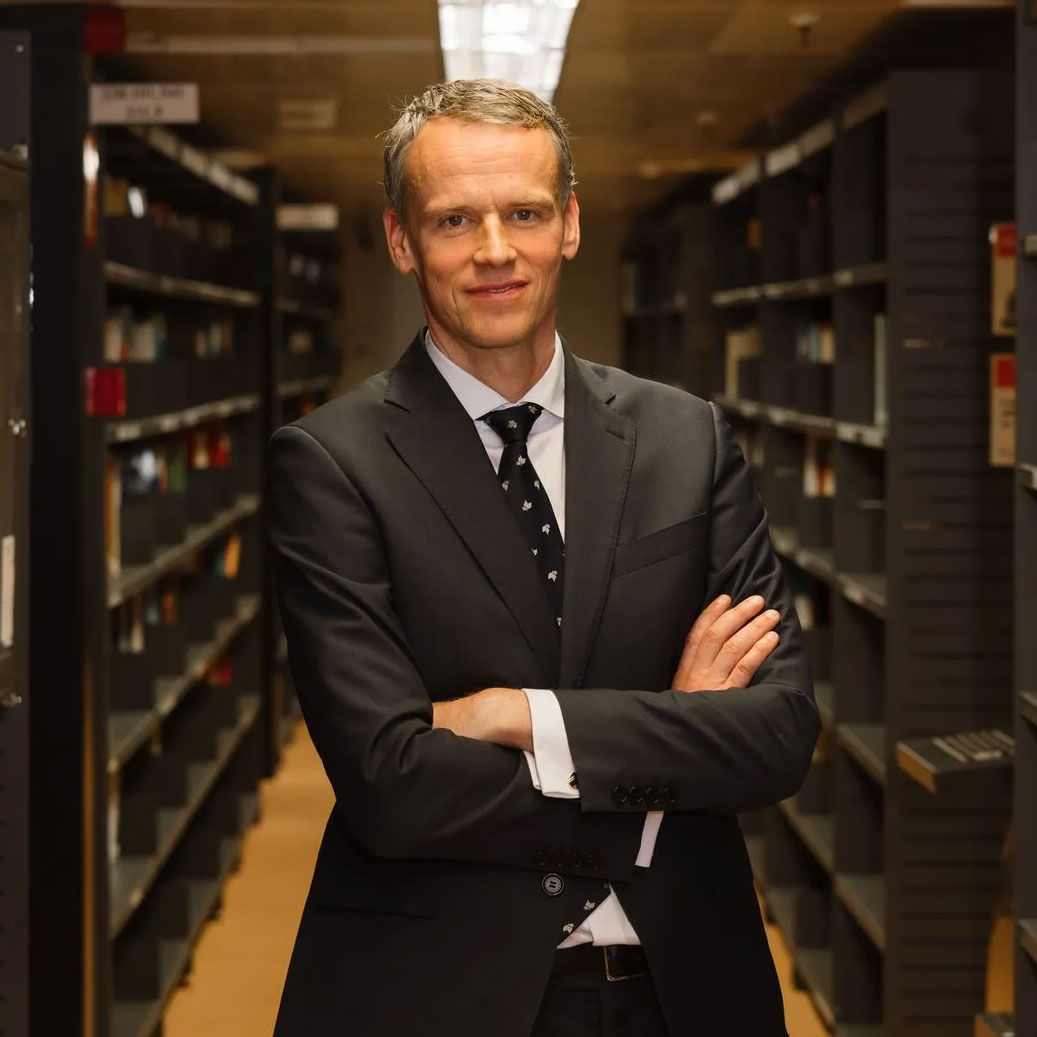
That same year, a young economist from the Münsterland, a rural region in northwestern Germany, who was teaching in Madrid, put forward an explanation that still holds up today. In The Tragedy of the Euro, Philipp Bagus described the monetary union as a common pasture on which everyone seeks his own advantage while all of them together bear the costs. The book has since appeared in fifteen languages, and its author has become one of the best-known voices of the Austrian School of economics in the German-speaking world, the school of thought around Carl Menger, Ludwig von Mises, and Friedrich August von Hayek that explains money, prices, and business cycles in terms of the actions of individuals.
At a glance
- Born: 1980, grew up in the Münsterland region of Germany
- Work: Professor of economics at the Universidad Rey Juan Carlos in Madrid (profesor titular since 2020)
- Network: Fellow of the Ludwig von Mises Institute, member of the academic advisory board of the Ludwig von Mises Institute Germany, member of the Friedrich A. von Hayek Society and the Mont Pèlerin Society
- Awards: Templeton Fellowship (2008), O. P. Alford III Prize in Libertarian Scholarship (2011 and 2017), Ludwig Erhard Prize for Economic Journalism, junior award (Förderpreis, 2016)
- Major works: The Tragedy of the Euro (2010, German edition 2011), Deep Freeze (2011, with David Howden), Warum andere auf Ihre Kosten immer reicher werden (2014, with Andreas Marquart; in English Blind Robbery!), In Defense of Deflation (2015), Wir schaffen das – alleine! (2017, with Andreas Marquart), Die Ära Milei (2024)
- In one sentence: He translates the monetary theory of the Austrian School into a language every saver can understand.
From the Münsterland to Madrid
Bagus earned his Abitur, the German university entrance qualification, at the Kardinal-von-Galen-Gymnasium in Mettingen and studied economics in Münster. An Erasmus exchange year in 2003/2004 took him to the Universidad Rey Juan Carlos in Madrid, where he found his academic mentor: Jesús Huerta de Soto, the best-known representative of the Austrian School in Spain. After completing his diploma degree in Münster in 2006, Bagus earned his doctorate under Huerta de Soto in December 2007 with a dissertation on deflation.
He has taught in Madrid ever since, rising step by step to a full professorship. Visiting professorships and teaching assignments have taken him to Münster, Bayreuth, Prague, and Angers, among other places. Besides scholarly articles, for example in the Quarterly Journal of Austrian Economics, he writes books for a broad audience, two of them together with the financial writer Andreas Marquart. His ability to write with scholarly precision and at the same time in a way anyone can follow explains a good part of his influence.
A Pasture That Belongs to Everyone
Economists speak of the tragedy of the commons when a good belongs to everyone in common and is therefore overused. On a village pasture, each farmer gets the full benefit of his additional cow, but he shares the damage from the overgrazed meadow with everyone else. Bagus applied this image to the monetary union, and it fits remarkably well.
The European Central Bank accepts the government bonds of member states as collateral when it lends money to banks. A government that takes on new debt can thereby have it financed indirectly with newly created money. It alone reaps the benefit, in the form of new spending and satisfied voters. The costs, by contrast, are spread through the loss of purchasing power and through bailout programs across everyone who holds euros. Those who show restraint pay their share anyway, and so debt grows almost inevitably.
The strength of this analysis lies in the incentives it exposes, rather than in predicting a date for failure. Bailout funds, bond purchases, and long years of zero interest rates appear in its light as the logical outcomes of a design in which responsibility and liability come apart. For his writing on the euro rescue policy, using Greece as an example, Bagus received the junior award (Förderpreis) of the Ludwig Erhard Prize for Economic Journalism, given by the Ludwig Erhard Foundation, in Berlin in 2016, an award named after the father of the social market economy.
Who Gets the New Money First
Together with Andreas Marquart, Bagus explained in 2014 in Warum andere auf Ihre Kosten immer reicher werden (Why others keep getting richer at your expense) what the scholarly literature calls the Cantillon effect, after the banker and economist Richard Cantillon, who described it in the eighteenth century. New money does not reach everyone at the same time. Those who receive it first, that is, the state, the banks, and large debtors, still buy at the old prices. Those who receive it last, such as retirees, savers, and employees on fixed wages, already pay the higher prices before their income catches up.
Seen this way, inflation is a silent redistribution that no parliament votes on. How noticeable it can become, many people experienced when inflation in the eurozone rose to 10.6 percent in October 2022. In English, the book appeared under the title Blind Robbery!, and it shows that a seemingly dry subject affects every household.
In Praise of Falling Prices
Mainstream economics regards falling prices as a danger, which is why central banks aim for annual inflation of two percent. Bagus devoted his major scholarly work to this fear. In Defense of Deflation was published by Springer in 2015 and is based on his dissertation. In it he distinguishes different kinds of deflation and shows that the most important of them is good news: when companies become more productive, prices fall, and everyone can afford more for his money. As a historical example, he examines the United States between 1865 and 1896, and buyers of computers and televisions have the same experience to this day.
Falling prices are dangerous above all for those who are heavily indebted, because the real value of their debt rises. That hits states and banks first and foremost. For people who save and shop, on the other hand, a world in which money gains value from year to year is a friendly world.
Small States, Great Possibilities
With Wir schaffen das – alleine! (We can do it, on our own!), a play on Chancellor Angela Merkel’s 2015 refugee-policy line “Wir schaffen das” (“We can do it”), Bagus and Marquart turned in 2017 to a question that goes beyond money. The subtitle sums up the thesis: Warum kleine Staaten einfach besser sind (Why small states are simply better). Small states, the authors argue, have to compete for citizens and businesses, find it easier to keep their bureaucracy in check, and are less inclined to grand claims of power abroad. Where the government is close, it is easier to control, and anyone dissatisfied with it does not have far to go to find an alternative. In this way the two give an old liberal idea a modern economic foundation.
Argentina as the Acid Test
Since December 2023, Argentina has been governed by Javier Milei, a president who openly invokes the Austrian School, and Bagus has followed this path up close. In Die Ära Milei. Argentiniens neuer Weg (The Milei era: Argentina’s new path), published by Langen Müller in 2024, he describes how a political outsider without a party or established structures was able to win the election. He recounts how Milei sharply reduced the number of ministries and why he became a role model above all for young Argentines. Milei himself wrote the foreword, and the entrepreneur Markus Krall wrote the afterword. In Spanish the book appeared as La era Milei, and Milei shared the editions in several languages on social media.
For Bagus, Argentina is a test case of whether the insights of his school can be translated into practical politics. The record of the first year in office supports this confidence: the monthly inflation rate, still at 25.5 percent in December 2023, stood at 2.7 percent in December 2024, and the state closed 2024 with a budget surplus for the first time since 2010. That is how quickly a country can recover when it gets its spending under control and stops the printing press.
What friends of liberty can learn from him
The first lesson is as simple as it is far-reaching: a common purse without clear liability invites plunder. That holds for the village pasture just as it does for a currency, and anyone who wants to understand the eurozone will get further with this one idea than with many a model full of equations.
Just as important is the insight that inflation means redistribution. It takes from savers and gives to those first in line, without anyone having to vote on it. His defense of deflation also implies that falling prices are usually the sign of a productive economy and that the fear of them serves above all those who carry a lot of debt.
Perhaps the most can be learned from his tone. Bagus writes without bitterness, explains how incentives work, and trusts his readers to draw their own conclusions. That is how his books also reach people who would never open a scholarly journal.
Who Owns the Money?
In the end, all of Philipp Bagus’s books lead back to the same question. Money is more than a technical detail for experts in central banks. It is stored-up lifetime, yesterday’s work that is meant to make a house, an education, or a peaceful retirement possible for you tomorrow. Whoever decides on the value of money therefore also decides on the fruits of that work. That this decision so rarely rests with those who earned the money is the starting point of his thinking, and he shows that things can be different with a confidence that is contagious.
Further reading
- Philipp Bagus: Die Tragödie des Euro. Ein System zerstört sich selbst, FinanzBuch Verlag, Munich 2011 (in German); in English: The Tragedy of the Euro, 2010
- Philipp Bagus and Andreas Marquart: Warum andere auf Ihre Kosten immer reicher werden, FinanzBuch Verlag, Munich 2014 (in German); in English: Blind Robbery!
- Philipp Bagus: In Defense of Deflation, Springer, Cham 2015
- Philipp Bagus: Die Ära Milei. Argentiniens neuer Weg, Langen Müller, Munich 2024 (in German)
This article is part of our series on thinkers, doers, and historical figures of liberty.
Sources
- Bagus, Philipp: The Tragedy of the Euro, Terra Libertas / Ludwig von Mises Institute, 2010; German edition: Die Tragödie des Euro. Ein System zerstört sich selbst, FinanzBuch Verlag, Munich 2011.
- Bagus, Philipp; Howden, David: Deep Freeze. Iceland’s Economic Collapse, Ludwig von Mises Institute, Auburn 2011.
- Bagus, Philipp; Marquart, Andreas: Warum andere auf Ihre Kosten immer reicher werden, FinanzBuch Verlag, Munich 2014 (in German; in English: Blind Robbery!).
- Bagus, Philipp: In Defense of Deflation, Springer, Cham 2015.
- Bagus, Philipp; Marquart, Andreas: Wir schaffen das – alleine! Warum kleine Staaten einfach besser sind, FinanzBuch Verlag, Munich 2017 (in German).
- Bagus, Philipp: Die Ära Milei. Argentiniens neuer Weg, with a foreword by Javier Milei and an afterword by Markus Krall, Langen Müller, Munich 2024 (in German).
- Ludwig von Mises Institute: profile of Philipp Bagus, https://mises.org/profile/philipp-bagus
- Ludwig Erhard Foundation: press release on the Ludwig Erhard Prize 2016, https://www.ludwig-erhard.de/wp-content/uploads/2023/10/LEP-2016_PM.pdf (in German)
- Perlentaucher: Die Ära Milei, https://perlentaucher.de/buch/philipp-bagus/die-aera-milei.html (in German)
- Perlentaucher: Wir schaffen das – alleine!, https://perlentaucher.de/buch/philipp-bagus-andreas-marquart/wir-schaffen-das-alleine.html (in German)
- Wikipedia: Philipp Bagus, https://en.wikipedia.org/wiki/Philipp_Bagus (biography, list of works)
- International Monetary Fund / Eurogroup: bailout program for Greece, May 2, 2010
- Eurostat: euro area inflation, October 2022 (10.6 percent)
- INDEC Argentina: consumer price index for December 2023 (25.5 percent) and December 2024 (2.7 percent); 2024 budget result (first surplus since 2010)