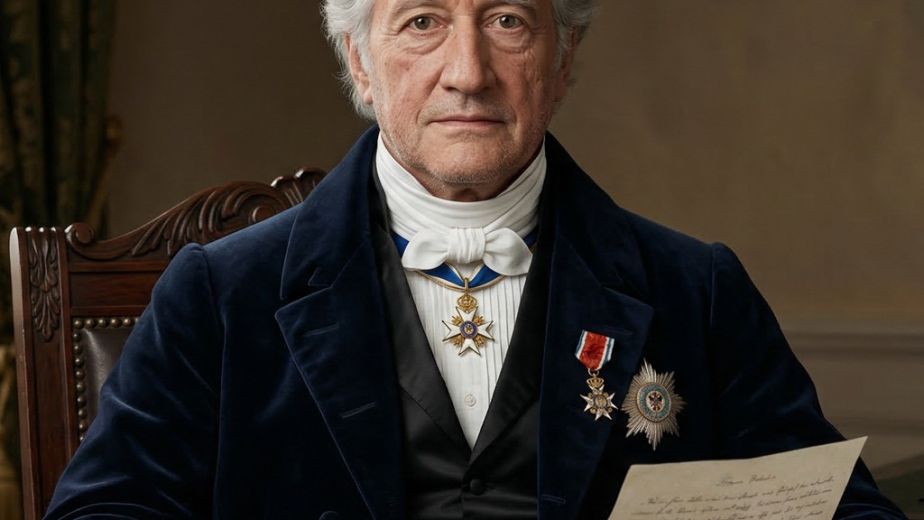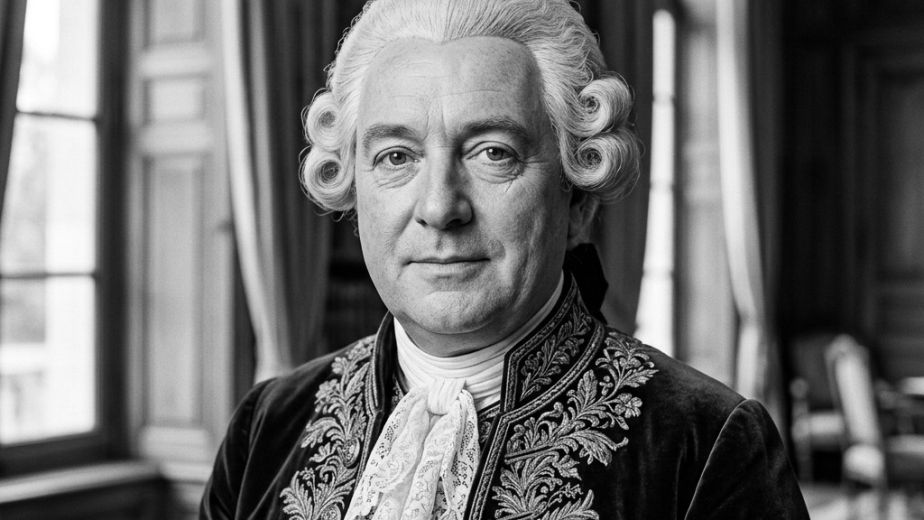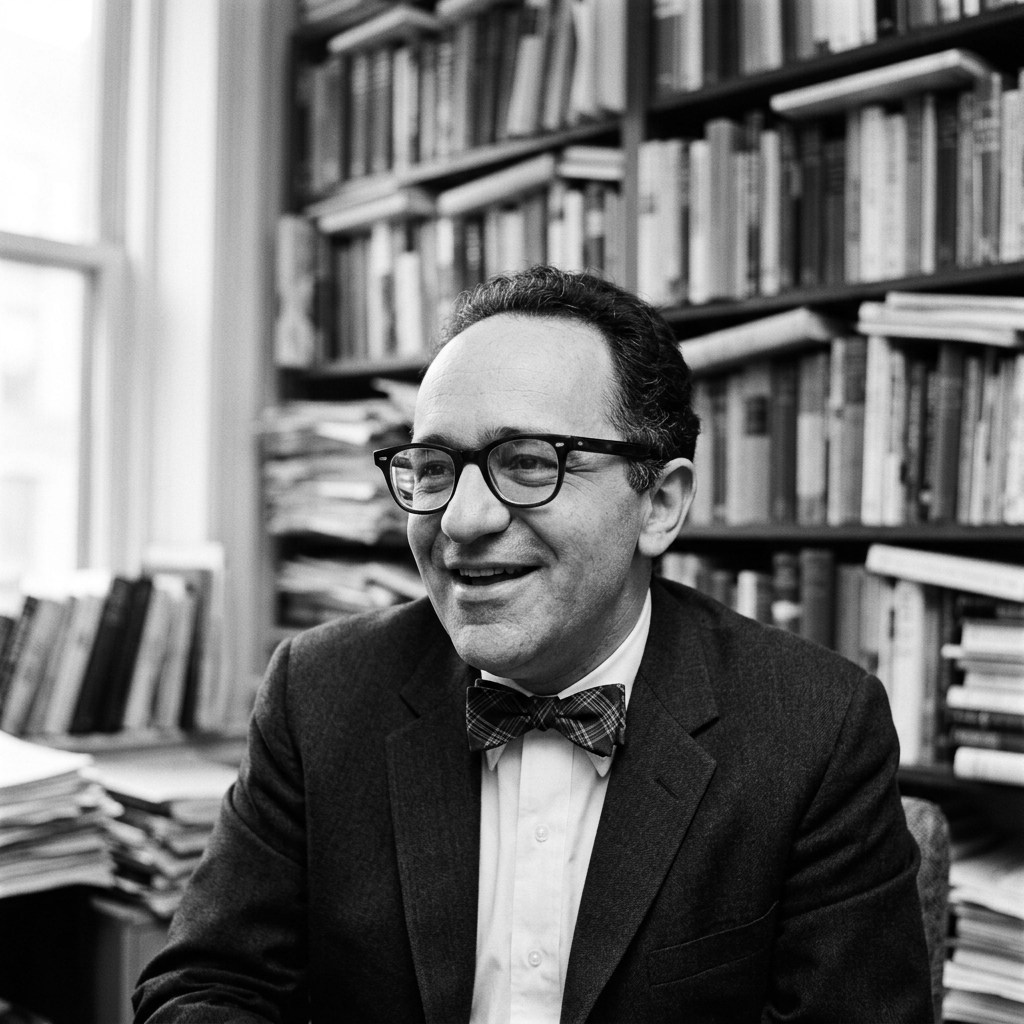
In 1949 a thick book by an émigré economist from Vienna appeared in the United States: Human Action by Ludwig von Mises. That same year, a 23-year-old doctoral student from Columbia University sat in the seminar Mises taught at New York University. His name was Murray Rothbard, and soon afterward he set out to make the work accessible to students in a textbook.
The project grew into a substantial work of his own, and the student became the man widely known in the 1970s as “Mr. Libertarian.” Hardly any other thinker has asked so persistently by what right the state acts, or answered the question so comprehensively: in ethics, in economics, and in history.
At a glance
- Life: March 2, 1926, in New York to January 7, 1995, in Manhattan
- Work: Economist and political philosopher; lecturer at the Polytechnic Institute of Brooklyn, from 1986 S. J. Hall Distinguished Professor of Economics at the University of Nevada, Las Vegas; cofounder of the Cato Institute (1977), Academic Vice-President of the Ludwig von Mises Institute (from 1982)
- Major works: Man, Economy, and State (1962), America’s Great Depression (1963), What Has Government Done to Our Money? (1963), For a New Liberty (1973), Conceived in Liberty (1975–1979), The Ethics of Liberty (1982), An Austrian Perspective on the History of Economic Thought (1995)
- In one sentence: He joined the Austrian School to an ethics of self-ownership and applied both to the state without exception.
A Prodigy from New York
Rothbard was born in New York, the son of Jewish immigrants. At Columbia University he studied mathematics and economics and graduated with honors. Of the Austrian School, the Viennese school of thought around Carl Menger and Ludwig von Mises that explains economic processes in terms of the actions of individual people, he heard nothing there. He found his way to Mises through the Foundation for Economic Education, a pro-liberty educational foundation, and from 1949 on he belonged to the core of the seminar in New York.
He wrote his dissertation on the economic crisis of 1819 under the economic historian Joseph Dorfman. His doctorate was delayed for years because the influential economist Arthur Burns at first refused to accept the dissertation. It was not accepted until 1956, and as a book, The Panic of 1819 is still regarded as the standard work on the subject.
During these years Rothbard made his living from commissions by the William Volker Fund, a foundation that supported pro-liberty scholars. He read new publications in the social sciences for the fund and wrote evaluations of them. In the mid-1950s he and a group of young like-minded people founded a discussion circle, which they named the “Circle Bastiat” after the French economist Frédéric Bastiat. With his wife JoAnn, known as Joey, whom he married in 1953, he hosted a libertarian salon.
A Scholar Who Built Institutions
For a long time a distinguished academic career was denied him. For more than two decades he taught economics at an engineering school in Brooklyn, on a modest salary and to students who wanted to become engineers. Only in 1986 did he receive a chair of his own, in Las Vegas, which he held until his death.
What the universities did not offer him, he created for himself. He founded journals, among them Left and Right (1965–1968), The Libertarian Forum, the Journal of Libertarian Studies (1977), and the Review of Austrian Economics (1987), the forerunner of today’s Quarterly Journal of Austrian Economics. In 1977 he helped build the Cato Institute, and in 1982 Llewellyn H. Rockwell founded the Ludwig von Mises Institute, whose academic head Rothbard remained until his death. He sought allies in the fight against war and state power in shifting camps: in the 1960s in the peace movement of the New Left, later among conservatives of the Old Right.
The Same Morality for Everyone
At the center of his thought is a principle that almost everyone takes for granted in everyday life: no one may use force or threaten force against another person in order to take his person or his property. Libertarians today call this the nonaggression principle. In For a New Liberty (1973) and The Ethics of Liberty (1982), Rothbard developed from it a complete legal order, which he grounded in natural law.
The starting point is each person’s ownership of himself. Whoever owns himself also owns what he makes with his labor out of unowned things, just as John Locke had described for land worked for the first time. All further property arises through exchange, gift, or inheritance. In this view, property is a right that is older than any government and that government therefore may not hand out as it pleases.
The decisive step is to apply this same standard to the state. In his 1965 essay Anatomy of the State, Rothbard describes the state as the organization that claims a monopoly on force in a territory and is the only one that obtains its income through coercion rather than through voluntary contributions or paid services. When an individual demands money under threat of force, we call it extortion. In The Ethics of Liberty, Rothbard drew the well-known conclusion: “Taxation is theft, purely and simply, even though it is theft on a grand and colossal scale which no acknowledged criminals could hope to match.”
Crises, Central Banks, and the People’s Money
As an economist, Rothbard stood firmly in the tradition of Mises. Man, Economy, and State (1962), which grew out of the textbook commission, is a systematic presentation of Austrian economic theory that Mises himself praised in a review. A year later, in America’s Great Depression, Rothbard applied the Austrian theory of the business cycle to the Great Depression. According to this theory, crises arise when central banks and banks expand credit beyond the level of savings and thereby set off investments that later turn out to be mistakes. Rothbard showed how the Federal Reserve had done exactly that in the 1920s, and he described how President Herbert Hoover, with White House conferences, pressure for cheap credit, and public works projects, prevented the necessary liquidation and so turned the downturn into a long depression.
For a broad audience he wrote What Has Government Done to Our Money? (1963), a short work on how money arose from exchange on the market and how governments brought it under their control and debased it step by step. In The Case Against the Fed (1994), he summed up what he had learned about central banks over decades: inflation is caused by the expansion of the money supply, and that expansion comes from the banking system together with the central bank. Ron Paul, the Texas congressman who later carried the call to end the Federal Reserve into American politics, named Rothbard as the economist who had influenced him most.
War and the Court Intellectuals
In the slim essay Anatomy of the State, Rothbard asks how a minority that lives off compulsory levies can hold on to power over time. His answer turns to the intellectuals: because the state needs the consent of the majority, it depends on those who shape opinion, and it rewards them with secure positions, income, and prestige.
According to Rothbard, the state grows even more through war than through scholars. In wartime, he argued, it can invoke defense and emergency to impose burdens that citizens would resist in peacetime, and every modern war has left the nations involved with permanently higher burdens of government. He approvingly quotes the writer Randolph Bourne’s line that war is the health of the state. Consistent with this, Rothbard opposed the wars of his time, and it was precisely this stance that cost him his work for William F. Buckley’s National Review in 1960, whose editor advocated a military anticommunism.
Order Without Rulers
Anyone who considers taxes theft has to explain how law and security could come about without the state. For this Rothbard drew on Gustave de Molinari, a Belgian-French economist who in 1849 had proposed that protection and security, too, be provided by competing suppliers. In his preface to the 1977 English edition, Rothbard credited Molinari’s essay as the first presentation of what is now called anarcho-capitalism. In Power and Market (1970) and For a New Liberty, he himself described how private defense agencies and arbitration courts could take over the tasks that police and courts perform today.
Rothbard was not the first to use the term anarcho-capitalism; the writer Karl Hess used it as early as 1969. But it was Rothbard who made it known, using it for his own position from the early 1970s on. Among the great names of the libertarian movement, in which the writer Brian Doherty counts Mises, Hayek, Milton Friedman, Ayn Rand, and Rothbard, he was the only one who wanted to abolish the state and not merely limit it.
History as the History of Liberty
Rothbard was also a historian. In the four volumes of Conceived in Liberty (1975–1979), he told the history of the American colonies up to the Declaration of Independence as a history of libertarian ideas and of resistance to rule. He left a fifth volume unpublished in manuscript. The historian Patrick Newman edited it, and it was published by the Mises Institute in 2019. In it, Rothbard interprets the American Constitution as the founding charter of a new, centralized government.
His last major work, the two-volume history of economic thought, appeared shortly after his death in 1995. In it he pays tribute to, among others, the Spanish Late Scholastics of the School of Salamanca, who as early as the sixteenth century explained the value of goods by people’s valuations, and he sees in them early forerunners of the Austrian School. Rothbard died of a heart attack in Manhattan on January 7, 1995, at the age of 68.
What friends of liberty can learn from him
Rothbard’s most important lesson is the single standard. What is forbidden to an individual does not become permitted because a government agency does it or a majority votes for it. Anyone who has once taken this idea seriously sees taxes, conscription, and expropriation differently, even if he does not care to follow Rothbard all the way to abolishing the state.
Equally fruitful is his insight that money is a question of power. A government that controls money can burden its citizens through inflation without having to pass new taxes, and it can pay for wars and benefits whose costs become visible only later. Added to this is his view of war as the strongest driver of state power. For Rothbard, liberty at home and peace abroad are therefore inseparable.
Finally, Rothbard showed by example that ideas need places where they are cultivated. Without a chair at a major university, he founded circles, journals, and institutes, some of which still exist today. His student Hans-Hermann Hoppe has said, in essence, that without Rothbard there would be no anarcho-capitalist movement to speak of, and the Mises Institute makes his works freely available online.
By What Right?
Murray Rothbard gave libertarianism a foundation that extends from ethics through economics to history, and he formulated it with a clarity that challenges even those who do not follow him. His books do not require specialized training of the reader, only the willingness to take ordinary morality seriously. In the end, the question remains that he asked all his life: by what right does the state do things that we would hold to be wrong if any other person did them?
Further reading
- Murray N. Rothbard: For a New Liberty. The Libertarian Manifesto, Macmillan, New York 1973
- Murray N. Rothbard: Anatomy of the State, Ludwig von Mises Institute, Auburn 2009 (first published 1965)
- Murray N. Rothbard: The Ethics of Liberty, Humanities Press, Atlantic Highlands 1982
- Justin Raimondo: An Enemy of the State. The Life of Murray N. Rothbard, Prometheus Books, Amherst 2000
This article is part of our series on thinkers, doers, and historical figures of liberty.
Sources
- Rothbard, Murray N.: The Panic of 1819. Reactions and Policies, Columbia University Press, New York 1962.
- Rothbard, Murray N.: Man, Economy, and State, Van Nostrand, Princeton 1962.
- Rothbard, Murray N.: America’s Great Depression, Van Nostrand, Princeton 1963.
- Rothbard, Murray N.: What Has Government Done to Our Money?, 1963 (now published by the Ludwig von Mises Institute).
- Rothbard, Murray N.: “The Anatomy of the State,” in: Rampart Journal of Individualist Thought, Summer 1965; book edition Ludwig von Mises Institute, Auburn 2009, https://cdn.mises.org/Anatomy%20of%20the%20State_3.pdf
- Rothbard, Murray N.: Power and Market, Institute for Humane Studies / Sheed Andrews and McMeel, 1970.
- Rothbard, Murray N.: For a New Liberty. The Libertarian Manifesto, Macmillan, New York 1973.
- Rothbard, Murray N.: Conceived in Liberty, vols. 1–4, Arlington House, New Rochelle 1975–1979; vol. 5 The New Republic: 1784–1791, ed. Patrick Newman, Ludwig von Mises Institute, Auburn 2019.
- Rothbard, Murray N.: Preface (1977) to Gustave de Molinari, The Production of Security, Center for Libertarian Studies, New York 1977, https://praxeology.net/MR-GM-PS.htm
- Rothbard, Murray N.: The Ethics of Liberty, Humanities Press, Atlantic Highlands 1982 (ch. 22, “The Nature of the State”).
- Rothbard, Murray N.: The Case Against the Fed, Ludwig von Mises Institute, Auburn 1994.
- Rothbard, Murray N.: An Austrian Perspective on the History of Economic Thought, 2 vols., Edward Elgar, Aldershot 1995, vol. 1, ch. 4: https://mises.org/online-book/austrian-perspective-history-economic-thought/4-late-spanish-scholastics
- Ludwig von Mises Institute: Profile of Murray N. Rothbard, https://mises.org/profile/murray-n-rothbard
- Ludwig von Mises Institute: “Chronology of the Life and Works of Murray Newton Rothbard,” in: Rothbard vs. the Philosophers, https://mises.org/online-book/rothbard-vs-philosophers/chronology-life-and-works-murray-newton-rothbard-0
- Rockwell, Llewellyn H. Jr.; Woods, Thomas E. Jr.: “Murray N. Rothbard: The Man and His Work,” Mises Daily, October 9, 2014, https://mises.org/mises-daily/murray-n-rothbard-man-and-his-work
- Marcus, B. K.: “Happy Birthday, Mr. Libertarian,” Mises Wire, March 2, 2010, https://mises.org/mises-wire/happy-birthday-mr-libertarian
- Ludwig von Mises Institute: Conceived in Liberty, Vol. 5, https://mises.org/library/conceived-liberty-volume-5-new-republic-1784%E2%80%931791
- Ludwig von Mises Institute: The Essential Rothbard, ch. 7 (on America’s Great Depression), https://mises.org/online-book/essential-rothbard/7-austrian-economic-history
- Mises Daily: “A Rothbardian Analysis of the State” (wording of the taxation quote), https://mises.org/mises-daily/rothbardian-analysis-state
- Mises Daily: “A Clear Conclusion: End the Fed” (Ron Paul on Rothbard), https://mises.org/mises-daily/clear-conclusion-end-fed
- Raimondo, Justin: An Enemy of the State. The Life of Murray N. Rothbard, Prometheus Books, Amherst 2000.
- Wikipedia (en): Murray Rothbard, https://en.wikipedia.org/wiki/Murray_Rothbard (starting point; life dates, Karl Hess 1969, Hoppe)
- The New York Times: obituary, “Murray N. Rothbard, Economist And Free-Market Exponent, 68,” January 1995.
Featured image: Murray Rothbard (AI illustration)