In 2023 the British journal Economic Affairs published a study with a sobering finding for friends of the market economy. Its author had commissioned surveys asking people in 34 countries on five continents what they thought of capitalism. In only six of these countries, led by Poland and the United States, did favorable views prevail. When the word “capitalism” was left out and people were asked about the features of a free economy, approval was markedly higher.
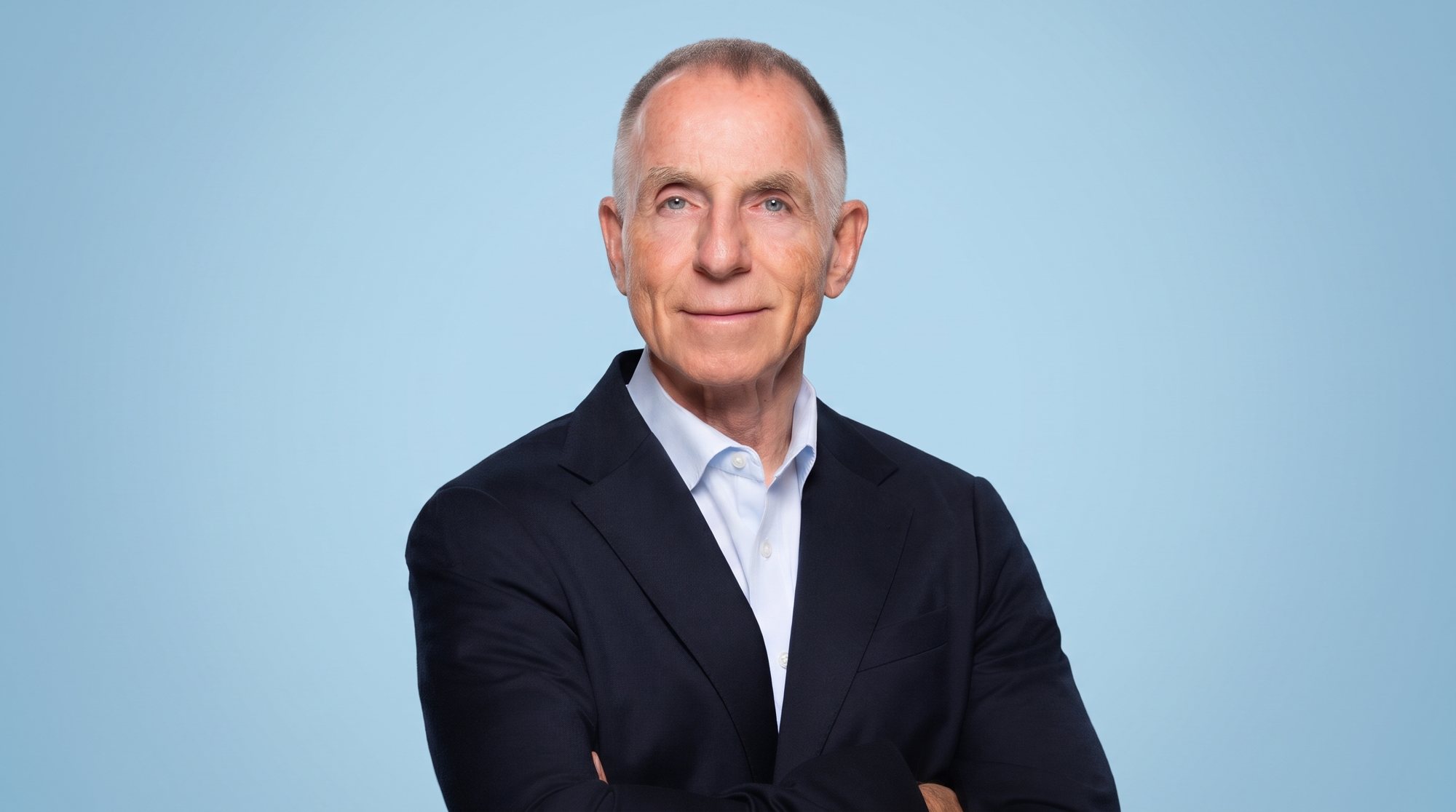
The man behind this study is Rainer Zitelmann, a historian and sociologist with two doctorates, formerly a journalist and later a real estate entrepreneur. For nearly a decade he has been preoccupied with a question he puts succinctly in one of his books: capitalism has few friends in the world, even though no other economic system has produced so much prosperity. He looks for answers in history, in surveys, and on travels through dozens of countries.
At a glance
- Born: June 14, 1957, in Frankfurt am Main
- Work: Historian (doctorate in 1986 at the Technical University of Darmstadt) and sociologist (second doctorate in 2016 at the University of Potsdam), journalist at the daily Welt, founder of the communications consultancy Dr. ZitelmannPB. (2000 to 2016), author and columnist
- Major works: Hitler. Selbstverständnis eines Revolutionärs (1987; in English Hitler’s National Socialism), Psychologie der Superreichen (2017; The Wealth Elite), Kapitalismus ist nicht das Problem, sondern die Lösung (2018; The Power of Capitalism), Die Gesellschaft und ihre Reichen (2019; The Rich in Public Opinion), Der Aufstieg des Drachen und des weißen Adlers (2023; How Nations Escape Poverty), Weltreise eines Kapitalisten (2024)
- Recognition: books translated into 35 languages, according to his own figures; finalist for the Manhattan Institute’s 2025 Hayek Book Prize
- In one sentence: He measures capitalism by its results and the prejudices against it by the facts.
From Maoist to Hitler Scholar
As a schoolboy, by his own account, Zitelmann was a Maoist who founded a “Red Cell” at his school. While studying history and political science at the Technical University of Darmstadt, he began to have doubts about the Marxist theory of fascism, according to which Hitler had essentially been a tool of big business. These doubts became his doctoral dissertation, for which he received his doctorate summa cum laude under Karl Otmar von Aretin in 1986.
Hitler. Selbstverständnis eines Revolutionärs (roughly, “Hitler: A Revolutionary’s Self-Image”) appeared in 1987. Zitelmann’s thesis was that Hitler saw himself as a revolutionary, in social and economic terms as well, and that he deliberately pursued the modernization of German society rather than merely accepting it as a side effect. Hitler rejected the free market as an organizing principle and despised capitalism as “plutocracy,” as the British historian Stephen Davies summarized in his 2022 review of the new English edition.
Scholars received the book with interest. Peter Krüger praised it in the Historische Zeitschrift, Gerhard L. Weinberg and Franciszek Ryszka commended its work with sources, and in 1989 the American Historical Review called it an admirable example of exhaustive research. Leading German dailies such as the Süddeutsche Zeitung, the FAZ (Frankfurter Allgemeine Zeitung), and Welt reviewed it favorably, while Peter Longerich wrote a critical review in the weekly Zeit. In 2017 the work appeared in an expanded new edition, and most recently in English in 2022 as Hitler’s National Socialism. In recent years the book has also been published in Spanish, Portuguese, Italian, Polish, and Russian.
After his doctorate, Zitelmann was a research assistant at the Free University of Berlin from 1987 to 1992. In 1990 he coedited, with Uwe Backes and Eckhard Jesse, the volume Die Schatten der Vergangenheit (The Shadows of the Past), which set out to take up Martin Broszat’s call for a historicization of National Socialism. Critics such as the historian Wolfgang Wippermann accused the editors in 1996 of championing a politics of history.
Contentious Years in Berlin
In 1992 Zitelmann became editor in chief of the publishing houses Ullstein and Propyläen, and a year later he moved to Welt. There editor in chief Claus Jacobi put him in charge of the weekly supplement “Geistige Welt” (roughly, “The World of the Mind”), in which, in Zitelmann’s own words, conservatives were to write on the offensive against the left-wing zeitgeist. The pieces polarized readers. In November 1993 his car was set on fire, and a claim of responsibility from left-wing autonomists was sent to the Berlin daily taz. Fierce disputes broke out in the newsroom, in which, by his own account, he was at times on the losing side. A public statement of solidarity with him was signed by, among others, the contemporary historian Hans-Peter Schwarz and Arnulf Baring. Zitelmann stayed with the paper but moved to the contemporary history desk and later to real estate.
In June 1994 he joined the Free Democratic Party (FDP), Germany’s liberal party, in Berlin-Spandau. Together with former Federal Prosecutor General Alexander von Stahl and others, he worked on the “Berliner Positionen einer Liberalen Erneuerung” (Berlin Positions for a Liberal Renewal), which were meant to strengthen national-liberal positions within the party. The initiative failed. In the spring of 1995, together with the writers Heimo Schwilk and Ulrich Schacht, he was one of the authors of the appeal “May 8, 1945: Against Forgetting,” which opposed interpreting the end of the war solely as liberation and recalled the expulsions and the division of Germany. Richard Herzinger counted the authors among the New Right in the taz, and in 1996 Kornelia Hauser called Zitelmann a leading thinker of the intellectual right.
From 1996 on, alongside his journalism, Zitelmann learned the real estate business, and at Welt he built the first daily real estate page in any German daily newspaper.
Entrepreneur and Wealth Researcher
In 2000 Zitelmann founded Dr. ZitelmannPB. GmbH, which advised real estate companies on their communications, among them international firms such as CBRE and Cordea Savills. He ran it until 2016 and then sold it. He built his fortune through this entrepreneurial work and through investments in real estate, as he openly explains.
That same year he earned a second doctorate at the University of Potsdam, this time in sociology. For his dissertation on the personality and behavior patterns of the wealth elite, he conducted 45 in-depth interviews with very rich people. It appeared in 2017 as Psychologie der Superreichen, in English as The Wealth Elite. Also in 2017 he published his memoirs under the title Wenn du nicht mehr brennst, starte neu! (If You No Longer Burn, Start Over!).
History’s Test Tube
In 2018, with Kapitalismus ist nicht das Problem, sondern die Lösung, Zitelmann found the subject that has not let go of him since. The book is a journey through time across five continents: China from the famine under Mao to its economic miracle, North and South Korea, the two German states, Chile and Venezuela, the reforms of Margaret Thatcher and Ronald Reagan, and the question of how socialist Sweden really is. According to the preface to the fourth edition, it reached number one on the nonfiction bestseller list in South Korea; in English it was published as The Power of Capitalism.
Zitelmann later gave his method a name, speaking of the “test tube theory.” Imagine a glass in which market and state are mixed. Add more market, as China has done since the 1980s, and poverty declines; add more state, as Venezuela has done since 1999, and it grows. To blueprints that exist only in theory he responds with a dry remark: “Socialism always looks good on paper, except when that paper is in a history book.”
He describes what he defends in sober terms. Capitalism rests on private property and competition, entrepreneurs discover new products and markets, and consumers decide success and failure with their purchases. He writes in Die 10 Irrtümer der Antikapitalisten (2022; in English In Defense of Capitalism) that capitalism is in fact an entrepreneurial economy, and that “entrepreneurial economics” would be the most appropriate term for it.
The Envied Minority
In Die Gesellschaft und ihre Reichen (in English The Rich in Public Opinion), Zitelmann applied the tools of prejudice research to a group that had scarcely figured in it. For this study the Allensbach Institute and Ipsos MORI surveyed people in Germany, Great Britain, France, and the United States, in his words the first internationally comparative survey of its kind. He sums up the result this way: in all four countries, people felt that the rich were the group it was least problematic to speak ill of in public.
From such data he developed a social envy coefficient, which he presented for seven countries in Economic Affairs in 2021. By this measure, the French, Spanish, and Germans judge the rich much more critically than Swedes, Americans, and Britons. The survey has since been conducted in 13 countries, and Zitelmann has published these results in Economic Affairs as well. He gives a historical reason why envy is not a harmless feeling: in the 20th century, “capitalists” and “kulaks” were persecuted and murdered because they were well off. In his view, prejudices against the rich therefore deserve the same scholarly attention as other prejudices.
How Nations Escape Poverty
In recent years Zitelmann has turned above all to the question of why some countries stay poor while others manage to rise. Der Aufstieg des Drachen und des weißen Adlers (2023) tells the story of Vietnam and Poland, which around 1990 were among the poorest countries in the world and in Europe, respectively, and which markedly improved their living standards within three decades after market reforms. The English edition, How Nations Escape Poverty, was one of the six finalists for the Manhattan Institute’s Hayek Book Prize in 2025. According to Zitelmann, the way out of poverty leads through growth, and growth requires economic freedom; by his analysis, decades of development aid in Africa have tended to entrench the very conditions they were meant to remedy.
For Weltreise eines Kapitalisten (A Capitalist’s Journey Around the World, 2024), he traveled to some 30 countries on four continents over 20 months and conducted hundreds of interviews. There are also documentaries about Vietnam, Poland, Sweden, and life behind the Berlin Wall, several of which won awards at the Anthem Film Festival. From what he has observed, capitalism has a good reputation above all where people have experienced the rise after the end of the planned economy firsthand, for example in Poland and Vietnam.
What friends of liberty can learn from him
The first lesson concerns how to make the case. Instead of arguing about ideals, Zitelmann compares countries, decades, and living conditions and lets the results speak. In doing so he turns around a common pattern of debate, in which actually existing capitalism is set against an imagined socialism that has never been tried anywhere. Zitelmann describes himself as a radical anti-constructivist. He sees the root evil of socialism in intellectuals designing a perfect society at their desks, but he believes this temptation also exists among some libertarians.
The second lesson is less comfortable. His surveys show that opponents of the market economy are ahead in public opinion in many places, often simply because the word “capitalism” puts people off. Anyone who advocates liberty should therefore know exactly what people think, and for this he provides internationally comparative data of a kind that had scarcely existed for these questions before.
Finally, there is his courage to defend wealth and entrepreneurship openly, without apologizing for them. He acknowledges that he himself is one of the rich, yet he had the empirical work for his studies carried out by academics who, in his words, are by no means rich.
To the Stars
At 69, Zitelmann keeps writing. In the summer of 2026 he published Weltraumkapitalismus (Space Capitalism), in which he shows how private companies are transforming spaceflight, and in the same year Zero Sum Mindset, about the widespread belief that one person’s gain is always another’s loss. His columns appear regularly in London’s City A.M., the French L’Express, and the Italian Linkiesta. He also writes for numerous US outlets such as the Washington Times, the Washington Examiner, and the Wall Street Journal. His path from young Maoist to defender of capitalism led through the archives and the markets, and it ends in a simple test that anyone can carry out: compare how people live where the market is given more room with how they live where the state crowds it out.
Further reading
- Rainer Zitelmann: Kapitalismus ist nicht das Problem, sondern die Lösung. Eine Zeitreise durch fünf Kontinente, FinanzBuch Verlag, Munich 2018 (in German); in English: The Power of Capitalism
- Rainer Zitelmann: Die Gesellschaft und ihre Reichen. Vorurteile über eine beneidete Minderheit, FinanzBuch Verlag, Munich 2019 (in German); in English: The Rich in Public Opinion
- Rainer Zitelmann: Der Aufstieg des Drachen und des weißen Adlers. Wie Nationen der Armut entkommen, FinanzBuch Verlag, Munich 2023 (in German); in English: How Nations Escape Poverty, Encounter Books, New York 2024
- Rainer Zitelmann: Hitler. Selbstverständnis eines Revolutionärs, expanded new edition, Lau Verlag 2017 (in German); in English: Hitler’s National Socialism, Management Books 2000, 2022
This article is part of our series on thinkers, doers, and historical figures of liberty.
Sources
- Zitelmann, Rainer: Hitler. Selbstverständnis eines Revolutionärs, Berg, Hamburg 1987; Klett-Cotta 1989; expanded new edition Lau 2017 (in German); in English Hitler: The Politics of Seduction, Allison & Busby 2000, and Hitler’s National Socialism, Management Books 2000, 2022.
- Backes, Uwe; Jesse, Eckhard; Zitelmann, Rainer (eds.): Die Schatten der Vergangenheit. Impulse zur Historisierung des Nationalsozialismus, Propyläen, Berlin 1990 (in German).
- Zitelmann, Rainer: Psychologie der Superreichen. Das verborgene Wissen der Vermögenselite, FinanzBuch Verlag, Munich 2017 (in German; in English The Wealth Elite, Lid 2018).
- Zitelmann, Rainer: Wenn du nicht mehr brennst, starte neu! Mein Leben als Historiker, Journalist und Investor, FinanzBuch Verlag, Munich 2017 (in German).
- Zitelmann, Rainer: Kapitalismus ist nicht das Problem, sondern die Lösung. Eine Zeitreise durch fünf Kontinente, FinanzBuch Verlag, Munich 2018 (in German; excerpt: https://www.m-vg.de/mediafiles/Leseprobe/9783959720885.pdf).
- Zitelmann, Rainer: Die Gesellschaft und ihre Reichen. Vorurteile über eine beneidete Minderheit, FinanzBuch Verlag, Munich 2019 (imprint 2018; in German; excerpt: https://www.m-vg.de/mediafiles/Leseprobe/9783959721639.pdf).
- Zitelmann, Rainer: “Attitudes to wealth in seven countries: The Social Envy Coefficient and the Rich Sentiment Index,” in: Economic Affairs 41 (2021), no. 2, pp. 211–224.
- Zitelmann, Rainer: Die 10 Irrtümer der Antikapitalisten. Zur Kritik der Kapitalismuskritik, FinanzBuch Verlag, Munich 2022 (in German; excerpt: https://www.m-vg.de/mediafiles/Leseprobe/9783959725460.pdf).
- Zitelmann, Rainer: “Attitudes towards capitalism in 34 countries on five continents,” in: Economic Affairs 43 (2023), no. 3, pp. 353–371, DOI 10.1111/ecaf.12591.
- Zitelmann, Rainer: Der Aufstieg des Drachen und des weißen Adlers. Wie Nationen der Armut entkommen, FinanzBuch Verlag, Munich 2023 (in German); in English How Nations Escape Poverty. Vietnam, Poland, and the Origins of Prosperity, Encounter Books, New York 2024.
- Zitelmann, Rainer: Weltreise eines Kapitalisten. Auf der Suche nach den Ursachen von Armut und Reichtum, FinanzBuch Verlag, Munich 2024 (in German).
- Zitelmann, Rainer: Weltraumkapitalismus, Langen Müller, Munich 2026 (in German); Zero Sum Mindset, Deutscher Wirtschaftsbuchverlag 2026.
- Rainer Zitelmann, official website, https://www.rainer-zitelmann.de/ (accessed November 9, 2026), page for the years 1993–2000: https://www.rainer-zitelmann.de/jahr-1993-2000/ (in German)
- Wikipedia (de): Rainer Zitelmann, https://de.wikipedia.org/wiki/Rainer_Zitelmann (introduction, as of November 9, 2026; in German)
- Wikipedia (en): Rainer Zitelmann, https://en.wikipedia.org/wiki/Rainer_Zitelmann (reception of the dissertation, list of works, films)
- Goergen, Fritz: “Rainer Zitelmann: Vom Roten Banner über Liberales Manifest zum Millionär,” Tichys Einblick, June 18, 2017, https://www.tichyseinblick.de/?p=125261 (in German)
- Seitz, Norbert: “Die ‘What’s right?’-Debatte. Das zaghafte Herantasten an eine zivile Rechte,” in: Aus Politik und Zeitgeschichte 10/1995, https://www.bpb.de/shop/zeitschriften/apuz/archiv/537253/die-what-s-right-debatte-das-zaghafte-herantasten-an-eine-zivile-rechte/ (in German)
- Herzinger, Richard: article on the appeal “May 8, 1945: Against Forgetting,” taz, April 15, 1995, https://taz.de/!1512495/ (in German)
- Davies, Stephen: “Volksgemeinschaft: Hitler as Revolutionary,” Econlib, August 1, 2022, https://www.econlib.org/library/columns/y2022/davieszitelmann.html
- Overview of reviews of the dissertation (selected by the author), https://www.historiker-zitelmann.de/hitler-selbstverstaendnis/ (in German)
- Manhattan Institute: press release on the 2025 Hayek Book Prize, March 28, 2025, https://manhattan.institute/article/manhattan-institute-announces-johan-norberg-as-hayek-book-prize-winner
- Encounter Books: How Nations Escape Poverty, https://www.encounterbooks.com/?p=21474
- Perlentaucher: Weltreise eines Kapitalisten (with a note on Peter Hoeres’s review in the Neue Zürcher Zeitung, July 25, 2024), https://perlentaucher.de/buch/rainer-zitelmann/weltreise-eines-kapitalisten.html (in German)
- RePEc/IDEAS: entry for “Attitudes towards capitalism in 34 countries,” https://ideas.repec.org/a/bla/ecaffa/v43y2023i3p353-371.html
- City A.M.: author profile of Rainer Zitelmann, https://www.cityam.com/profile/rainer-zitelmann/ (accessed November 9, 2026)
- Langen Müller: Weltraumkapitalismus, https://www.langenmueller.de/en/products/weltraumkapitalismus-1
Featured image: Background edited