On April 18, 1638, a young man in London was tied to the back of an oxcart and whipped all the way from the Fleet Prison to Westminster. There he was put in the pillory. Instead of standing still, he spoke to the crowd against the bishops and threw pamphlets by the Puritan physician John Bastwick among the onlookers until he was gagged.
John Lilburne was punished for distributing unlicensed books, but above all for a refusal. Before the Star Chamber, the king’s special court, he had declined to take an oath that would have bound him to answer every question put to him. More than three centuries later, the Supreme Court of the United States cited exactly this case when it laid down the rights of suspects in police interrogation.
At a glance
- Life: born around 1614/15, the son of a landowner from County Durham; died August 29, 1657, in Eltham near London
- Work: apprentice to a cloth merchant, officer in the parliamentary army, pamphleteer, leading spokesman of the Levellers
- Major works: Englands Birth-Right Justified (1645), The Freemans Freedome Vindicated (1646), Englands New Chains Discovered (1649), An Agreement of the Free People of England (1649, with William Walwyn, Thomas Prince, and Richard Overton)
- In one sentence: He insisted that parliaments and revolutionary governments, too, are bound by the rights of the individual, and he spent many years in prison for it.
Apprentice Years in London
Lilburne’s father, Richard, owned a modest estate near Bishop Auckland in the north of England. The son went to London as an apprentice to a cloth merchant, and through his master he came to know Bastwick. Lilburne helped print one of Bastwick’s pamphlets and had to flee to the Netherlands as a result. When he returned in December 1637, he was arrested for having printed and distributed unlicensed books.
During his interrogation he was required to take the so-called ex officio oath. Anyone who swore it had to answer every question put to him on any subject whatsoever, and so might hand the court the very evidence for his own conviction. Lilburne refused. On February 13, 1638, the Star Chamber sentenced him to a fine of 500 pounds, whipping, the pillory, and imprisonment until he submitted. He did not submit and remained in prison for almost three years, at times in irons.
An Advocate Named Cromwell
In November 1640 the Long Parliament assembled. A few days later, on November 9, the member for Cambridge presented the prisoner’s petition in the House of Commons. It was Oliver Cromwell’s first recorded speech in the Long Parliament, and Lilburne was released. On May 4, 1641, the Commons resolved that the Star Chamber’s sentence was “illegal, and against the Liberty of the Subject,” and also bloody, wicked, cruel, barbarous, and tyrannical.
When the Civil War broke out, Lilburne fought on the side of Parliament. He fought at Edgehill, was captured at Brentford in November 1642, and was tried for high treason by the Royalists in Oxford. A prisoner exchange saved him. In 1644 he served at Marston Moor as a lieutenant colonel of dragoons. In April 1645 he left the army because he would not swear to the Solemn League and Covenant, an alliance with Scotland meant to commit England to a Presbyterian church order. To Lilburne, such an oath violated liberty of conscience.
Equal in Dignity by Nature
From then on he fought with the pen, against whichever side he was convinced was doing wrong. The very title of a pamphlet he wrote in Newgate Prison in 1645 says a great deal: Englands Birth-Right Justified against all Arbitrary Usurpation, whether Regall or Parliamentary. The birthright of Englishmen was to be defended against arbitrary usurpation, whether it came from the king or from Parliament. In the same pamphlet he complained that the monopoly of the Merchant Adventurers, a privileged company for the export of cloth, shut him out of the cloth trade. The former apprentice knew from his own experience what a privilege granted by the state means for those who are not part of it.
The following year he clashed with the House of Lords because he had publicly attacked the Earl of Manchester, his former commander. Summoned before the Lords, he refused to answer their questions and did not recognize their jurisdiction over a commoner. From prison, in June 1646, he wrote the postscript to The Freemans Freedome Vindicated. In it he declares that all men are “by nature all equal and alike in power, dignity, authority, and majesty.” Authority over others could therefore arise only “by mutual agreement or consent.”
The Lords fined him 4,000 pounds and sentenced him to seven years in the Tower. Not until August 1648 did they set the sentence aside. But the idea that all power rests on the consent of the governed, and that no office places a person above the common law, shaped his writings from then on.
A Constitution from the Tower
Lilburne’s followers, mockingly called Levellers by their opponents, became a movement in the late 1640s. They gathered signatures for petitions, spread pamphlets, and in the fall of 1647, at the Putney Debates, argued with the army leadership over a draft constitution, the Agreement of the People. After the king’s execution in January 1649, a Council of State and the army governed. In Englands New Chains Discovered, Lilburne called this new chains being fastened on England, and on March 28, 1649, he was arrested along with the other leaders.
From the Tower, on May 1, 1649, Lilburne, Walwyn, Prince, and Overton published the final version of their draft, An Agreement of the Free People of England. For long stretches it reads like a catalog of limits on state power. No law was to compel anyone in matters of faith (Article X), no one was to be pressed into military service (Article XI), and no one was to be punished for refusing to answer questions against himself in criminal cases (Article XVI). Only twelve sworn men of the neighborhood were to convict (Article XXV). Trade overseas was not to be hindered (Article XVIII), excise taxes and customs duties were to be levied only for a limited time, tithes, the payments owed to the church, were to be phased out, and the death penalty was to apply only to murder and crimes of similar gravity.
Article XXX is remarkable. The future representative body was expressly to have no power to “level mens Estates, destroy Propriety, or make all things Common.” Anyone who associates the word Leveller with redistribution will find the opposite here. The vote was to belong to all men aged 21 and over, except servants, recipients of alms, and Royalists who had fought against Parliament. For the seventeenth century, that was an unusually wide circle.
While the four sat in the Tower, women from London marched to the House of Commons with a petition for their release. Among the organizers was Lilburne’s wife, Elizabeth. The members sent word, in effect, that they had already answered the women’s husbands and that the women should go home and look after their households. The women came back on May 5 with a second petition.
Twelve Jurors Against the Republic
In October 1649 Lilburne stood trial for high treason before a special commission at London’s Guildhall. He conducted his own defense and repeatedly appealed directly to the jurors. They were judges of the law as well as of the facts, he declared, while the judges on the bench were “no more but cyphers to pronounce their verdict.” Judge Jermyn called this doctrine a damnable heresy. The jury acquitted Lilburne on October 26, and the cheering in the hall held up the proceedings for about half an hour. His supporters had a medal struck that bears the names of the jurors and celebrates him as saved “by the power of the Lord and the integrity of his jury.”
He found no peace afterward. Because he had made grave accusations against Sir Arthur Hesilrige in a petition during a dispute over a coal mine belonging to his uncle, Parliament imposed heavy fines and banished him for life by an act of January 30, 1652. After Cromwell dissolved the Rump Parliament in April 1653, Lilburne returned without permission. Once again he stood trial, and once again a jury acquitted him, on August 20, 1653. The government kept him in custody anyway, first in the Tower, then in the Channel Islands, at Mont Orgueil on Jersey, where the governor complained that this prisoner gave him more trouble than ten Royalists. Cromwell offered him his freedom if he would stop working against the government. Lilburne refused and insisted on the course of law.
In October 1655 he was moved to Dover Castle. There he joined the Quakers, and in 1656 he publicly professed their faith in a pamphlet. Eventually he was released on parole, and Cromwell continued to pay him an allowance. On August 29, 1657, John Lilburne died in Eltham while visiting his wife, who was expecting their tenth child.
What friends of liberty can learn from him
Lilburne lives on most clearly in the rights that a suspect holds against the state. In Miranda v. Arizona in 1966, the Supreme Court of the United States wrote that perhaps the critical historical event in the origin and development of the privilege against self-incrimination was the trial of “one John Lilburn, a vocal anti-Stuart Leveller, who was made to take the Star Chamber Oath in 1637.” In Origins of the Fifth Amendment (1968), the legal historian Leonard W. Levy traced how such struggles gave rise to a fundamental right. The warning that people under arrest in the United States hear today thus has a forerunner in a refusal for which Lilburne was whipped in 1638.
Just as instructive is his trust in juries. A government can pass laws, appoint judges, and commission prosecutors, but in the end twelve ordinary citizens must agree. Twice Lilburne saw them refuse, even though the powerful expected otherwise. In his life, the jury appears as the place where society sets a limit on state power.
Finally, his work shows that economic and civil liberty belonged together for him. The apprentice whom a monopoly shut out of the cloth trade and the prisoner who would not swear an oath against himself were both resisting authorities that disposed of the individual without considering themselves bound by the same law. That a draft constitution from his circle sought to enshrine freedom of trade, liberty of conscience, and the protection of property all at once explains why classical liberals and libertarians still like to invoke the Levellers today.
The Man Who Would Not Swear
John Lilburne did not design a system of liberty. He defended it before the Star Chamber, before the House of Lords, twice before the courts of the republic, and through many years of imprisonment, against the king as much as against Parliament and against the man who had once set him free. His significance lies in this incorruptibility: he took no government at its word merely because it appealed to the people or to a good cause, and he demanded the same of every one of them, namely respect for the rights of the individual. The nickname his contemporaries gave him sums it up. A freeborn person owes no one self-incrimination, and no authority stands so high that it need not justify itself before twelve neighbors.
Further reading
- Andrew Sharp (ed.): The English Levellers, Cambridge University Press, Cambridge 1998 (includes Lilburne’s postscript of 1646 and the Agreement of 1649)
- Pauline Gregg: Free-Born John. A Biography of John Lilburne, Harrap, London 1961
- Michael Braddick: The Common Freedom of the People. John Lilburne and the English Revolution, Oxford University Press, Oxford 2018
- Leonard W. Levy: Origins of the Fifth Amendment, Oxford University Press, New York 1968
This article is part of our series on thinkers, doers, and historical figures of liberty.
Sources
- Lilburne, John: Englands Birth-Right Justified against all Arbitrary Usurpation, whether Regall or Parliamentary, London (Larner’s Press) 1645.
- Lilburne, John: The Freemans Freedome Vindicated, London 1646, with postscript from Newgate (June 1646); transcription of the postscript: https://constitution.org/1-History/lev/eng_lev_03.htm
- Lilburne, John, et al.: Englands New Chains Discovered, London 1649.
- Lilburne, John; Walwyn, William; Prince, Thomas; Overton, Richard: An Agreement of the Free People of England, London, May 1, 1649; transcription: https://www.marxists.org/history/england/english-revolution/may-day.htm
- Lilburne, John: The Resurrection of John Lilburne, now a prisoner in Dover Castle, London 1656.
- Sharp, Andrew (ed.): The English Levellers, Cambridge University Press, Cambridge 1998 (edition of sources).
- Supreme Court of the United States: Miranda v. Arizona, 384 U.S. 436 (1966), https://www.law.cornell.edu/supremecourt/text/384/436
- Firth, Charles Harding: “Lilburne, John,” in: Dictionary of National Biography, vol. 33, London 1893, https://en.wikisource.org/wiki/Dictionary_of_National_Biography,_1885-1900/Lilburne,_John
- Sharp, Andrew: “Lilburne, John (1615?–1657),” in: Oxford Dictionary of National Biography, doi:10.1093/ref:odnb/16654 (quoted in Hammersley)
- Hammersley, Rachel: Trial by Jury (blog post on the 1649 trial and the medal), https://www.rachelhammersley.com/new-blog/tag/treason
- BCW Project: John Lilburne, c.1615–1657, https://bcw-project.org.uk/biography/john-lilburne
- Gregg, Pauline: Free-Born John. A Biography of John Lilburne, Harrap, London 1961.
- Braddick, Michael: The Common Freedom of the People. John Lilburne and the English Revolution, Oxford University Press, Oxford 2018.
- Levy, Leonard W.: Origins of the Fifth Amendment. The Right Against Self-Incrimination, Oxford University Press, New York 1968.
- Foxley, Rachel: essay on the Levellers, Milton, and democracy, https://centaur.reading.ac.uk/73021/1/FOXLEY%20Levellers%20Milton%20democracy%20amended%20author%20final.pdf
- Modugno, Roberta A.: “The Levellers and Early Libertarian Thought,” Mises Daily, May 27, 2014, https://mises.org/mises-daily/levellers-and-early-libertarian-thought
- Spartacus Educational: Katherine Chidley (women’s petitions of 1649), https://www.spartacus-educational.com/Katherine_Chidley.htm
- Wikipedia: John Lilburne, https://en.wikipedia.org/wiki/John_Lilburne (overview, chronology)
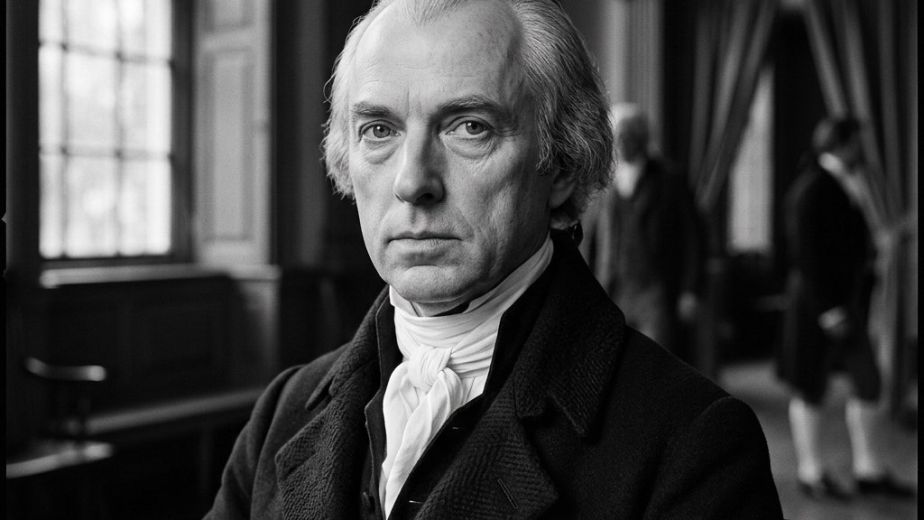
Featured image: John Lilburne (AI illustration)