In 1999 the journal Sociology of Religion published an essay titled “Secularization, R.I.P.” In it the author declared one of the oldest certainties of his field dead: the assumption that religion would disappear on its own as education, prosperity, and science advanced. This thesis, he wrote, had never fit the data. Medieval Europe had not been more devout than Europe today, and the folk religions of Asia were by no means declining with modernization.
The author was Rodney Stark, and by then he had already spent two decades working on a different explanation. According to it, whether people believe depends less on how modern they are than on whether religious communities are free to compete for them. Stark was not a thinker of liberty in the political sense, and he never wrote a theory of the state. But hardly any sociologist of his generation studied so persistently what happens when the state stays out of matters of faith, or searched so resolutely for the medieval roots of European liberty.
At a glance
- Life: born July 8, 1934, in Jamestown, North Dakota; died July 21, 2022, in Woodway, Texas
- Work: newspaper reporter; for 32 years professor of sociology and comparative religion at the University of Washington; from 2004 at Baylor University, finally as Distinguished Professor of the Social Sciences
- Major works: The Churching of America (1992, with Roger Finke), The Rise of Christianity (1996), Acts of Faith (2000, with Roger Finke), For the Glory of God (2003), The Victory of Reason (2005), How the West Won (2014)
- In one sentence: He applied the idea of competition to religion and read the history of Europe as a history of limited power.
From local reporter to scholar of religion
Stark grew up in a Lutheran family in North Dakota, studied journalism at the University of Denver, and worked as a reporter for the Oakland Tribune from 1959 to 1961. There he wrote, among other things, about religious cults and sects. At Berkeley he took up the study of sociology, did research there with Charles Glock on Christian beliefs and anti-Semitism, and received his doctorate in 1971.
Together with John Lofland, he studied in San Francisco in the early 1960s how people come to join a new religious movement. The result shaped the rest of his work: people convert when their ties to members of the group become stronger than their ties to outsiders, and far less because of proselytizing.
Stark taught in Seattle for more than three decades before moving to Baylor University in Texas in 2004, where he co-directed the Institute for Studies of Religion. He wrote more than 30 books and more than 140 scholarly articles, and his work appeared in 18 languages. For a long time he described himself as an agnostic; in 2007 he called himself an “independent Christian.” He described his way of working as that of “a dedicated, even reckless eclectic.”
When churches must compete for their faithful
With William Sims Bainbridge and later with Roger Finke, Stark developed what is now called the economics of religion, or the theory of religious markets. Its starting point is a view of human beings familiar to economists: in matters of faith, too, people weigh costs and benefits, and they do so in relationships with others. Stark once said, in essence, that anyone who assumes people make reasonable choices in religious matters will understand the world much better.
From this follows a claim about the state. Where many communities are free to compete for followers, they have to work for their members. Where a church is privileged and provided for by the state, it lacks this incentive. In The Churching of America, Finke and Stark calculated in 1992 that on the eve of the American Revolution only about 17 percent of Americans belonged to a church, around 1850 about 34 percent, and in 1980 about 62 percent. With the religious freedom of the young republic, a lively competition for the faithful began, in which the old, established churches fell behind new and zealous communities. The authors summed it up in one sentence: the less regulated a religious economy is, the more diversity flourishes.
Adam Smith had already prepared the ground for this idea in The Wealth of Nations. He drew a sharp distinction between clergy who live on the voluntary contributions of their hearers and those provided for by benefices, tithes, or a fixed salary: “Their exertion, their zeal and industry, are likely to be much greater in the former situation than in the latter” (Book V, Chapter 1). In 1991 the economist Laurence Iannaccone explicitly traced this line from Smith to the modern economics of religion. Together with him, Stark in 1994 also explained Europe’s weak church attendance by sluggish organizations in heavily regulated religious markets rather than by a fading of the religious need. Whether diversity actually brings more participation is disputed to this day; the British sociologist Steve Bruce, for example, maintained that industrialization had secularized the West.
How a small movement won the Roman Empire
One of his best-known books applied the model to antiquity. In The Rise of Christianity (1996), Stark asked how a small group of followers of Jesus could become the religion of the Roman Empire within three centuries. His answer did not presuppose mass conversions. A growth rate of about 40 percent per decade, such as the Mormons also achieved in the 20th century, would have been enough to go from roughly a thousand Christians around the year 40 to roughly six million around the year 300.
He looked for the reasons in everyday life. When great epidemics struck the empire in the years 165 and 251, Christians nursed their sick while many pagans abandoned theirs, and so more Christians survived. Because Christians rejected abortion and infanticide, their congregations had more women and more children. His figures are a model calculation whose starting value specialists in early Christianity consider uncertain, but the basic idea, that a faith spreads through networks of friends and relatives, has inspired many researchers.
The Middle Ages as a workshop of liberty
Later, Stark turned to the question of why science, capitalism, and political liberty arose precisely in Europe. In For the Glory of God (2003), he argued that the Christian image of a rational Creator had spurred the exploration of nature. To him, the science of the 16th century appeared as a gradual continuation of medieval theology, not as a break with it. It is remarkable that he dealt with the dark side at the same time: the same image of God, he argued, had driven the European witch-hunts and had also led Christians to condemn slavery as an abomination.
In The Victory of Reason (2005), he took the idea further and contradicted Max Weber, who had derived the spirit of capitalism from the Protestant ethic. Weber, he said, was right that religion shaped the economy, but he had confused places, times, and denominations. The most important institutions of capitalism had existed long before the Reformation: on the great monastic estates, where in the 12th century almost every one of the 742 Cistercian monasteries ran its own workshops, and in the city republics of northern Italy such as Venice, Genoa, and Florence.
For friends of liberty, the second part of the argument is the more important one. According to Stark, capitalism flourished only where rulers could not take the fruits of people’s labor at will. As counterexamples he cited 11th-century China, whose court imposed an iron monopoly and seized the enterprises, as well as the despotisms of Spain and France, to which he devoted a chapter of their own.
This book in particular met with sharp criticism. Even sympathetic reviewers such as Thomas E. Woods and Robert Royal, who welcomed the correction of old prejudices about the Middle Ages, found that Stark overstated his case and let religion explain too much.
Late books against old images
In the last phase of his career, Stark increasingly wrote against widely held views of history. God’s Battalions (2009) defended the Crusades as a response to Muslim expansion, an interpretation that drew much criticism from historians. How the West Won (2014) summed up his thesis that modernity emerged from rational economic orders, political liberties, and scientific knowledge, and denied that Europe had grown rich from its colonies. In Bearing False Witness (2016), he examined ten charges against the Catholic Church, from the “Dark Ages” to the Inquisition, which he considered comparatively mild by the standards of its time.
Stark was a combative man. Colleagues described him as generous and loyal, but some found his confrontational style hurtful. After his death, a researcher at the Pew Research Center said that thousands of articles and books had tried to build on Stark’s bold theses or to challenge them.
What friends of liberty can learn from him
The first lesson concerns the relationship between the state and faith. Anyone who wants religion to stay alive does it no favor with state support. Stark’s data from America and his interpretation of Europe suggest that religious freedom protects not only people of other faiths but also the communities themselves, because it keeps them alert. For readers in Germany, where the state collects the church tax on behalf of the major churches, this is a finding worth pondering.
The second lesson concerns history. Stark reminds us that markets, credit, and urban self-government in Europe are older than the modern state and flourished best where power was divided and property was protected. One need not share his thesis about the role of Christianity on every point to see that.
Finally, his career shows that one can contradict the consensus of a field with numbers. Stark did so loudly and sometimes too loudly, but he forced his opponents to examine their assumptions.
Where liberty took root
Rodney Stark left behind no philosophy of liberty, and anyone who wanted to declare him a libertarian would do him an injustice. His contribution lies elsewhere: he tested with modern data Adam Smith’s old insight that competition makes even clergy diligent, and he told the history of Europe as the history of people who defended their property, their cities, and their faith against the grasp of the powerful. Some of his arcs were stretched too far. Yet the question he left behind remains: how much of Europe’s liberty and prosperity is really owed to the modern state, if both are older than it.
Further reading
- Roger Finke and Rodney Stark: The Churching of America, 1776–2005. Winners and Losers in Our Religious Economy, Rutgers University Press, New Brunswick 2005
- Rodney Stark: The Rise of Christianity, Princeton University Press, Princeton 1996
- Rodney Stark: The Victory of Reason. How Christianity Led to Freedom, Capitalism, and Western Success, Random House, New York 2005
- Adam Smith: The Wealth of Nations, Book V, Chapter 1 (on the pay of the clergy)
This article is part of our series on thinkers, doers, and historical figures of liberty.
Sources
- Stark, Rodney; Glock, Charles Y.: Christian Beliefs and Anti-Semitism, 1966.
- Stark, Rodney; Bainbridge, William Sims: The Future of Religion. Secularization, Revival, and Cult Formation, University of California Press, Berkeley 1985.
- Finke, Roger; Stark, Rodney: The Churching of America, 1776–1990. Winners and Losers in Our Religious Economy, Rutgers University Press, New Brunswick 1992 (expanded: 1776–2005, 2005).
- Stark, Rodney; Iannaccone, Laurence R.: “A Supply-Side Reinterpretation of the ‘Secularization’ of Europe,” in: Journal for the Scientific Study of Religion 33 (3), 1994, pp. 230–252.
- Stark, Rodney: The Rise of Christianity, Princeton University Press, Princeton 1996.
- Stark, Rodney: “Secularization, R.I.P.,” in: Sociology of Religion 60 (3), 1999, pp. 249–273.
- Stark, Rodney; Finke, Roger: Acts of Faith. Explaining the Human Side of Religion, University of California Press, Berkeley 2000.
- Stark, Rodney: For the Glory of God. How Monotheism Led to Reformations, Science, Witch-Hunts, and the End of Slavery, Princeton University Press, Princeton 2003.
- Stark, Rodney: The Victory of Reason. How Christianity Led to Freedom, Capitalism, and Western Success, Random House, New York 2005.
- Stark, Rodney: God’s Battalions. The Case for the Crusades, HarperOne, New York 2009.
- Stark, Rodney: How the West Won. The Neglected Story of the Triumph of Modernity, ISI Books, Wilmington 2014.
- Stark, Rodney: Bearing False Witness. Debunking Centuries of Anti-Catholic History, Templeton Press, West Conshohocken 2016.
- Smith, Adam: An Inquiry into the Nature and Causes of the Wealth of Nations, London 1776, Book V, ch. 1, part III, art. 3; Project Gutenberg no. 3300, https://www.gutenberg.org/cache/epub/3300/pg3300.txt
- Christianity Today: obituary of Rodney Stark, August 2022, https://www.christianitytoday.com/2022/08/obit-rodney-stark-sociology-religion-rational-choice
- University of Washington, Department of Sociology: “Rodney Stark: A Reckless Eclectic Remembered,” August 23, 2022, https://soc.washington.edu/news/2022/08/23/rodney-stark-reckless-eclectic-remembered
- University of Washington Magazine: “UW professor hailed for his ‘masterpiece of historical sociology,’” December 1, 1998, https://magazine.washington.edu/uw-professor-hailed-for-his-masterpiece-of-historical-sociology/
- Wikipedia (en): Rodney Stark, https://en.wikipedia.org/wiki/Rodney_Stark (overview, life dates, list of works)
- Ingersoll, Julie: review of The Churching of America, Acton Institute, Religion & Liberty 4 (6), https://acton.org/pub/religion-liberty/volume-4-number-6/churching-america
- Princeton University Press: For the Glory of God, publisher’s page, https://press.princeton.edu/books/paperback/9780691119502/for-the-glory-of-god
- Penguin Random House: The Victory of Reason, publisher’s page, https://www.penguin.com.au/books/the-victory-of-reason-9781588365002
- Woods, Thomas E. Jr.: review of The Victory of Reason, in: The Independent Review, Spring 2007, https://independent.org/PUBLICATIONS/TIR/article.asp?a=637
- Royal, Robert: review of The Victory of Reason, in: Claremont Review of Books VI (4), Fall 2006, https://claremontreviewofbooks.com/?p=8735
- Wolfe, Alan: “The Reason for Everything,” in: The New Republic, January 16, 2006, https://newrepublic.com/article/65229/the-reason-everything
- Callahan, Gene: review of Bearing False Witness, Russell Kirk Center, https://kirkcenter.org/reviews/nobody-expects-the-spanish-inquisition-to-be-explained-fairly/
- Bruce, Steve: Choice and Religion. A Critique of Rational Choice Theory, Oxford University Press, Oxford 1999.
- Iannaccone, Laurence R.: “The Consequences of Religious Market Regulation: Adam Smith and the Economics of Religion,” in: Rationality and Society 3, 1991.
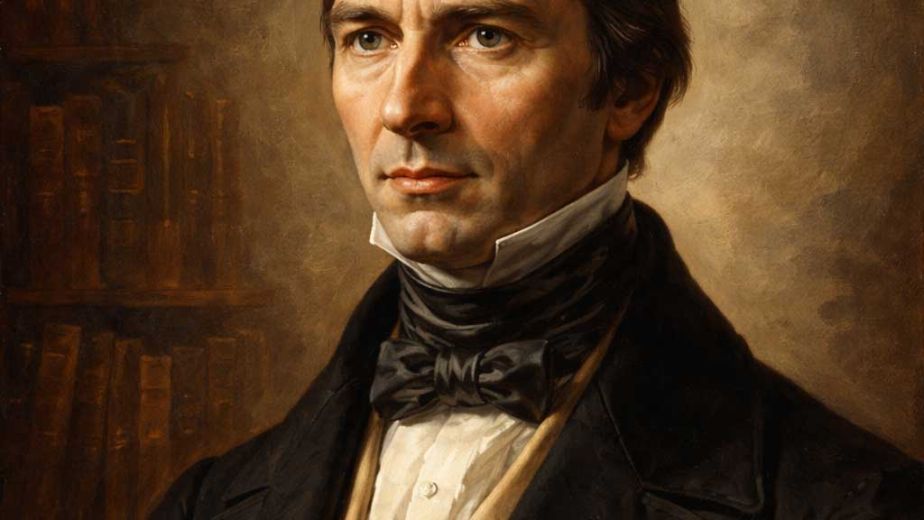
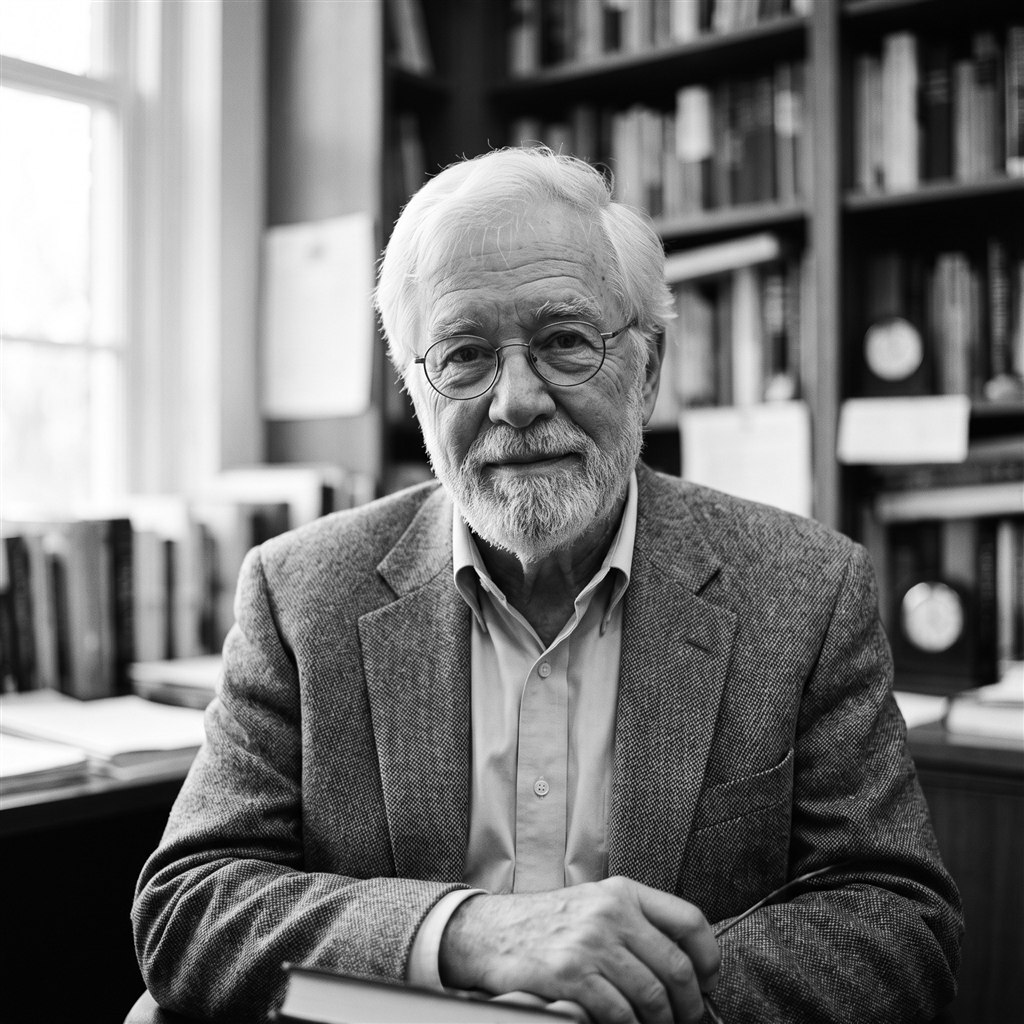
Featured image: Rodney Stark (AI illustration)