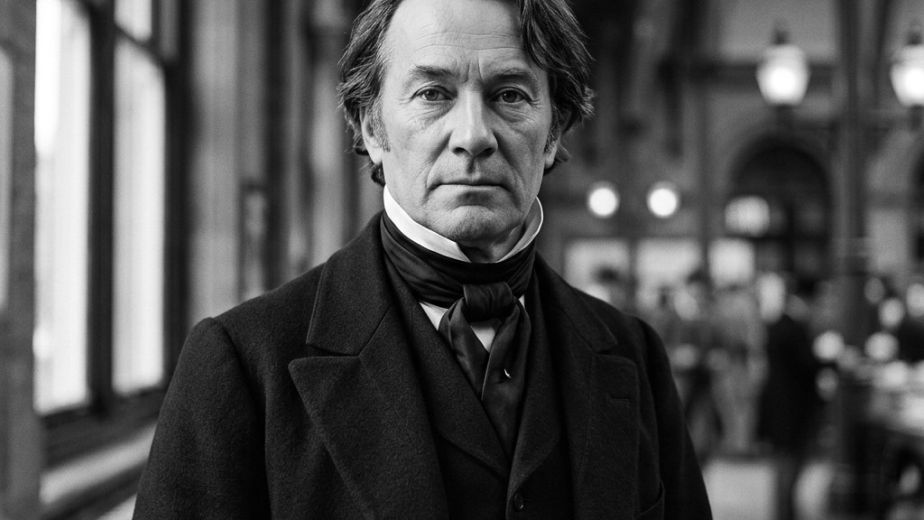
Those who still clung to the old faith feared isolation more than error, Tocqueville wrote, and so they joined the crowd even though they did not agree with it.
Alexis de Tocqueville, as cited in Elisabeth Noelle-Neumann, Die Schweigespirale (The Spiral of Silence), 1980
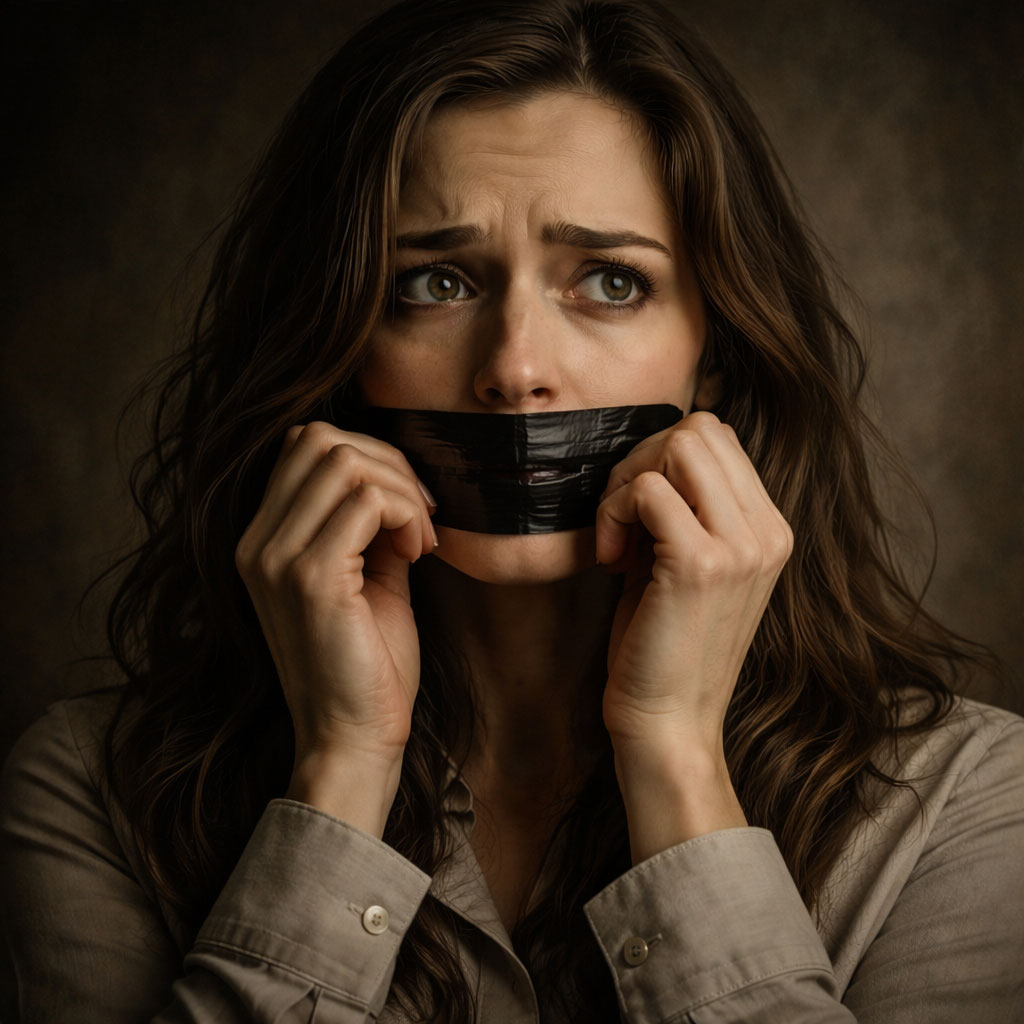
It takes no uniformed censors, no government agency burning books and no official ban to silence free expression. Sometimes social pressure is enough: the fear of being ostracized, of losing one’s job or of being pilloried in the media. This phenomenon, the self-censorship of the silent middle, is one of the underestimated threats to free discourse in Western democracies. And current studies show that it is getting worse.
1. The spiral of silence: a German concept of global relevance
In the 1970s, the political scientist and pollster Elisabeth Noelle-Neumann developed the theory of the spiral of silence (Schweigespirale). It rests on a simple but profound observation: people continuously observe their social surroundings and adjust their public expressions of opinion to what they perceive as the accepted majority view, not necessarily because they are convinced, but because they fear social isolation.
The theory can be summed up in four core hypotheses:
- Most people fear social isolation.
- They therefore constantly observe the climate of opinion around them.
- Those who believe their opinion puts them in the minority increasingly fall silent.
- The mass media have enormous influence over which opinion is seen as able to win majority support.
The result is a self-reinforcing spiral: whoever stays silent becomes invisible. The more invisible an opinion, the more others believe they are alone in holding it, and they fall silent too. The actual distribution of opinions in the population and the publicly visible climate of opinion can drift far apart in the process.
Of particular importance: Noelle-Neumann explicitly emphasized the role of the mass media. When the media advocate a particular position cumulatively (repeatedly) and consonantly (in unison), the public perceives it as the socially accepted norm, regardless of whether it reflects the actual majority opinion.1
2. What current studies show
Germany: 57 percent say caution is called for
A representative survey by the renowned Allensbach Institute, obtained exclusively by the Swiss daily Neue Zürcher Zeitung, paints an alarming picture: 57 percent of Germans say they can now express political views only with caution. Only a minority still believes it may voice political opinions without restriction.2
The breakdown by party affiliation is particularly revealing: among supporters of the AfD (Alternative for Germany), 89 percent said they no longer dare to speak their minds freely. Among supporters of the Union (the CDU and its Bavarian sister party, the CSU) the figure was 42 percent, among supporters of the Social Democrats (SPD) 34 percent. At the opposite extreme, only 15 percent of Green Party supporters share the feeling that freedom of expression is restricted.
This asymmetry is sociologically significant: it suggests that Germany’s public climate of opinion marks certain positions as socially acceptable and flags others as risky. Those whose opinions match the media and academic mainstream feel free. Those who deviate prefer to keep quiet.
United States: the Cato Institute and the logic of self-censorship
The picture in the United States is no better in this respect. In 2020, the Cato Institute surveyed American citizens about their experiences with self-censorship in a representative YouGov poll (n = 2,000). The result: 62 percent of Americans said the political climate prevents them from saying things they believe because others might find them offensive. In 2017 the figure had been 58 percent, so the trend is rising.3
The partisan breakdown closely mirrors the German data: 77 percent of Republicans censor themselves, as do 64 percent of moderates and 52 percent of liberals. The only exception: “strong liberals,” that is, the most ideologically committed left, are the only group in which a majority (58 percent) say they feel free to speak their minds.3
Emily Ekins, director of polling at the Cato Institute, summed up the findings: they were more consistent with a theory of people walking on eggshells than with the idea that only one particular opinion had been banished from acceptable discourse, which suggested that many different viewpoints are socially sanctioned as soon as they depart from the progressive mainstream.3
A global trend: UNESCO warns of a historic low
The trend is confirmed globally as well. The UNESCO report on the Freedom of Expression Index 2024 shows that the global index of freedom of expression fell by ten percent between 2012 and 2024. According to UNESCO, a decline of this magnitude has previously been observed only in exceptional historical emergencies: during the First World War, in the years leading up to the Second World War and at the height of the Cold War. Self-censorship, it said, had increased enormously and was becoming the new norm.4
3. A concrete example: migration
Hardly any issue illustrates the phenomenon of self-censorship better than the migration debate. Let us take a sober look at the situation:
The majority of the population in the German-speaking countries believes that uncontrolled mass migration is a problem. This is not a fringe opinion: even in polls commissioned by public broadcasters and established polling institutes, clear majorities regularly come out in favor of stricter border controls and a reduction in irregular migration.
At the same time, anyone who voices this opinion publicly, directly and unambiguously is seen as taking a risk. The social costs are real and can be documented:
- Professional consequences in academia, media companies and NGOs
- Public scandalization by public broadcasting and left-liberal media
- Social ostracism by the network of so-called “fact-checkers” and civil society organizations, some of them funded by the state
- Reports filed on social media platforms by activist networks, leading to deletions or bans
The result is a classic spiral of silence: the majority opinion that actually exists becomes invisible because those who hold it stay silent. The publicly perceived climate of opinion reflects the views of the population less and less, and thereby produces further silence.
4. Direct and indirect censorship: a libertarian analysis
At this point a conceptual distinction is worth making, one that matters especially from a libertarian perspective.
Classic censorship is state-run and direct: an agency bans an opinion, a book, a broadcast. Against this form of censorship the defenses are clear: civil liberties, freedom of the press, judicial review.
The new form of suppressing opinion is subtler and in some respects more effective, because it does without formal bans. It operates through:
Social sanctions: Whoever voices the wrong opinion loses social standing, friendships or career prospects. This is a private mechanism, but it has public effects.
Structural incentives for overcompliance: Platforms and publishers under pressure from the EU’s Digital Services Act (DSA) or national regulation delete more than the law requires as a precaution, out of fear of liability. The result is a systematic narrowing of the space for discourse without any specific ban ever being issued.5
Media asymmetry with public funding: Public broadcasting is financed by compulsory levies (in Germany the broadcasting fee still widely known as the “GEZ” after the agency that used to collect it, in Austria the GIS/ORF fees) paid by all citizens, regardless of their political convictions. When this institution systematically marginalizes or defames certain positions, that has a different democratic quality than private opinion makers. Here, tax and fee money is used to finance a climate of opinion that silences some of the very citizens who pay for it.
Friedrich Hayek would have pointed here to the problem of knowledge and information: in a free society, truth does not emerge from institutional decree but from the free exchange of ideas and arguments. When this exchange is distorted by structural asymmetries, it is not only individual liberty that suffers but the quality of society’s process of discovery as a whole. The democratic “marketplace of ideas” works only if all suppliers compete on equal terms.6
5. Objections and libertarian replies
Anyone who advances this thesis has to deal with serious objections.
Objection 1: Criticism is not censorship.
The left’s counterargument goes like this: when journalists, activists or citizens respond to an opinion and criticize it, that is freedom of expression, not its suppression. A society in which no opinion provoked any objection would not be freer but more conformist.
In principle, this objection is correct. No opinion has a right to be received without contradiction. The libertarian reply: the problem lies not in criticism as such but in the asymmetry. When one side of the debate faces professional consequences, institutional pressure, state-funded networks and media escalation while the other side can speak freely, it is no longer a fair competition of arguments. The form the criticism takes (denunciation, scandalization, framing someone as a “racist” or “right-wing extremist”) aims to destroy the speaker, not to refute the argument.
Objection 2: Some opinions deserve sanctions.
The argument goes: anyone who advocates racist or inhumane positions must expect social consequences. Societies are right to set norms.
Here too, this is right in principle. But who defines what is “racist”? Experience shows that the term is being applied ever more loosely to any form of skepticism about migration, to calls for border controls or to criticism of asylum procedures, in other words to positions that can be debated on the merits and that command democratic majorities. The definition of what “may be said” shifts with the political winds, and whoever controls that definition controls the discourse.
Objection 3: Feelings do not reflect reality.
Critics, for example the Berlin daily taz, argue that the survey figures on “perceived freedom of expression” reflect an emotional perception, not a legal fact. Germany formally guarantees freedom of expression, they say, so the complaints are unfounded.7
This rejoinder misreads the phenomenon. The spiral of silence operates at the level of perceived social reality, not at the level of legal norms. Even if no one goes to prison, self-censorship has real effects on public discourse. That people do not feel free to express their opinions is a problem for democracy, regardless of whether it is sanctioned by law or not.
6. Consequences
The self-censorship of the silent middle is not an abstract academic problem. It has concrete political consequences:
It produces election results that surprise elites. When opinion research systematically underestimates how many people hold certain positions, because these people stay silent in surveys as well, a distorted picture emerges. Brexit, Trump in 2016, the strong approval ratings for Milei, the electoral successes of the FPÖ (the Freedom Party of Austria): in all these cases there was a considerable gap between the public climate of opinion and actual voting behavior.
When people have the impression that their opinion is not heard or is actively suppressed, their alienation from the state, the media and the established parties grows. The rise of parallel public spheres (Telegram channels, alternative media, international platforms) is not primarily a sign of extremism but a rational reaction to a mainstream system perceived as closed.
Third, it impairs the quality of collective decisions. A society that cannot openly discuss certain problems, because the social penalty for certain diagnoses is too high, cannot solve those problems either. Migration policy that rests on false premises, because the public cannot have an honest debate about costs, capacities and problems of integration, will produce poor results.
7. What is to be done? Libertarian perspectives
From a libertarian point of view, there is no state solution to a problem that arose from too much state influence in the first place. But there are principles:
Abolish state-funded steering of opinion: The structural funding of fact-checking networks, NGOs and media platforms by government bodies, such as the federal program “Demokratie leben!” (“Live Democracy!”) with around 200 million euros a year, is incompatible with a neutral climate of opinion. Anyone who wants to keep the state out of the bedroom must also keep it out of public discourse.
Scale back public broadcasting: A broadcasting system that is funded by all citizens through compulsory fees while systematically marginalizing certain political opinions is not a neutral provider of information. It is a player in the battle of opinions with privileged resources. The libertarian position is consistent: privately financed broadcasting, free competition among the media.
Resist the technical infrastructure of censorship: The EU’s Digital Services Act (DSA) creates incentive structures that push platforms toward systematic overcompliance. The consequences are foreseeable: self-censorship by platforms, self-censorship by users, algorithmic invisibility of unwelcome opinions. Forces committed to liberty should name this development clearly and fight it both in the courts and in politics.
Courage as a personal principle of action: Noelle-Neumann recognized that the spiral of silence is broken by people she called the “hard core”: those who are willing to stand up for their opinion even against the tide. Everyone who holds a well-founded opinion and voices it despite social pressure helps to make dissent normal. This is not heroism. It is a basic democratic attitude.
Conclusion
The silent middle is not an invention of cultural pessimists. It is an empirically well-documented phenomenon, confirmed by current surveys in Germany, the United States and worldwide. Self-censorship is on the rise, and it disproportionately affects those whose positions depart from the progressive media mainstream.
This is no proof that every opinion sanctioned in this censorious way is right. But it is proof that our space for discourse is asymmetrically distorted, and that this asymmetry has democratic costs we must not ignore.
For the libertarian perspective, this yields a clear task: to defend not only formal freedom of expression but also the structural conditions under which free discourse is actually possible. For liberty on paper, hollowed out in everyday life by social sanctions, state-funded steering of opinion and algorithmic suppression, is no liberty at all.
Sources and notes
- Elisabeth Noelle-Neumann: Die Schweigespirale. Öffentliche Meinung – unsere soziale Haut. Piper, Munich 1980 (in German). English edition: The Spiral of Silence: Public Opinion – Our Social Skin. University of Chicago Press, Chicago 1984. See also: noelle-neumann.de
- Allensbach Institute / Neue Zürcher Zeitung: “Mehrheit der Deutschen äußert politische Meinungen nur noch mit Vorsicht” (A majority of Germans now voice political opinions only with caution), NZZ, December 17, 2025 (in German). nzz.ch
- Emily E. Ekins: Poll: 62% of Americans Say They Have Political Views They’re Afraid to Share. Cato Institute, July 22, 2020. cato.org
- UNESCO: Freedom of Expression Index 2024, quoted in Epoch Times Deutschland: “Meinungsfreiheit verschlechtert: UNESCO-Bericht zeigt Trend zur Selbstzensur” (Freedom of expression worsens: UNESCO report shows trend toward self-censorship), December 15, 2025 (in German). epochtimes.de
- See also: study by RTR, Austria’s regulatory authority for broadcasting and telecommunications, on the Digital Services Act and freedom of expression in Austria, December 2024 (in German). rtr.at
- Friedrich A. Hayek: The Constitution of Liberty. University of Chicago Press, Chicago 1960. Also by the same author: Law, Legislation and Liberty, vol. 3. Routledge, London 1979.
- taz: “Studie zu Meinungsfreiheit: Gefühle sind keine Tatsachen” (Study on freedom of expression: feelings are not facts), December 22, 2023 (in German). taz.de
This article appears on “Weg zur Freiheit,” the libertarian blog for the German-speaking world. All opinions are the author’s own. We welcome feedback and additions on the content.