On June 25, 1820, in Berlin, Georg Wilhelm Friedrich Hegel signed the preface to a textbook for his students, the Elements of the Philosophy of Right. It contains a double sentence: “What is rational is actual; and what is actual is rational.” Some read it as a blessing on everything that existed, including the Prussian state, which had brought Hegel to Berlin two years earlier.
Hegel pushed back against this reading. In his Encyclopedia of the Philosophical Sciences he concedes that these “simple sentences” had “met with hostility,” and he points out that even ordinary feeling would not grant “a contingent existence the emphatic name of something actual” (§ 6 Remark). For him, only what corresponds to reason is actual in the strict sense, and in the sphere of right that means: to freedom. He calls the system of right “the realm of actualized freedom” (§ 4). What did he mean by freedom, and why does his line of thought end, of all places, with the state?
At a glance
- Life: August 27, 1770, in Stuttgart to November 14, 1831, in Berlin
- Work: lecturer in Jena, headmaster of a secondary school in Nuremberg, professor in Heidelberg (from 1816) and Berlin (from 1818)
- Major works: Phenomenology of Spirit (Phänomenologie des Geistes, 1807), Science of Logic (Wissenschaft der Logik, 1812 to 1816), Encyclopedia of the Philosophical Sciences (Enzyklopädie der philosophischen Wissenschaften, 1817, final edition 1830), Elements of the Philosophy of Right (Grundlinien der Philosophie des Rechts, 1820, title page dated 1821)
- In one sentence: He gave the person, property, and market society a firm place in philosophy, yet subordinated them to a state to which he granted the highest right over the individual.
From the Tübingen Seminary to a Chair in Berlin
From 1788 to 1793 Hegel studied at the Tübinger Stift, the Protestant seminary in Tübingen, where he became friends with Friedrich Hölderlin and Schelling. After years as a private tutor in Bern and Frankfurt, he qualified as a university lecturer in Jena in 1801. After a period as a newspaper editor in Bamberg and, from 1808, as director of the Aegidien Gymnasium in Nuremberg, he received a chair in Heidelberg in 1816; in 1818 came the call to Berlin, which the minister Altenstein had pushed through against the wishes of the faculty. In 1829/30 Hegel served as rector of the university. His last work, on the English Reform Bill, was stopped by the government in 1831 after two thirds of it had been printed in the Prussian state newspaper. In November of the same year he died of cholera.
A Freedom That Wants to Be More Than Arbitrariness
Hegel calls the common idea that freedom means being able to do whatever one wants arbitrariness, and he considers it incomplete: “If we hear it said that freedom in general consists in being able to do what one wants, such an idea can only be taken as a complete lack of intellectual education” (§ 15 Remark). A will that merely chooses among desires it happens to find in itself remains, in Hegel’s view, dependent on them; it becomes free only through ends that it can justify rationally.
Hegel judges even more harshly a freedom that proves itself only by negating. This “freedom of the void,” he writes, becomes in politics the “fanaticism of smashing all existing social order”; it believes it wants, for instance, a state of universal equality, and yet produces nothing but “the fury of destruction” (§ 5 Remark).
His answer is concrete freedom. “The state is the actuality of concrete freedom,” we read in § 260, and this means: the individual person and his particular interests are to find their “complete development and the recognition of their right” in the family and in civil society, and at the same time to will the universal as their own concern. For him, freedom is realized in institutions in which people recognize one another as free.
Property as the First Existence of Freedom
The Philosophy of Right begins with the person and his property: “The person must give itself an external sphere of its freedom in order to exist as Idea.” (§ 41) From the standpoint of freedom, property, “as its first existence,” is “an essential end for itself” (§ 45 Remark). Plato’s ideal state therefore contains “the wrong against the person of being incapable of private property” (§ 46 Remark). Hegel considered demands for an equal distribution of land and wealth superficial: “What and how much I possess is therefore a matter of legal contingency.” (§ 49)
He rejects slavery just as clearly. All its justifications, he argues, rest on taking the human being merely as a natural being (§ 57 Remark). One may hand over one’s own labor power only for a limited time, because otherwise one would make one’s personality “the property of another” (§ 67). The Remark to § 209 says: “A human being counts as such because he is a human being, not because he is a Jew, Catholic, Protestant, German, Italian, etc.” Consistently, Hegel defended the civil rights of Jews against the “outcry” of their opponents, who, he said, had overlooked “that they are, first and foremost, human beings” (§ 270 Remark, footnote).
A System of All-Round Interdependence
For Hegel, civil society, the world of work and the market, stands between the family and the state. He describes it as a “system of all-round interdependence” in which the welfare of each individual is interwoven with the welfare of all (§ 183). He knew the political economy of Smith, Say, and Ricardo (§ 189 Remark), and he sums up the core of this order in a sentence reminiscent of Adam Smith: subjective selfishness turns into a contribution to everyone else, “so that, in earning, producing, and enjoying for himself, each person thereby produces and earns for the enjoyment of the others” (§ 199).
In the modern world, each person decides for himself which estate, that is, which occupational class, he belongs to (§ 206), and this requires a law that everyone can know: laws must be made public (§ 215 Remark), and so must court proceedings (§ 224).
Hegel did not overlook the downsides of the market. If a large mass of people sinks below a certain standard of living, the “rabble” arises (§ 244), and for all its wealth, society is “not rich enough” to check poverty (§ 245). Although the right balance between producers and consumers establishes itself on the whole, he considers deliberate regulation necessary: he allows the public authority to fix prices for basic foodstuffs and to exercise “general provision and direction” when large branches of industry depend on distant circumstances (§ 236 with Remark).
The State Above the Individual
The break with liberal thought lies in the question of what the state is for. Hegel explicitly rejects the liberal answer: whoever confuses the state with civil society and places its purpose “in the security and protection of property and personal freedom” makes the interest of individuals the ultimate end, and then it follows “that being a member of the state is something optional” (§ 258 Remark). To him the state is an “absolute, unmoved end in itself, in which freedom attains its highest right,” and this final end also has “the highest right against individuals, whose highest duty is to be members of the state” (§ 258).
What follows from this is shown in § 324. Citizens, he writes, have the duty to preserve the independence and sovereignty of the state “by risking and sacrificing their property and their lives, not to mention their opinions” (§ 324). The Remark says that herein lies “the ethical moment of war”: war preserves the ethical health of nations, “just as the movement of the winds preserves the sea from the putrefaction” into which a lasting peace would plunge them. He adds that this is “only a philosophical idea” and that actual wars require a different justification (§ 324 Remark). In § 351 he also says that civilized nations regard and treat others “as barbarians, with the consciousness of an unequal right.”
Political participation remains narrowly limited. Hegel wanted a constitutional monarchy with separated powers, but at its head stands a monarch who is destined for his dignity “by natural birth” (§ 280), and a sovereignty of the people set up in opposition to the monarch is something Hegel counts among “confused thoughts” (§ 279 Remark). Of the people, insofar as the term means a particular section of the members of the state, he says that it “expresses the part that does not know what it wants” (§ 301 Remark). Citizens are to be represented through municipalities and corporations, not each individual with a vote of his own (§ 308 with Remark).
He takes an equally narrow view of freedom of speech. To define freedom of the press as the freedom “to speak and write whatever one wants” belongs, he says, to “the still wholly uneducated crudity and superficiality of representational thinking,” and he counts “bringing the government, its authorities and officials, and the person of the monarch in particular, into contempt” among offenses and crimes (§ 319 Remark). In addition, the state may require of all its members “that they belong to a church community,” no matter which (§ 270 Remark).
In the preface, Hegel attacks the philosopher Jakob Friedrich Fries as the “commander of this shallowness,” who in 1819 had been suspended from his teaching post in Jena at the request of the Central Investigation Commission in Mainz, the federal body set up that year to pursue political “demagogues,” and he writes that it is no wonder “if governments have finally turned their attention to such philosophizing.”
One often quoted sentence, however, does not belong in this account. The saying that it is “the course of God in the world that the state exists” does not appear in Hegel’s book of 1820 but in an Addition that Eduard Gans compiled from students’ lecture notes for the 1833 edition. According to Walter Kaufmann, the widespread English version “march of God” also shifts the meaning; what is meant is rather that it belongs to the way of God with the world that there is a state. One does not need it to reach a verdict, because the paragraphs Hegel himself had printed show clearly enough how highly he placed the state.
What Friends of Liberty Can Learn from Hegel
The first lesson concerns property. Hegel grounds it in the freedom of the person and not merely in its usefulness, and precisely for that reason he can call the community of goods a wrong against the person.
The second lesson concerns distrust of the drawing-board blueprint. His treatise, Hegel writes in the preface, is not meant to construct a state “as it ought to be,” and he mocks Fichte’s proposal to put a painted portrait of suspects right into their passports. His warning against a freedom that smashes everything in existence in order to bring about abstract equality reads, after the twentieth century, like an early diagnosis.
The third lesson is a warning contained in Hegel’s own work. Whoever distinguishes between mere arbitrariness and “true” freedom and hands the definition of true freedom over to the state can end up presenting punishment for contemptuous speech about the government and the sacrifice of life in war as the realization of freedom, and Hegel himself drew these conclusions.
The Owl of Minerva and the Citizen
Philosophy, Hegel writes at the end of his preface, always comes too late to teach the world: “the owl of Minerva begins its flight only with the onset of dusk.” He wanted to comprehend what is, and he saw correctly that freedom needs property, contracts, public laws, and a society of free enterprise. That he placed the state above all these institutions separates him from the liberals. The question he leaves behind is still open today: Who decides which order counts as rational, and what is left to you when your own reason comes to a different conclusion?
Further reading
- Georg Wilhelm Friedrich Hegel: Grundlinien der Philosophie des Rechts, Werke in zwanzig Bänden, vol. 7, Suhrkamp, Frankfurt am Main 1970 (full text freely available at zeno.org) (in German); in English as Elements of the Philosophy of Right
- Shlomo Avineri: Hegels Theorie des modernen Staates, Suhrkamp, Frankfurt am Main 1976 (in German); English original: Hegel’s Theory of the Modern State, Cambridge University Press, Cambridge 1972
- Walter Kaufmann: The Hegel Myth and Its Method, in: From Shakespeare to Existentialism, Beacon Press, Boston 1959
- Terry Pinkard: Hegel: A Biography, Cambridge University Press, Cambridge 2000
This article is part of our series on thinkers, doers, and historical figures of liberty.
Sources
- Hegel, Georg Wilhelm Friedrich: Grundlinien der Philosophie des Rechts oder Naturrecht und Staatswissenschaft im Grundrisse (1820, title page dated 1821), in: Werke in zwanzig Bänden, vol. 7, Suhrkamp, Frankfurt am Main 1970; full text: http://www.zeno.org/Philosophie/M/Hegel,+Georg+Wilhelm+Friedrich/Grundlinien+der+Philosophie+des+Rechts (cited: Preface, §§ 4, 5, 15, 41, 45, 46, 49, 57, 67, 183, 199, 206, 209, 215, 224, 236, 244, 245, 258, 260, 270, 272, 273, 279, 280, 301, 308, 319, 324, 351) (in German)
- Hegel, Georg Wilhelm Friedrich: Enzyklopädie der philosophischen Wissenschaften im Grundrisse (1830), Introduction, § 6 Remark, in: Werke, vol. 8; full text: http://www.zeno.org/Philosophie/M/Hegel,+Georg+Wilhelm+Friedrich/Enzyklop%C3%A4die+der+philosophischen+Wissenschaften+im+Grundrisse/Einleitung (in German)
- Hegel, Georg Wilhelm Friedrich: Grundlinien der Philosophie des Rechts, ed. Eduard Gans, Duncker und Humblot, Berlin 1833 (with the “Additions” compiled from students’ lecture notes; used only to place the Addition to § 258) (in German)
- Fetscher, Iring: Hegel, Georg Wilhelm Friedrich, in: Neue Deutsche Biographie 8 (1969), https://www.deutsche-biographie.de/sfz28648.html (in German)
- Redding, Paul: Georg Wilhelm Friedrich Hegel, in: Stanford Encyclopedia of Philosophy, https://plato.stanford.edu/entries/hegel/
- Gäbe, Lüder: Fries, Jakob Friedrich, in: Neue Deutsche Biographie 5 (1961), pp. 608 f., https://www.deutsche-biographie.de/sfz69851.html (in German)
- Kaufmann, Walter: The Hegel Myth and Its Method (1951), in: idem, From Shakespeare to Existentialism, Beacon Press, Boston 1959, pp. 88–119, https://www.marxists.org/reference/subject/philosophy/works/us/kaufmann.htm
- Z. Zeitschrift Marxistische Erneuerung: article on the Gans edition of the Philosophy of Right and its Additions, https://www.zeitschrift-marxistische-erneuerung.de/kontext/controllers/document.php/971.6cb28b.pdf (in German)
- Avineri, Shlomo: Hegels Theorie des modernen Staates, translated by R. and R. Wiggershaus, Suhrkamp, Frankfurt am Main 1976 (in German; English original: Hegel’s Theory of the Modern State, Cambridge University Press 1972)
- Pinkard, Terry: Hegel: A Biography, Cambridge University Press, Cambridge 2000
- Wikipedia (en): Elements of the Philosophy of Right, https://en.wikipedia.org/wiki/Elements_of_the_Philosophy_of_Right (only for the year of publication and the title page)
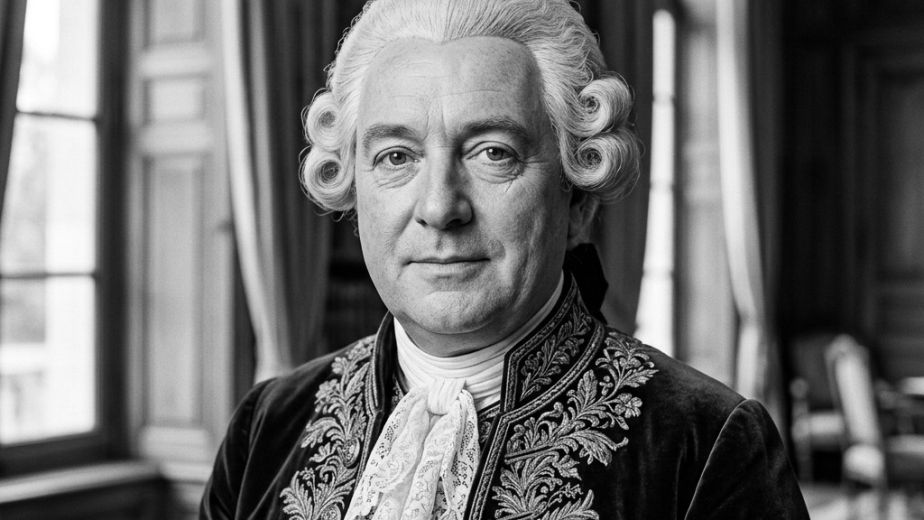
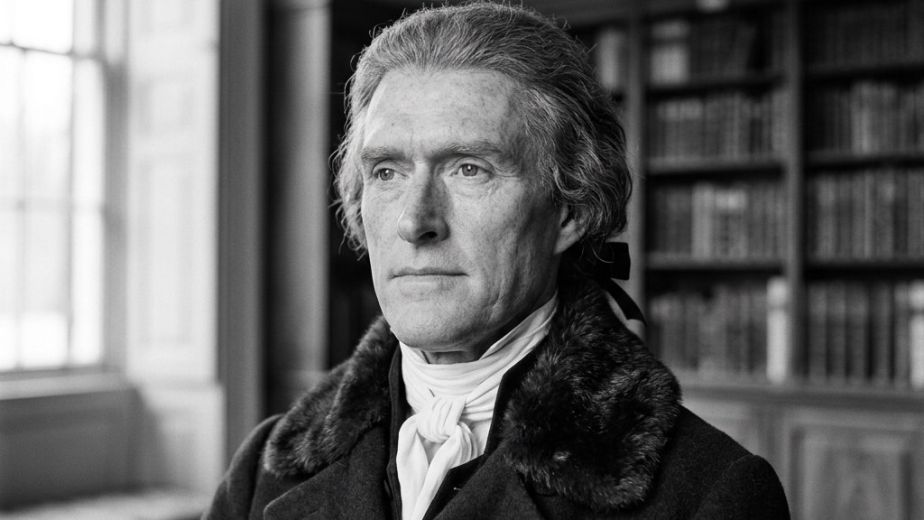
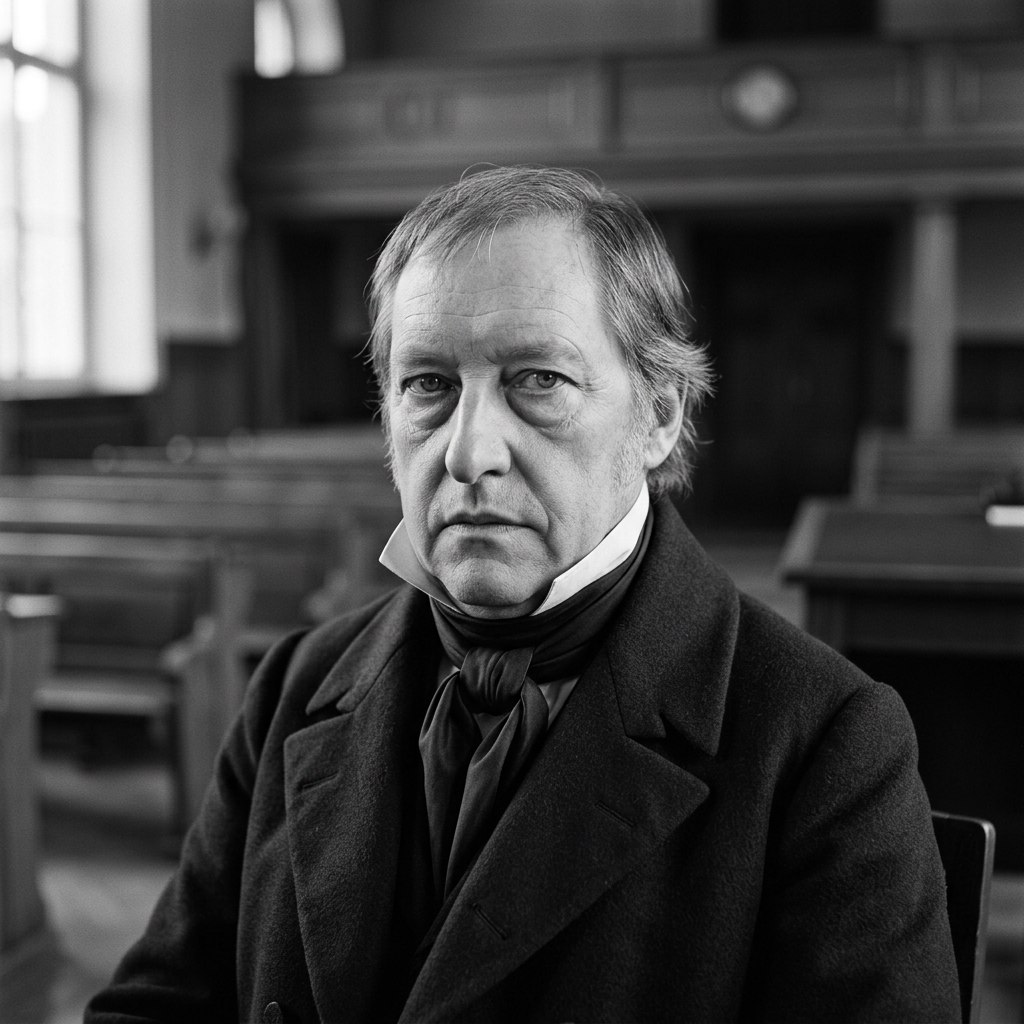
Featured image: Georg Wilhelm Friedrich Hegel (AI illustration)